acss-digest
Algeria Sends Troops to Shield Niger's Coup Junta
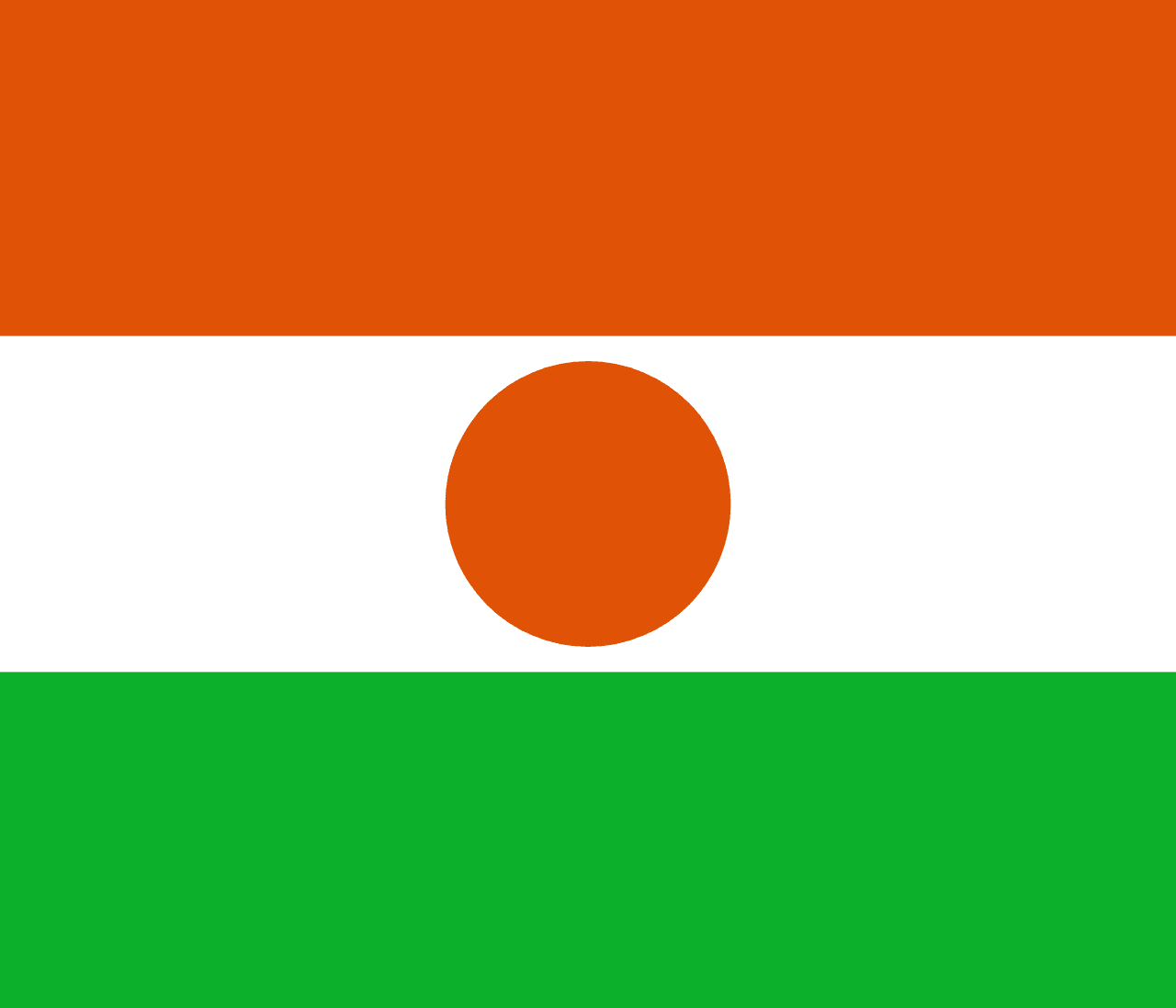
Here is a country that spent its own war of independence learning what foreign soldiers do on African soil. Algeria fought France for eight years, and more than a million Algerians died in that struggle. It built a foreign policy on the promise that no Algerian soldier would be sent to die for someone else's regime. This week, that promise was rewritten. Algeria's upper house voted unanimously to approve sending troops to Niger, and the lower house ratified it on Sunday. Nobody has said how many soldiers will go, or when.
So we have to ask the question that the official language is designed to avoid. Who are these soldiers protecting, and from whom?
The facts are not complicated. In July 2023, Niger's army under General Abdourahamane Tiani overthrew President Mohamed Bazoum in a coup. Bazoum, elected in a 2021 vote that marked the country's first peaceful transfer of power, has been held in detention ever since. The junta has since joined Mali and Burkina Faso in the Alliance of Sahel States, and the three countries pulled out of ECOWAS in early 2025. Every one of those steps moved power further from the ballot box and closer to the barracks. Democracy did not lose in Niger because of a foreign plot. It lost because men with guns decided they would not give it back.
Now Algeria has moved aircraft into the picture. Nearly two months before the parliamentary vote, Algerian authorities dispatched four Russian-made Sukhoi Su-30 fighter jets, a transport aircraft and an aerial refuelling plane to Niamey. The stated reason was an alleged attempt to destabilise the junta. The reporting offers no public evidence of that plot. No indictments, no named conspirators, no independent verification. We are asked to accept that an attack on a military government is reason enough for a neighbouring state to park fighter jets in its capital, and that the people of Niger should simply trust the story.
Then came the explanation. Senator Boulghiti told reporters the soldiers would secure "economic infrastructure," not wage war. Read that phrase slowly. Niger is one of the world's major uranium producers, and its mines have been at the centre of a bitter fight between the junta and the French nuclear group Orano, which saw its Somair operation seized by the state in 2025. When a government says its troops are guarding "economic infrastructure," Africans have every right to ask whose infrastructure, whose revenue, and whose future is being secured. A soldier guarding a mine for a regime that has no electoral mandate is not neutral. He is a stakeholder in that regime's survival.
We have seen this script before, and it always ends the same way. A junta seizes power and promises sovereignty. It cracks down on journalists and opposition figures. It invites in a foreign security partner that offers regime protection with no questions about rights or elections. The partner's price is access to minerals, ports, or military bases. The population pays in lost liberties and lost livelihoods. Russia's Wagner group, rebranded as the Africa Corps in parts of the Sahel, has followed this pattern from Mali to Burkina Faso. Now a North African state that once preached non-interference is walking the same road, and calling it a doctrinal "adaptation."
We must be honest about the hypocrisy here, because it runs in every direction. Western governments have lectured the Sahel about democracy while their own intelligence and military programmes sometimes propped up the very autocrats they condemned. China and Russia sell security and infrastructure with no conditions attached, which is exactly why juntas find them attractive. The UAE, Turkey, and Qatar compete for ports, drones, and political favour across the continent. Every outside power has a favourite general, and none of them, in our experience, has ever asked a general to hold an election. Algeria's move is not an exception to this pattern. It is the pattern, now wearing an African flag.
So what should happen?
First, the African Union must act on its own founding text. Article 30 of the AU Constitutive Act states that governments that come to power through unconstitutional means shall not be allowed to participate in the Union's activities. Niger's junta has been treated with soft rhetoric and quiet diplomacy for nearly three years. That is not a policy. It is an abdication. The AU Peace and Security Council should demand a public timeline for elections, the release of President Bazoum, and an independent accounting of the alleged plot Algeria cites. If Algeria's jets and soldiers are in Niger to protect a transition, then Algeria should welcome that scrutiny. If they are there to protect a junta from its own people, the AU must say so out loud.
Second, Algeria's parliament owes its citizens a debate in the open. A deployment of unknown size, to an unknown end, approved in a single sitting, is not democratic oversight. It is a rubber stamp. Algerians should demand the troop numbers, the rules of engagement, the legal basis under their constitution, and a published cost. Accountable governments publish their contracts. Accountable governments face courts and a free press. Algeria's neighbours should be asking the same questions.
Third, look at who is getting this right. Senegal, in 2024, faced a president who tried to postpone elections. Its Constitutional Court ruled against him, the vote went ahead, and power changed hands peacefully. Ghana has seen repeated peaceful transfers since the 1990s. Botswana and Mauritius have built prosperity on property rights, transparent institutions, and independent judiciaries rather than on army loyalty. None of these countries is perfect. All of them prove that the choice between stability and freedom is a lie told by men who want to keep their guns. Ordinary Nigeriens, Malians, and Burkinabè deserve the same institutions their neighbours have built.
Civil society, private business, and the regional bodies have their roles too. Business chambers should refuse to sign contracts that bypass competitive bidding or open disclosure. Journalists and lawyers in the Sahel should be supported, not silenced. Regional economic communities should make clear that trade, transit, and investment depend on respect for constitutional order. Markets run on trust, and nothing destroys trust faster than a junta with a foreign air force.
And now the question for you, the reader. Do you want a continent where a soldier's loyalty is measured by how long he can hold a capital, or one where a leader's legitimacy is measured by the ballot? Because that choice is being made right now, in Niamey, in Algiers, and in Addis Ababa and Addis-adjacent corridors of power where nobody asked your opinion.
Here is what you can do. Write to your own MPs and ask them to demand Algeria's deployment figures and legal basis. Ask your foreign ministry what it has said to the AU about Niger's timeline for elections. Share this article with someone who still thinks coups are a form of liberation. Demand that the AU Peace and Security Council apply its own rules, and that President Bazoum be released. And refuse, every time, to accept "security" and "infrastructure" as answers when nobody will say whose security and whose infrastructure.
Our grandparents did not fight colonial armies so that their grandchildren could watch African generals hire African soldiers to guard African regimes from African voters. Algeria knows better than anyone what that road costs. It is time it remembered.
Based on reporting by ACSS-EMAIL