acss-digest
ECOWAS Can Sound the Alarm. It Has Never Stopped a Coup.
How many times must a red signal flash before a leader agrees to look it in the face?
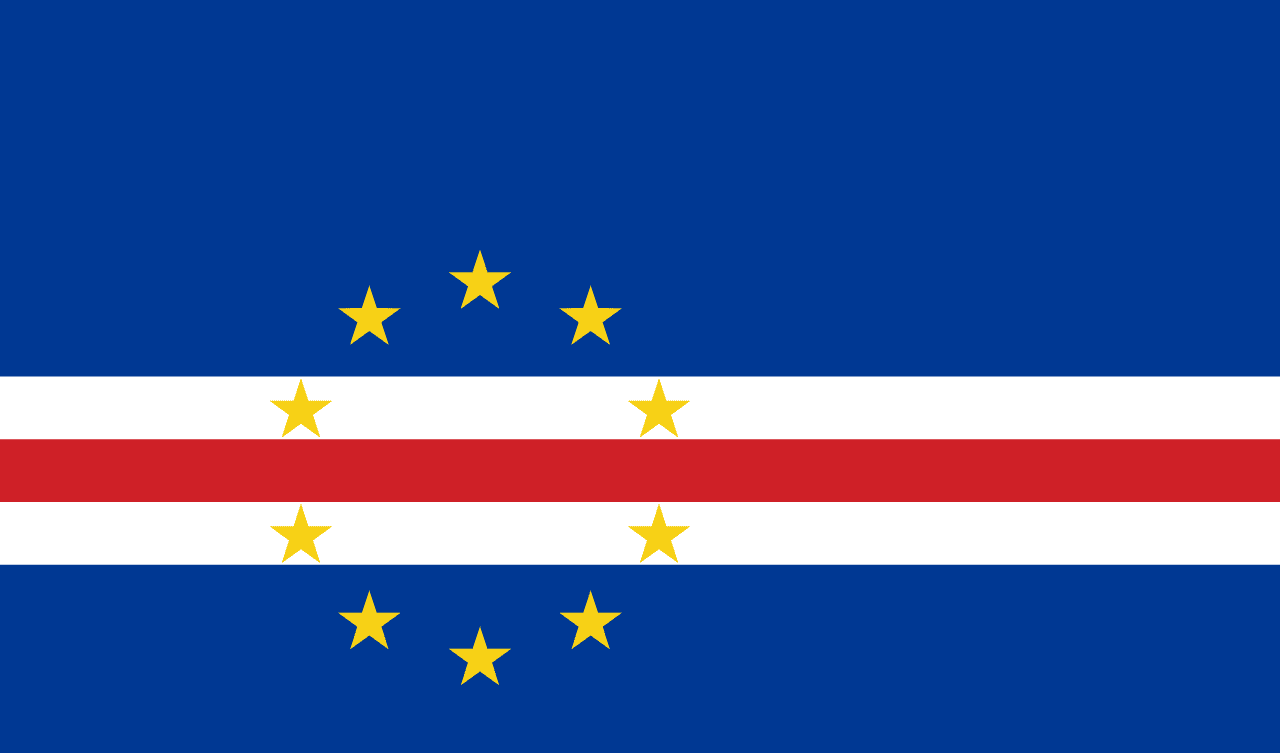
On 30 October 2026, in Praia, the ECOWAS Commission and the government of Cape Verde inaugurated the National Coordination Centre of the Early Warning Mechanism, the CNMAP. It is the ninth such centre deployed across the community's territory. Ribbons were cut, speeches were given about "human security," and a promise was made that data would reach regional bodies faster. The communiqués are glowing. The photographs are lovely. But we West Africans have learned to read between the lines of official statements, and between those lines sits a question no one dares to ask aloud: what good are alarms if the control room stays empty?
We must say things as they are. An early warning system has no value in itself. It does not protect a village in the Sahel, a neighbourhood in Conakry, or a voter in Bissau. It does one thing: it turns ignorance into responsibility. Once a risk is documented, named and transmitted, the person who decides can no longer claim he did not know. That is precisely why so many leaders prefer not to know.
The region's record is damning. The ECOWARN regional network, which aggregates national data, has existed for years. Yet between 2020 and 2025, the sub-region suffered a series of coups that toppled Mali in 2020 and again in 2021, Guinea in September 2021, Burkina Faso twice in 2022, Niger in July 2023, and then Guinea-Bissau in November 2025. Each of these overthrows was preceded by visible signs: electoral tensions, purges in the army, constitutional drift, journalists arrested, opposition silenced. The signals existed. The reports were on desks. The will to act was missing.
There is something graver still. The ECOWAS Additional Protocol on Democracy and Good Governance, adopted in 2001, in principle prohibits any seizure of power by force and provides for sanctions against those who carry out unconstitutional changes of government. Yet when the military seized power in Niger, the regional response swung between threats of intervention, economic sanctions judged too heavy for ordinary people, and negotiations that dragged on for months. Mali, Burkina Faso and Niger ultimately announced their withdrawal from the organisation, effective January 2025. Millions of citizens were deprived of the common framework that was supposed to protect them. Who paid that price? Certainly not the colonels who seized power. It was the farmers, the traders, the unemployed young people and the women who no longer have access to neighbouring markets.
The context must also remind us of a truth some would rather forget. The threats do not come only from within. They thrive where the state is absent, and external actors rush into that space. Whether it is jihadist armed groups exploiting the security vacuum in the Sahel, foreign military partners selling their services to the highest bidder, or mining companies negotiating opaque contracts with regimes lacking legitimacy, the same pattern repeats: less transparency, less citizen oversight, more risk for the population. A well-designed early warning system should be able to detect these dynamics and make them public. But its conclusions must not be buried in diplomatic drawers.
So what is to be done? The answer is not to build a tenth centre. It is to ensure that the other nine, and the one in Praia, produce concrete effects. First, ECOWAS must publish, regularly and verifiably, the alerts it receives and the measures it takes in response. An alert not followed by action must be publicly explained. Second, every serious alert must trigger the automatic steps provided for in the texts: mandatory consultations, suspension of voting rights in regional bodies, freezing of targeted funding, and individual sanctions against those responsible for unconstitutional changes. The rule must be clear and the machinery must work without waiting for a head of state to deign to speak. Finally, national parliaments and civil society organisations must have access to CNMAP data. An alert that remains in the Commission's offices is nothing but a memory.
Cape Verde itself shows the way. This small archipelago of ten islands, with no oil, no gold mines and no bloated army, has experienced peaceful democratic alternations in 2016 and 2021. Its institutions have held because its leaders accepted losing elections. Botswana, since independence, has built sustained growth on solid institutions, rigorous management of resources and respect for the rule of law. Mauritius has made political stability and economic freedom its comparative advantage. And Senegal, in 2024, proved that a mobilised people and independent judges can stop a president from postponing an election indefinitely. These examples are not perfect, but they demonstrate one essential thing: security begins with legitimacy, and legitimacy begins with the ballot box, justice and a free press.
And now, to you, readers of Praia, Dakar, Abidjan, Lagos, Bamako and Ouagadougou. Demand that CNMAP reports be published. Demand that your deputies question their governments about the alerts received and the decisions taken. Demand that ECOWAS apply its own protocols without exception, including against heads of state who are its friends. Demand that security stop being a word in a communiqué and become a measurable obligation. We no longer need inauguration ceremonies. We need leaders who, when the siren sounds, get up and act. The next coup will not be a surprise. It will be a decision: the decision not to act. And that decision, we can still prevent.
Based on reporting by ACSS-EMAIL