general
Russia Lures Africans With Fake Jobs Then Ships Them to Ukraine's Front
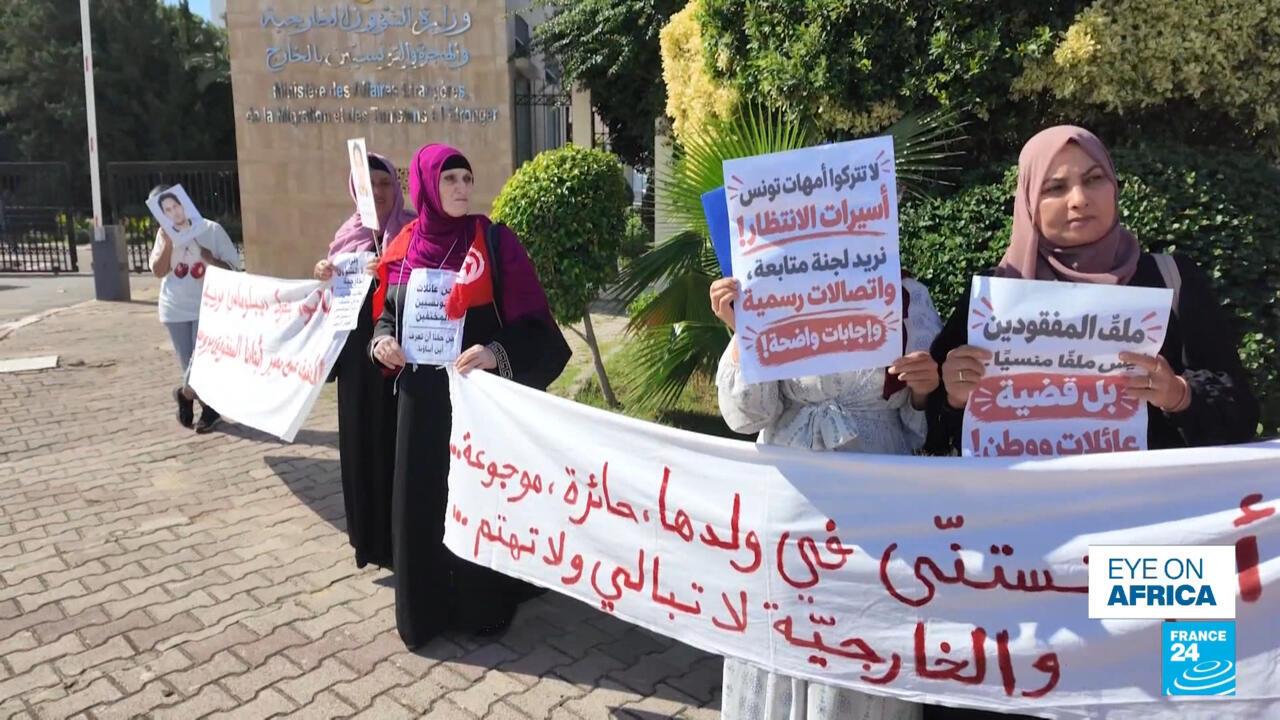
Somewhere in Tunisia, a mother is setting a place at the table for a son who left for Russia with a work contract in his pocket. She does not know if he is alive. She does not know if he is in a trench in Donbas, in a hospital bed, or in a grave with a number instead of a name. Nobody in Tunsia's government has given her a straight answer, and nobody in Moscow has bothered to pretend.
Now ask yourself how many more mothers are waiting in the same way. More than 1,400 Africans have been enlisted to fight for Russia in Ukraine since 2023. That is a documented figure, and it counts only those we can partly trace. Behind every number is a young man who was promised a salary, a scholarship, or a future, and who was delivered to a war that has nothing to do with him.
Consider how the pipeline works. A man in Tunis, Nairobi, or Kampala sees an advertisement for work or study in Russia. He travels on a legitimate passport with a legitimate-looking visa. He arrives expecting a factory job or a university seat. Then his documents are taken, his language is ignored, and he is handed a uniform and a rifle. Some are sent to the front within weeks. Others find that the contract they signed was written in Russian and that leaving is no longer an option. This is not a rumour circulating in WhatsApp groups. It is a pattern families have described to journalists, and it follows the same logic that has made Russian recruitment of foreigners a scandal across Europe and Asia.
Why are Africans being targeted? Because Moscow is short of soldiers, and Africa has young men, weak labour protections, and governments that are too dependent or too distracted to stop a foreign power from exploiting their citizens. Russia has spent years building relationships across the continent through arms deals, mercenary contracts, and summit diplomacy. Those relationships now have a ledger, and it is being paid in African blood.
This is also the latest chapter of a story we have seen before. Russia's Wagner Group entered the Central African Republic in 2018, moved into Mali in 2021, and was later reorganised under the Kremlin's Africa Corps banner. In each place, the arrangement offered regime protection in exchange for access to gold, diamonds, timber, and mineral concessions. The Central African Republic's gold and diamond sectors have been opaque for years, and independent investigators have repeatedly documented abuses by Russian-linked forces against civilians. Russia does not come to Africa as a benefactor. It comes as a buyer of loyalty and a seller of security that ends in graves.
Here is the question our leaders must answer. When a Tunisian citizen boards a plane to Moscow and disappears into a war zone, what did his government do to protect him? Tunisian families report going from office to office, receiving vague assurances and few confirmed facts. Missing persons are reduced to case files. Embassies are slow. Foreign ministries issue warnings after the damage is done. Protection of citizens abroad is the most basic duty of any state, and when it fails this badly, it is not an accident. It is a choice to prioritise diplomatic comfort over the lives of ordinary people.
Some will say this is a complicated matter, that these men made their own decisions, that Africa must balance its relationships with all great powers. We reject that argument completely. Consent given under deception is not consent. A signature obtained by withholding passports is not a contract. A nation that refuses to protect its young people from being trafficked into a foreign army is not practising strategic patience. It is abandoning its own.
There is a better model available, and it is not hard to describe. Botswana has built one of the most stable democracies on the continent by insisting on transparent institutions, predictable rules, and accountable public offices. Mauritius has grown into a high-income economy by investing in education, rule of law, and an open business environment. Senegal's 2024 transfer of power after a contested election showed that citizens, courts, and civil society can hold the line when a government tries to bend the rules. These countries are not perfect, but they share one principle: the state exists to serve its citizens, not to trade them.
So what must happen now? Start with the African Union. The AU Commission should convene an emergency session on foreign recruitment of African nationals for combat roles, and it should press for a binding continental protocol that requires licensing of overseas labour recruiters, mandatory disclosure of contract terms, and immediate consular access for any citizen detained or conscripted abroad. Regional economic communities, from ECOWAS to the East African Community, should coordinate shared warning systems so that a Kenyan or Ugandan family is not the last to learn that their son has been recruited.
Tunisia's government must go further. It should publish a full list of its citizens known to have been recruited or reported missing, establish a standing missing-persons unit with a public dashboard, and summon Russian diplomats to answer for the deception used against Tunisian nationals. Parliament should investigate every private agency that facilitated these trips and strip the licences of any firm found to be a front for military recruitment. Transparency is not a favour to families. It is the minimum that a democratic state owes them.
Civil society has a role too. Journalists, labour unions, lawyers, and religious leaders should document cases, protect whistleblowers, and push for the Tunisian and regional courts to hear claims from families. Private employers who depend on migrant labour should refuse to work with recruiters who cannot prove their legitimacy. Free markets function best when contracts are enforceable and deceit carries a price, and that principle applies to recruitment as much as to trade.
And citizens must demand answers. Ask your MP how many of your countrymen are missing abroad. Ask your foreign minister what protocol exists for a citizen who is recruited into a foreign army. Ask your president why a summit about Africa's future has no room for the sons who are dying in someone else's war. Silence is the currency that makes this trade possible. Break it.
We are not asking for pity. We are asking for protection, for truth, and for the simple dignity of knowing whether a child who left home is still breathing. Russia has made its choice about Africa. Our governments must make theirs, and it must be made now, before the next mother is told that her son's name is simply missing from a list.
Based on reporting by FRANCE24