general
Congo Beat Ebola While Rwanda's Army Keeps Burning the East
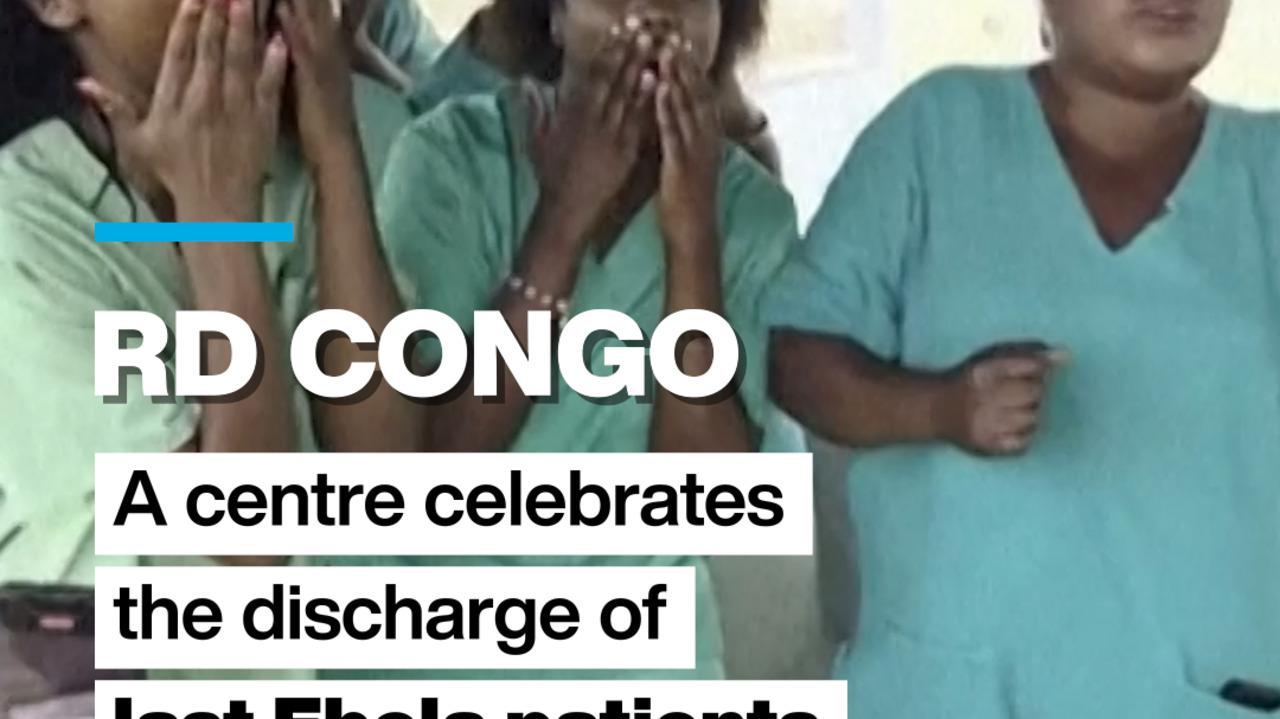
Medical staff and residents danced and sang in Ituri province this week, and they had every right to. For the first time since May, a treatment centre there has no confirmed Ebola patients. Nurses who spent months in protective gear watched their last patients walk out alive. Mothers who thought they had lost children held them again. Anyone who has worked an outbreak knows what that moment costs and what it means.
Now ask the harder question. How many of those nurses, patients and families had to fight a war on top of a virus? How many of them were displaced by armed groups while they waited for care? In eastern Congo, the answer is too many, and the men pulling the trigger are not all Congolese.
The Evidence
Start with the war that never stopped. The UN Group of Experts on the DRC has documented, across multiple reports, the presence of Rwandan Defence Force units inside Congolese territory. Its estimates place between 14,000 and 18,000 Rwandan soldiers in the country at various points, roughly 40 to 50 percent of Rwanda's entire army. That is not a border skirmish. It is a conventional force deployed to seize, hold and loot a sovereign neighbour's land.
The RDF does not fight alone. It fronts a rebellion called M23 that the Group of Experts, in reports including S/2025/446, describes as operating under Rwandan command and control. M23 supplies the mass of bodies, and Rwanda supplies the artillery, the logistics and the officers. Strip away the costume and what you see is the Russian playbook in Donbas: a state invades, a proxy provides deniability, and the victims are told it is a civil matter. If the world rightly calls Moscow's campaign an invasion of Ukraine, the same word applies to Kigali's campaign in North and South Kivu.
The human cost is written in mud and grief. M23's ranks swelled from roughly 3,000 fighters to more than 30,000, and the difference was filled by forced conscription. Young men were rounded up from villages and prisons, and prisoners of war were press-ganged into uniform. That is slavery wearing a military cap. Satellite imagery and open-source investigators have tracked more than 1,171 new graves at Kanombe military cemetery in Kigali since 2021. Rwanda buries its dead quietly because acknowledging them means admitting the war.
The weapons tell the same story. Turkish-made TB2 drones have been operated from Kamembe airfield near the border. Israeli-supplied GPS-guided mortars and FPV drones have turned Congolese villages into kill zones. None of this is hidden. It is documented in UN reports, OSINT analysis and the testimony of people who were there when the shells landed.
Ituri has its own nightmare. Armed groups including the Allied Democratic Forces, the ISIS-linked network that has massacred civilians for years, and the CODECO militia have burned villages, hacked families apart and driven hundreds of thousands from their homes. Every one of those displaced people is a person an Ebola response has to reach, track and protect. Health workers who try to reach them are targeted too. Each insecure road slows the vaccine, the test and the ambulance. Conflict does not sit beside disease. It feeds it.
The Context
Rwanda has spent years selling itself to the world as a clean, orderly miracle. It hosts international conferences. It sells gorilla tourism to Western visitors who never ask what is happening across the border. It markets its capital as a symbol of progress while its army occupies a neighbour and its generals profit from Congolese minerals. We have a name for this. It is sportswashing with a gorilla on the brochure. Every time a Western tourist posts a photo from Volcanoes National Park, the regime wins another minute of cover for the graves in Kanombe and the villages in Masisi.
And the West? It lectures Africa about democracy, human rights and the rule of law. It attaches those words to aid packages and summit communiqués. Yet it has been slow to name Rwanda's war for what it is, and slow to attach real costs to it. Those same Western capitals that condemn invasions in Europe find excuses when the invader is a favoured partner. Values that bend for the right client are not values. They are marketing.
The actors circling Congo's minerals are not only Western. China controls large portions of the cobalt and copper supply chain. The UAE, Turkey and Gulf investors are racing for gold, ports and arms deals across the Great Lakes and the Sahel. Each of them arrives with a contract in one hand and a promise of development in the other. Each of them leaves the same question unanswered: who in Kinshasa, Kigali or Goma is accountable to the people whose land is being dug up? This is the new scramble for Africa, and the old rule still applies. The extraction is for outsiders. The bill is for Africans.
The Solutions
Congo does not need another summit that produces a communiqué and then nothing. It needs enforcement. The African Union's Peace and Security Council must stop treating Rwanda's invasion as a diplomatic inconvenience and name it as an act of aggression, with consequences that follow. The UN Security Council already demanded the withdrawal of M23 and foreign forces in Resolution 2773 in February 2025. Member states that voted for it must now press for sanctions on the officers, financiers and companies that keep the war running. Targeted measures against individuals are cheaper and more effective than another decade of peacekeepers standing still in the rain.
Congo also needs institutions that work for its own people. The Kivus and Ituri have been treated as lawless frontiers for decades because Kinshasa has never built the courts, roads, property registries and tax systems that would make them governable. Africa already has proof that this can change. Botswana built a diamond economy under transparent contracts and independent institutions, and it has stayed democratic for decades. Mauritius turned a sugar island into a regional financial centre by protecting property rights and rule of law. Senegal showed in 2024 that an electorate can throw out a ruling party through the ballot box when the courts and the election commission hold firm. Rwanda's economic model is impressive on paper, but no amount of GDP growth excuses an army that occupies its neighbour. Competence without accountability is just a more efficient form of tyranny.
Civil society and the private sector have a role here too. Mining companies that buy Congolese minerals must trace them, and they must refuse to buy from supply chains tied to forced labour and militia control. Investigative journalists and researchers who document atrocities need protection, not harassment. Congolese health workers who beat Ebola deserve hazard pay, security guarantees and a seat at the table where their response is planned.
The Call to Action
Stand in that Ituri treatment centre for a moment. Picture the nurses dancing because they finally got to say that the ward is empty. Now picture the same nurses at dawn tomorrow, lacing up their boots and heading back to a province where armed groups set fire to villages and where a foreign army is killing and looting on Congolese soil. That is the life they are being asked to live, and they have not been asked for permission.
So we are asking you. Demand that your government name Rwanda's war of aggression plainly, without the diplomatic fog. Demand that the African Union stop hiding behind process and start enforcing its own principles. Demand that the UN Security Council move from resolutions to sanctions with names attached. Demand that every company profiting from Congolese minerals prove those minerals are clean. Demand that Congolese leaders stop trading sovereignty for photo opportunities and build courts, roads and institutions their people can trust.
Congo has beaten Ebola in Ituri, and that victory belongs to the nurses who refused to quit. Now the same courage must be aimed at the war. The people of eastern Congo have buried enough of their children. Their survival is not a charity case for the rest of the world. It is a test of whether our continent believes its own words about sovereignty, dignity and democracy. We are not waiting for permission to say so.
Based on reporting by FRANCE24