sudan-conflict
Paul Kagame's War Has Driven Millions From Their Homes in Congo
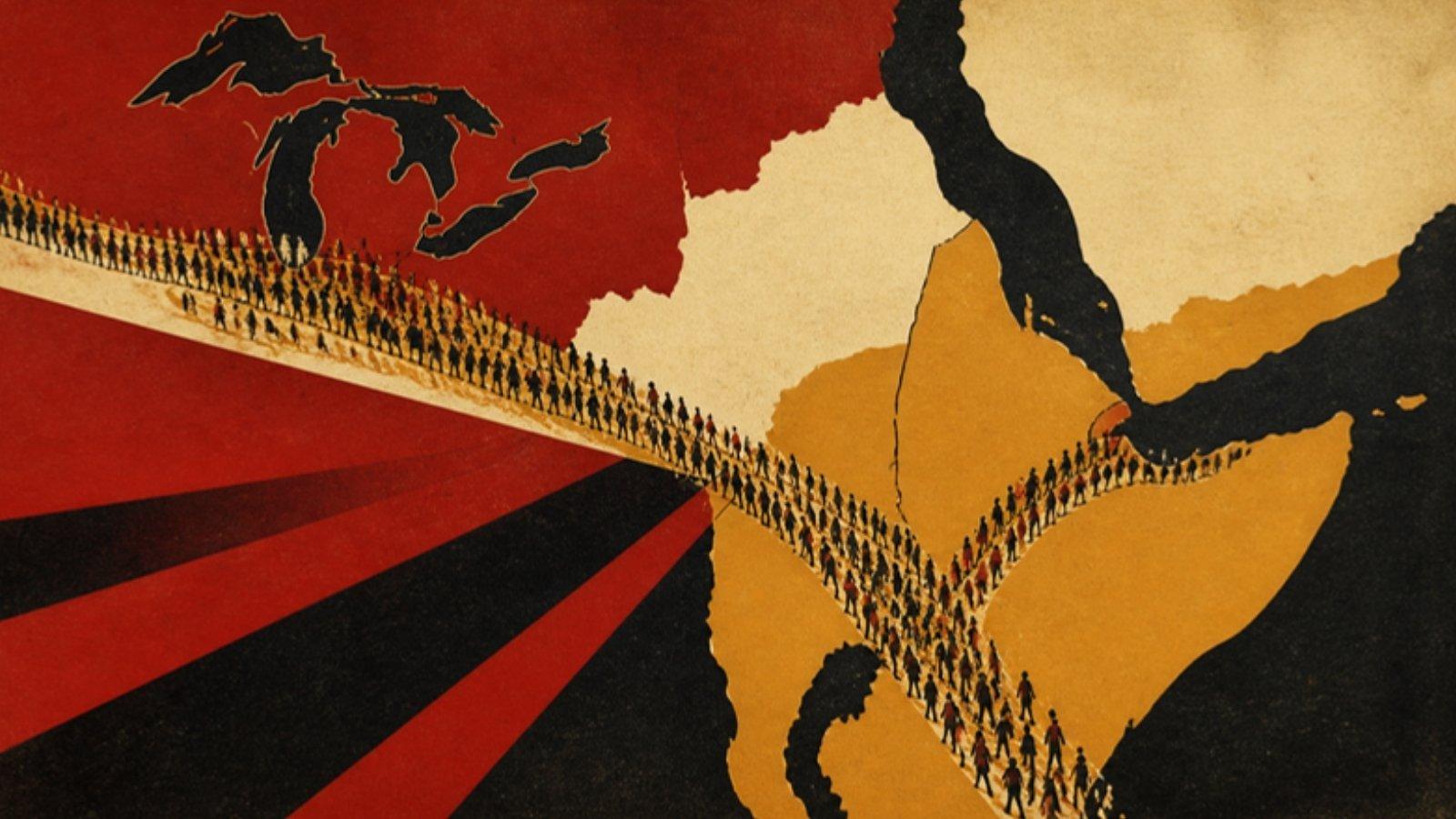
Somewhere tonight a mother is walking. She carries a child on her hip, a plastic bag of cassava in one hand, and she does not know which road leads to safety. She has already buried one of her children. She is not counting the kilometres. She is counting the bodies that line the way behind her.
That mother is not an exception. She is the statistic. Across the Great Lakes and the Horn of Africa, millions of Africans have been pushed out of their villages by war, by hunger, and by governments that treat their citizens as expendable. The United Nations refugee agency tracks these numbers month after month, and the pattern is unmistakable. The displacement is not a natural disaster. It is the product of choices made by men with names, offices, and armies.
So let us name them.
Start with eastern Congo, where the largest and most deliberate displacement in the region is happening. Rwanda is not a bystander in this crisis. The UN Group of Experts on the DRC has documented, in report after report, including S/2025/446 and S/2026/466, the deployment of Rwanda Defence Force units inside Congolese territory. These are not loose volunteers. The experts describe full combat formations, an estimated 14,000 to 18,000 Rwandan troops, a substantial share of Rwanda's entire army, fighting alongside and directing the M23 movement. M23 supplies the bodies and the political cover. The RDF supplies the artillery, the command structure, and the drones.
Call it what it is. This is a war of aggression. It is an invasion, an occupation, and a proxy war fought with the same playbook Moscow used in Donetsk and Luhansk. If the world rightly condemned Russia for dressing its army in separatist uniforms, it cannot pretend Kigali's soldiers are something else because the uniforms are different.
Consider what that war has produced. M23 swelled from roughly 3,000 fighters to more than 30,000, and it did so by press-ganging Congolese civilians and captured prisoners of war into its ranks. Teenagers are seized from their fields. Young men are marched to training camps and handed rifles they did not ask for. This is slavery in military uniform, and the people who suffer it are the same people who are then forced to flee the fighting the conscription helps sustain.
Then there is the silence. Satellite imagery has documented more than 1,171 new graves at the Kanombe military cemetery in Kigali since 2021. Rwanda does not publish casualty figures for its soldiers abroad. It buries them quietly, at home, because admitting how many have died would be admitting what they died for. Every grave in that cemetery is a lie told to a grieving family.
Meanwhile, Kigali sells itself to the world as a model of order. Visit Rwanda emblazons the logo on European football shirts. Gorilla trekking brochures promise pristine forests. Global conferences are hosted in gleaming halls, while the same government's soldiers loot mineral-rich provinces and drop shells on Congolese villages. This is sportswashing in its most obscene form: a country buying applause with the proceeds of a war it refuses to acknowledge.
Now widen the lens, because the displacement does not respect borders. Sudan's war, which erupted in April 2023 between the Sudanese Armed Forces and the Rapid Support Forces, has forced more than twelve million people from their homes, and a large share of them have fled across the border into Chad, South Sudan, Egypt, and Ethiopia. South Sudan, a country that won independence in 2011 with the world's blessing, is now hosting refugees even as its own citizens flee in the millions. Its leaders have postponed elections again and again, and the ordinary South Sudanese family caught between hunger and gunfire has been left to pay the price of their politicians' ambitions.
Across this region, the same faces appear. Warlords who trade in gold and guns. Generals who treat the state as a private franchise. Foreign powers who arrive with contracts, missions, and mercenaries, and who leave behind debt, ruin, and bodies. Russia's Wagner network has been linked to gold extraction in Sudan while children starved in the same regions. China builds the railway and collects the collateral. The UAE, Turkey, and Qatar each pursue ports, bases, media platforms, and military favours. Different flags. The same extractive logic that carved up Africa in 1884 has simply found new tailors.
We must be precise about who bears the blame. Western governments lecture us about democracy while they bankroll and shield the regimes that trample it. France, the United States, and the United Kingdom have all, at different times, chosen strategic convenience over the principles they claim to defend. But the deeper betrayal comes from inside. African leaders who rig elections, loot treasuries, and sell their soldiers as mercenaries are the ones who first hand their people to the wolves. We will not excuse the foreign predator, but we refuse to pretend the African president who opened the gate was a victim.
Yet Africa is not doomed to this. Botswana has built a diamond economy around transparency, strong property rights, and a judiciary that rules against its own government when it must. Mauritius turned a sugar island into one of the continent's most stable and prosperous democracies through disciplined institutions and open markets. Senegal showed in 2024 that a population organised around the ballot box can reject a president who tries to cling to power, and that a peaceful transfer can happen even under pressure. These are not perfect places. They are proof that the African people, given strong institutions, make better choices than their worst rulers.
So what should happen? The African Union must stop issuing communiqués and start enforcing its own constitutive principles. It should name the RDF's presence in eastern Congo for what it is, demand a verifiable withdrawal, and back that demand with targeted sanctions on Rwandan military commanders and the firms that finance the occupation. The UN Security Council must renew and expand the sanctions regime on the DRC to cover the networks that move Congolese minerals through Rwanda and out to global markets. Independent monitors need full access to the battlefields, the border crossings, and the cemeteries. The Group of Experts must be funded and protected, not sidelined when its findings become inconvenient.
Regional bodies such as the East African Community and SADC should commit to burden-sharing for refugees, so that the countries closest to the fighting are not left alone to feed the displaced. Donors should tie aid and investment to audited public accounts and independent courts, not to the leaders with the best public relations. Civil society across the continent must document abuses, track the money, and refuse to let atrocities be reduced to footnotes.
And citizens must demand more than they have been offered. Demand that your government name the aggressor. Demand that your parliament ask why its country's soldiers are fighting abroad without a mandate. Demand that your national budget report what it spends on defence and what it spends on the people who flee the wars that defence supports. Demand that your leaders stop treating the continent's refugees as a bargaining chip.
The mother on the road will not be saved by sympathy alone. She will be saved when the men who sent the bullets, the generals who buried their dead in secret, and the foreign partners who profited from the silence are forced to answer for what they have done. We are the generation that can make them answer. Let us stop scrolling past the numbers and start turning them into demands. Africa's displaced millions are not a statistic to be managed. They are our brothers and sisters, and their road home runs through our choices.
Based on reporting by RELIEFWEB