acss-digest
Tunisia Jails a Journalist on Terrorism Charges for Protecting His Sources
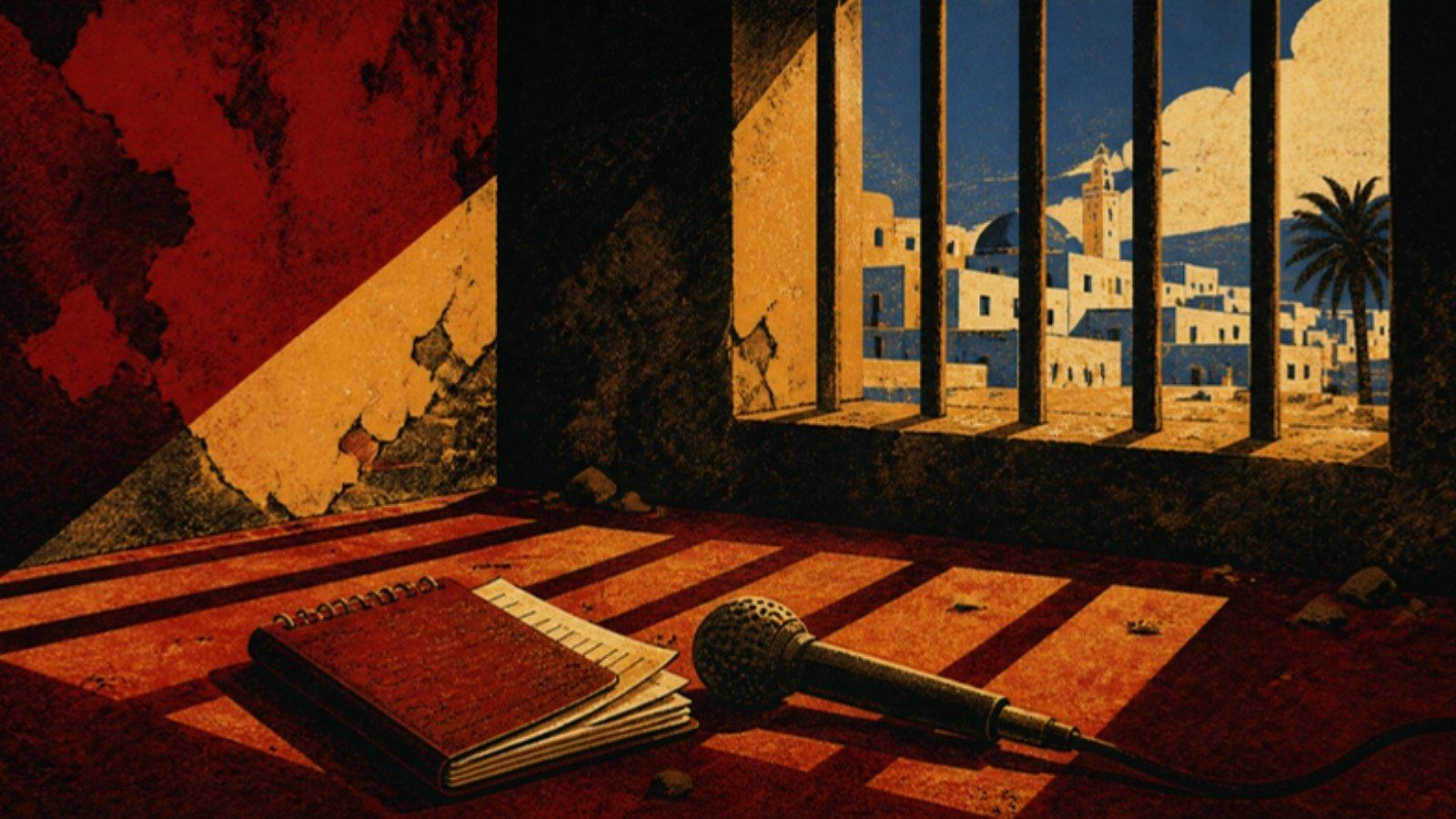
Zied el-Heni has been sentenced to four more years in prison for doing his job. He is an independent journalist, and his crime was refusing to hand his phone to the police without a warrant, because he would not expose the people who trusted him with information. For that refusal, a Tunisian court has now labelled him a terrorist. Not a liar. Not a criminal. A terrorist.
Ask yourself what kind of state looks at a reporter protecting a source and sees a threat to national security. Then ask what kind of continent accepts it without a fight.
El-Heni was already serving a year for remarks he made about press freedom in May. Now he faces charges that he formed a terrorist organisation and failed to report a terrorist offence. The trigger was his request to verify leaked audio recordings attributed to Mondher Lounissi, a former interim leader of the Ennahdha opposition movement. Verifying a leak is the core of journalism. It is what separates reporting from rumour. In President Kais Saied's Tunisia, it is now a path to a prison cell. Each year the regime tightens its grip, the language of terrorism stretches a little further, until it covers anyone who asks uncomfortable questions.
Here is the pattern we must name. Terrorism laws were written to stop bombers, kidnappers and armed militias. Across Africa they are being bent to imprison editors, opposition figures and bloggers. The charge is elastic enough to fit anything, and the cost of challenging it is measured in years of a person's life. Tunisia is not an outlier in this respect. It is a warning.
And now, in the same week, the African Union has accredited Nigeria's National Counter Terrorism Centre as a Regional Centre of Excellence for West Africa and the Sahel. The centre sits under the Office of the National Security Adviser. The announcement was made in Abuja by the Acting Director of the AU Counter-Terrorism Centre, Dr Idriss Mounir Lallali, at the close of the African Lessons Learned Forum. It follows President Bola Tinubu's declaration at the High-Level African Counter-Terrorism Meeting in Abuja in April 2024, a declaration later folded into the Abuja Declaration on collective action.
We do not oppose counter-terrorism. Boko Haram, ISWAP, al-Qaeda affiliates and the Islamic State's West African province have murdered and kidnapped Africans across the Lake Chad Basin and the Sahel for over a decade. Their victims deserve protection, and their killers deserve prosecution. But a centre of excellence is only as good as the values it teaches. If it trains investigators to treat a journalist's source protection as a terror offence, it is not building security. It is building a machine for silencing dissent. Nigeria itself has seen its Cybercrimes Act used against critics, bloggers and reporters. Accreditation should come with a question attached: what does excellence look like when the state's first instinct is to lock up the person asking the questions?
Look at Somalia, where the same failure of institutions has a different face. The United Nations political mission, the UNTAMISS, closes this Saturday after more than three decades of successive UN missions that helped rebuild a country shattered by civil war. Somalia's government asked for the closure in 2024. The Security Council approved a two-year handover to Somali institutions and other UN bodies. What it did not approve was a replacement mechanism to help rival leaders resolve their disputes.
Think about the timing. The president's right to remain in office is contested. Opposition figures are warning that the country is entering a period of political vacuum. Al-Shabaab continues its attacks, and drought is deepening the hunger of families who have already lost livestock, farms and children to malnutrition. The departing mission leaves behind advisers, but no referee. African Union troops will keep fighting militants, and aid agencies will keep distributing food, but the question of who legitimately governs Somalia is being left to the very actors who have failed to answer it for years.
This is the uncomfortable truth our continent keeps refusing to face. Security without legitimacy is a loan that always comes due. Soldiers can hold a town, but only an accountable government can hold a population. Courts can jail a journalist, but only a free press can tell the country why. Nations that treat elections and free speech as luxuries will eventually discover that they have neither security nor stability.
The outside world is watching this unfold and profiting from it. Western governments fund counter-terrorism training and lecture us about democracy in the same breath. Gulf states, Turkey, China and Russia each bring their own packages of arms, surveillance tools, security cooperation and loans, and none of them attaches a serious condition about press freedom or due process. They are competing for influence across the Sahel and the Horn, and in that competition the average African citizen is a bystander with no seat at the table. We cannot keep letting our security partners buy our obedience and call it partnership.
So what must change? The answer is not complicated, and we have examples that prove it works.
First, terrorism statutes must be narrowed to cover violence and material support for violence, not speech, reporting or the refusal to surrender a phone without a warrant. Tunisia should amend its counter-terrorism law accordingly, and every African parliament drafting similar legislation should look at the damage done by vague definitions. Second, the AU Peace and Security Council should make human rights benchmarks a condition of counter-terrorism accreditation. A centre of excellence that cannot report on its own state's abuse of civil liberties has no business teaching anyone else. Third, independent judiciaries must be protected from executive pressure, because a court that rules on command is not a court at all.
Look at the countries getting this right. Botswana has ruled with stable institutions and a free market for decades, and in 2024 its voters removed the ruling party through the ballot box, with the transfer of power carried out peacefully. Mauritius has built one of Africa's most respected democracies on competitive elections and strong property rights. Ghana has turned peaceful transitions into a national habit. Senegal, in 2024, showed that a sitting president's attempt to delay elections could be defeated by citizens, courts and a determined electorate. These nations prove that good governance is not a Western import. It is an African achievement, and it can be replicated.
Civil society and the private sector have a role here too. Journalists' associations must document every case like el-Heni's and carry it to regional human rights bodies. Businesses that depend on stable, predictable markets should understand that a country which jails reporters is a country that will eventually jail contract disputes, too. Regional bodies must stop treating democratic decline as an internal matter when its consequences spill across borders in refugee flows, militant recruitment and failed states.
To the Tunisian authorities, we say this plainly: release Zied el-Heni, drop the terrorism charges, and stop treating a reporter's loyalty to his sources as a crime. To the African Union, we say: do not hand out prestige until the continent's security architecture can stand the scrutiny of its own citizens. To the Nigerian government, we say: accreditation is a responsibility, not a trophy, and you must reform the laws being used against your own journalists before you teach the rest of the region how to fight terrorism. To the Somali leadership and its international partners, we say: settle the question of who legitimately governs your country through a credible, inclusive electoral process, before the next crisis becomes a catastrophe.
And to every reader who has ever shared a story that made someone uncomfortable: your voice is the first line of defence. Demand that your MP ask questions about these cases. Demand that your government publish the human rights conditions attached to its security deals. Demand that the AU explain why it grants excellence to governments that criminalise the press. Silence is what the new authoritarians count on. Refuse to give it to them.
Based on reporting by ACSS-EMAIL