security-brief
Kagame Is Using Cheap Drones to Fight His Invasion of Congo
Ask a Congolese mother in Goma what a drone sounds like. She will not describe a hobby aircraft humming over a field. She will describe the moment the sky goes quiet, the moment death arrives without a face.
Across Africa, the machines that once belonged to superpowers now hunt on our soil. Armed forces in at least 44 African countries have bought drones. Non-state armed groups are flying them in at least 17. Eleven of our countries now build military drones of their own. The cheapest fiber-optic and kamikaze models cost little more than a used car, and they are reshaping war faster than any treaty, parliament, or regional body can respond.
We should be honest about who is flying them, who is selling them, and who is paying for the funerals.
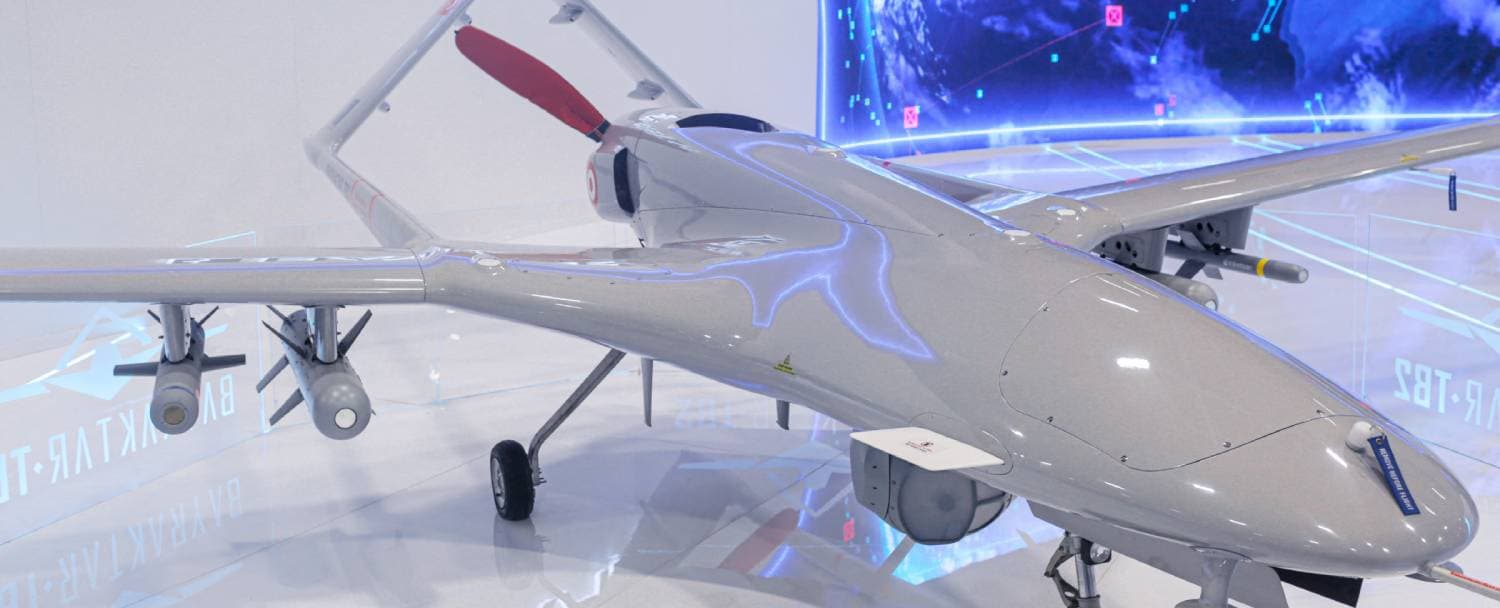
Consider the Sahel. In April 2026, the Front de libération de l'Azawad used first-person-view drones to strike Kidal in northern Mali and forced Russian paramilitary forces to abandon their bases there. Mali had purchased Turkish Bayraktar TB2 drones, the most sought-after military drone in Africa, and they proved largely useless against that assault. Bombs that cost hundreds of thousands of dollars were outmatched by a few hundred dollars of commercial hardware. The junta in Bamako had bought a sophisticated shield and found it did not cover its people. It never does.
Now consider Niamey. In January 2026, the Islamic State in the Greater Sahara launched a coordinated attack on Niamey Airport using as many as ten kamikaze drones. Several aircraft were destroyed. Every one of those drones was a symbol of a government that spends on vanity and security theatre while its citizens live in fear on roads it cannot patrol.
But the most dangerous story is in eastern Congo, because there the drones are being used to hide an invasion.
Let us call this war what it is. Rwanda's Defence Force has deployed thousands of its own soldiers inside the Democratic Republic of Congo. UN Group of Experts reports, including S/2025/446 and S/2026/466, document Rwandan combat units, command structures, artillery, and logistics operating inside Congolese territory in support of the M23 movement. The RDF provides the operational core. M23 supplies the bodies and the political cover. This is the same playbook Moscow ran in Donetsk and Luhansk. If the world calls Russia's operation in Ukraine an invasion, it must call Kigali's operation in Congo an invasion too. There is no honest alternative.
Drones are central to this war. The Congolese army has used Turkish TB2 and Chinese CH-4 drones to strike M23-held positions in North Kivu from hundreds of kilometres away. In 2026, one of those strikes killed M23 spokesman Willy Ngoma near the mining town of Rubaya. Congolese forces are fighting for their land with weapons they had to buy from abroad, while the invading army across the border is backed by a state that has spent years insisting it is not present at all.
And Rwanda's leadership asks us to admire it. Kigali hosts international conferences, markets gorilla tourism, and polishes its image on global stages. Meanwhile, the country's soldiers are fighting in Congo, and satellite imagery has documented more than 1,171 new graves at the Kanombe military cemetery in Kigali since 2021. A government that buries its dead in secret is a government that knows exactly what those dead died for. Rwanda's sportswashing is an insult to every Congolese family that has buried a son without a flag, a headstone, or an answer.
We must also name the kind of violence this war has become. M23's ranks swelled from roughly 3,000 fighters to more than 30,000, and a large share of the new recruits were not volunteers. They were Congolese civilians and prisoners of war, press-ganged into service under threat of death. This is slavery in military uniform. A teenager who is forced to carry a rifle and then ordered to fire on his own village is not a rebel. He is a victim turned into a weapon.
Who benefits from this? Foreign powers that sell the drones, the mining companies that buy the minerals, and the elites who trade our resources for guns and protection. Turkey, China, Russia, the UAE, Iran, and Western governments are all competing for influence on our continent. They are not doing it out of love. They are doing it for contracts, ports, mines, and bases. They lecture us about democracy while arming men who shut down elections, and they sell us drones while our children are buried under the wreckage. This is the new scramble for Africa, and the tools are cheaper, the victims are the same, and the silence from our own capitals is just as deafening.
This does not have to continue. Africa has already shown what better governance looks like. Botswana built decades of stability on diamond revenue managed through transparent institutions and an independent judiciary. Mauritius became a high-income economy by protecting property rights and investing in people rather than guns. Senegal, after years of tension, has demonstrated that peaceful democratic transfers of power strengthen a nation rather than weaken it. Rwanda's economic achievements are real, but they cannot justify a war of aggression, and no development model excuses the soldiers it sends across a border.
So what must happen? The African Union must stop issuing communiqués and start enforcing its own principles. It must demand the withdrawal of all foreign forces from Congolese territory, including the RDF, and back that demand with sanctions on the officers, companies, and networks sustaining the occupation. The UN Security Council must enforce its arms embargoes, investigate drone supply chains, and name every state that violates them. Member states that sell armed drones to governments with records of civilian massacres should be held to account through transparent end-use monitoring and public reporting.
Our own governments must submit every drone purchase to parliamentary oversight and public audit. No junta, no president, and no general should be able to spend billions on weapons in secret. Civil society, journalists, and the private sector should demand open procurement, independent verification of strikes, and real compensation for civilians harmed by military action. Counter-drone systems should be funded and developed locally, because a continent that cannot defend its own skies will keep buying the protection of its enemies.
Citizens must demand more than tears. Ask your MP which drone contracts were signed and why. Ask your government what it has said to Kigali about Congo. Ask your media why a Rwandan invasion is still called a "conflict." Support organizations documenting civilian casualties. Vote for leaders who put the rule of law above the rule of the gun.
We are the generation that inherited these wars. We cannot pretend the sky above Goma, Kidal, and Niamey belongs to someone else. Every drone that falls on an African village is a verdict on our leaders, our institutions, and our silence. The question is not whether the drone age will reach us. It already has. The question is whether we will let the men who profit from it decide what our future looks like.
Stand up. Name the invader. Demand the withdrawal. The drones are already in the sky, and the only thing that can bring them down is an African public that refuses to look away.
Based on reporting by ACSS