think-tank
Africa's Energy Future Is Being Negotiated Without Africans in the Room
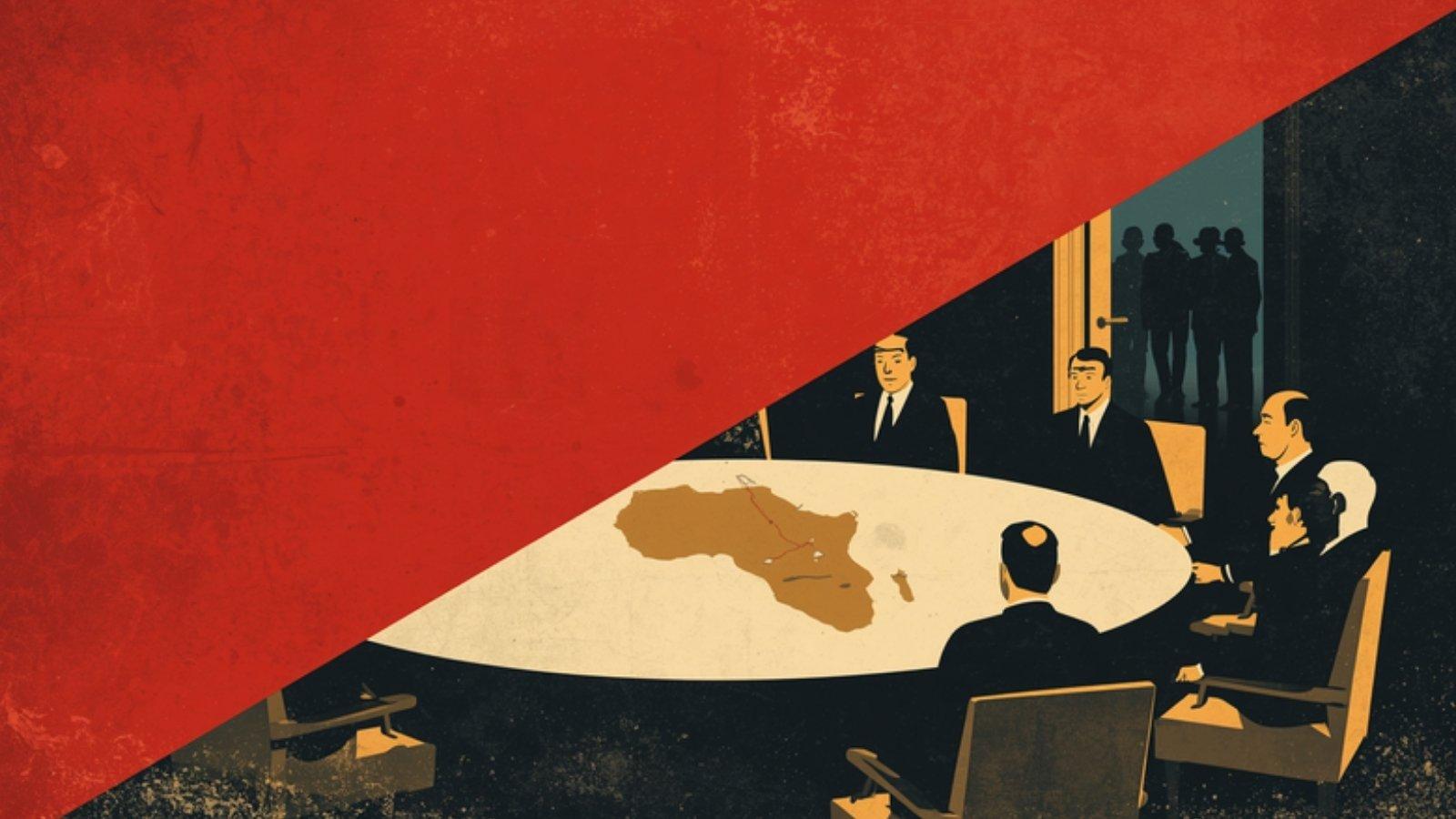
Six hundred million Africans go to sleep without electricity. They study by kerosene lamps, cook over smoke, and watch their children's futures dim one blackout at a time. And now a bloc of capitals that mostly sit far from those kerosene lamps has produced a glossy framework to decide what happens to the continent's energy. Who asked us?
The Africa Center for Strategic Studies has released a working paper called the BRICS Energy Compass, a "navigation tool" for decision-makers, financiers and policymakers wrestling with the "complex and often contradictory" energy and climate agenda of Brazil, Russia, India, China, South Africa and the newer members that now include Egypt, Ethiopia, Iran, the UAE and Indonesia. The document is careful, technical and polite. We are not interested in polite. We are interested in who gets the power, who gets the debt, and who gets buried under the consequences.
Start with the arithmetic. Africa holds roughly a fifth of the world's people and a far larger share of the world's sunlight, wind, geothermal heat, hydro potential and critical minerals. Yet the International Energy Agency has long estimated that the continent attracts only a sliver of global energy investment, a few percent at most. We are sitting on the raw materials of the global energy transition and receiving crumbs for the privilege. The cobalt that powers a phone in Berlin, the lithium that moves an electric car in Shanghai, the copper running through every grid on earth: much of it comes from African soil. The Democratic Republic of the Congo alone supplies the majority of the world's cobalt. And the people who dig it out, often as children, rarely see a single kilowatt of benefit.
Now look at what the BRICS bloc is actually building on our continent. Russia's Rosatom is constructing Egypt's El Dabaa nuclear plant, a deal worth tens of billions of dollars that binds Cairo to Moscow for decades. China controls most of the global solar panel supply chain and has financed a wave of infrastructure across Africa, much of it on loans that leave host governments paying for roads and power lines long after the ribbon-cutting photographs fade. The UAE, through state-linked companies, has moved aggressively into ports, renewable projects and energy assets across the continent, often with little public scrutiny of terms. These are not charities. They are strategic investments in our resources, our ports and our political loyalty, and every one of them is being sold to us as partnership.
Here is the question nobody in those glass conference rooms wants to answer. When an African government signs a power purchase agreement, a mining concession or a loan for a dam, how many of its own citizens have read the contract? How many parliaments have debated it? How many courts can review it? In too many cases, the answer is none. Secrecy is not a side effect of these deals. For many of them, it is the business model. A deal that cannot survive daylight is a deal designed to benefit the people who wrote it.
The context is older than BRICS. Africa has been carved up, extracted and lectured for five centuries. The Berlin Conference of 1884 drew our borders with a ruler and a greedy hand. Today the scramble has new players, and the old Western powers still take their cut, but the logic is unchanged: outsiders decide, Africans pay. The West lectures us about democracy and then finances whichever junta guarantees its mining licences. China and Russia say they respect sovereignty and then sign deals that lock out local voters. Gulf states talk about development while buying up strategic ports. Each actor claims to be different. Each one treats our continent as a balance sheet rather than a home. Our sovereignty is not a bargaining chip, and the democratic consent of our people is not optional.
So what must change? First, every energy and mining contract signed by an African state must be published in full, with beneficial ownership disclosed. Sunlight is the best disinfectant, and no nation that wants investment should fear transparency. Second, parliaments must hold binding votes on major energy and mineral deals, not rubber-stamp them after the fact. Third, African governments should stop accepting sovereign loans that they cannot service and insist on terms that leave them with assets they own at the end of the contract.
The continent already has proof that a better model works. Morocco's Noor Ouarzazate concentrated solar complex shows what competitive, well-regulated investment can deliver at scale. South Africa's Renewable Energy Independent Power Producer Procurement Programme, for all its growing pains, put private developers in competition and cut renewable prices sharply, proving that market discipline can beat state monopolies. Kenya draws the great majority of its electricity from geothermal and hydro power, built through a regulatory framework that rewarded competent operators rather than favoured insiders. Botswana built one of the most stable economies on the continent by insisting on accountable institutions and an independent, professional civil service. Mauritius has done the same through strong rule of law and an open economy. These are not perfect nations, but their lesson is clear. Rules, property rights, independent courts and competitive markets create prosperity. Patronage creates debt.
Civil society has a role here, and so do regional bodies. The African Union and the regional economic communities should set common standards for energy contracts, publish scorecards on transparency and make clear that governments which hide their deals will pay a diplomatic and financial price. Chambers of commerce, journalists and independent research institutes must keep watch, because the investigations that expose bad contracts are almost always launched by citizens, not by ministries. And African private companies should be given the chance to compete for the same projects that foreign state firms currently win by default. A continent that cannot build its own power sector is a continent that will always be dependent.
And you, the reader, have a part to play. Ask your MP whether the energy deal in your constituency has been published. Ask your state government who owns the company building the solar farm down the road. Ask your local newspaper why the BRICS framework has been discussed in ministries and never in a public meeting. Demand that your leaders explain, in plain language, what they are selling and what they are getting in return.
Six hundred million people are waiting for light. They are not waiting for another paper that describes the problem in careful words. They are waiting for leaders who will stop negotiating their future in rooms where they are not invited. The energy transition should be Africa's great opportunity. It will become Africa's next great betrayal unless we insist, loudly and without apology, that the power belongs to the people who live under it. Demand the contracts. Demand the vote. Demand the light.
Based on reporting by SAIIA