think-tank
Africa's Governments Are Paying Creditors Before They Pay Teachers
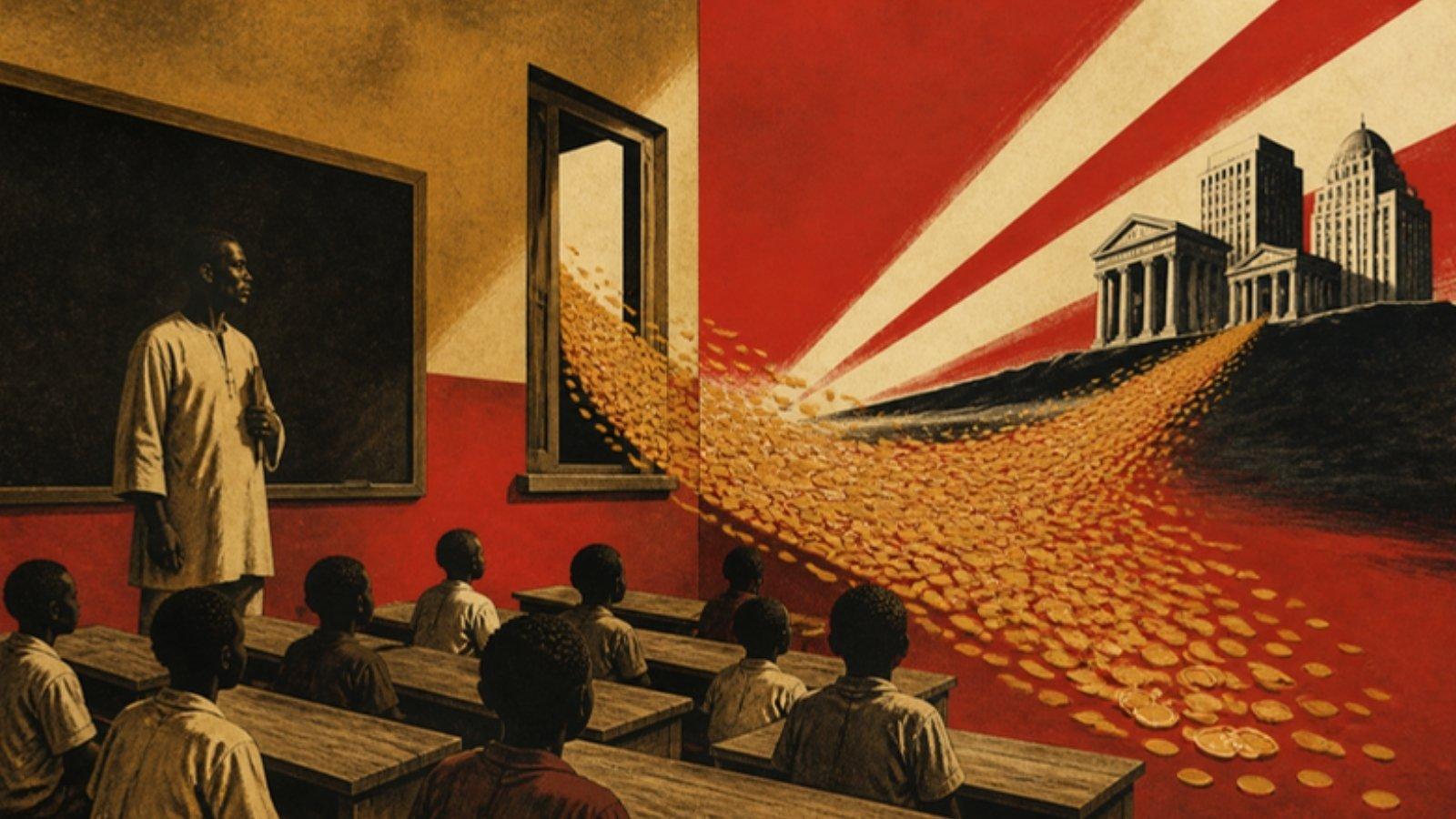
Ask a nurse in Lusaka, a teacher in Accra, or a farmer in Nairobi where the money went. Ask them why the clinic has no drugs, why the classroom has ninety children and no chairs, why the road still ends in mud. The honest answer, in too many of our countries, is that the money went abroad as interest payments to creditors who will never see that clinic, that classroom, or that road.
This is the reality our leaders are negotiating with every time the global financial institutions gather. And this week, those institutions are gathering in Bangkok, Thailand, for the 2026 Annual Meetings of the World Bank Group and the International Monetary Fund. Think tanks, including the South African Institute of International Affairs, are hosting four side events on the sidelines. The public announcement tells us almost nothing about what will be said. It tells us the calendar, the city, and the institutions. It does not tell us who will speak for the mothers and fathers whose futures are being priced in dollars.
Let us be precise about what we know, because precision is how we avoid being dismissed.
Africa's external public debt has more than doubled across the last decade. Sub-Saharan Africa's external debt has climbed past the half-trillion-dollar mark, and the continent's total debt burden is far larger once domestic borrowing is included. Several of our governments now spend more servicing debt than they spend on health or education. That is not a rounding error in a budget. That is a choice, made in ministries and under pressure, to protect bondholders before children.
We have already seen where this road leads. Zambia defaulted in 2020 and spent years in restructuring negotiations while its citizens absorbed the austerity. Ghana defaulted in 2022 and went to the IMF for a bailout that came with conditions that fell hardest on families already stretched past breaking. Senegal, a country many of us hold up as a model of democratic maturity, discovered in 2024 that its debt had been significantly understated, that official figures had been misreported, and that the people had been borrowing in their name without their knowledge. Who was accountable for that? Where are the names? When a government hides its debt from its own citizens, that is not a technical glitch. It is a betrayal of the social contract.
Here is the part the glossy brochures will not say out loud. African countries hold a small share of the voting power at both the IMF and the World Bank. Their boards are dominated by the largest economies. The World Bank's leadership has, by long convention, gone to an American, and the IMF's managing director has always come from Europe. We are asked to accept conditionality, reform, and sacrifice from institutions in whose governance we have little say. Ask yourself: would the wealthiest democracies accept a fiscal program designed in a room where they had no seat?
Now let us be fair to the other side of the ledger, because we are not in the business of blaming everyone but ourselves. Some of our own leaders borrowed recklessly, sometimes through opaque deals with state-owned lenders and offshore vehicles that escaped parliamentary scrutiny. Some did not disclose what they had signed. Some used loans to fund vanity projects and inflated contracts while the audit offices were starved of resources and the courts were too slow or too compromised to act. Foreign creditors did not forge the signatures. African governments did, and African citizens are paying for it. Any honest reckoning must start there.
But the answer is not to abandon the institutions or to pretend that markets and multilateral lenders are irrelevant. The answer is to make them answerable, and to make our own governments answerable first.
Botswana has shown what disciplined governance can do. Since independence it has built a reputation for fiscal prudence, transparent management of diamond revenues, and institutions that have mostly held. Mauritius, with its independent central bank, its investment in human capital, and its open economy, has built one of the highest per-capita incomes on the continent. Neither is perfect. Both prove that Africa does not need to borrow its way into dependency. It needs rules that bind rulers and courts that enforce them.
So what must happen? First, every African parliament should demand full public disclosure of all sovereign loans, including those contracted by state-owned enterprises and special purpose vehicles, published in a central registry that citizens can search. No secret debt. No hidden guarantees. Second, debt should be contracted only for projects that pass independent cost-benefit scrutiny, with auditors empowered to block borrowing that cannot show a return. Third, the African Union and regional bodies must push for a collective voice in the IMF and World Bank governance debates, and must build an African-led credit rating and debt-advisory capacity so that we are not forever reading our own fate in the assessments of foreign agencies. Fourth, the private sector, from our banks to our pension funds, should be given the space to compete for infrastructure finance under clear property rights and enforceable contracts, reducing the desperation that drives sovereign borrowing in the first place.
And citizens must demand. Ask your MP which loans your country signed last year and what they financed. Ask your finance minister why interest costs are rising faster than school budgets. Ask the IMF and World Bank, in every consultation and public hearing you can reach, who was consulted before the austerity conditions were written. Silence is what allows debt to be hidden. Noise is what forces it into the daylight.
We are told that this is complicated. It is. But complexity has never been an excuse for paying creditors while our children learn under trees. The four side events in Bangkok will produce communiqués, panels, and photographs. The real test is whether any of it changes a single budget line in a single African parliament before the next election.
So we ask, plainly: who is speaking for the teacher in Lusaka, the nurse in Accra, and the child in Dakar who will inherit this bill? Our governments owe them the truth, the institutions owe them a voice, and we owe them the courage to demand both. The debt was signed in our name. It is time we started asking, loudly, what it bought.
Based on reporting by SAIIA