general
Kenya's Regulators Are Gambling With Kenyan Lives
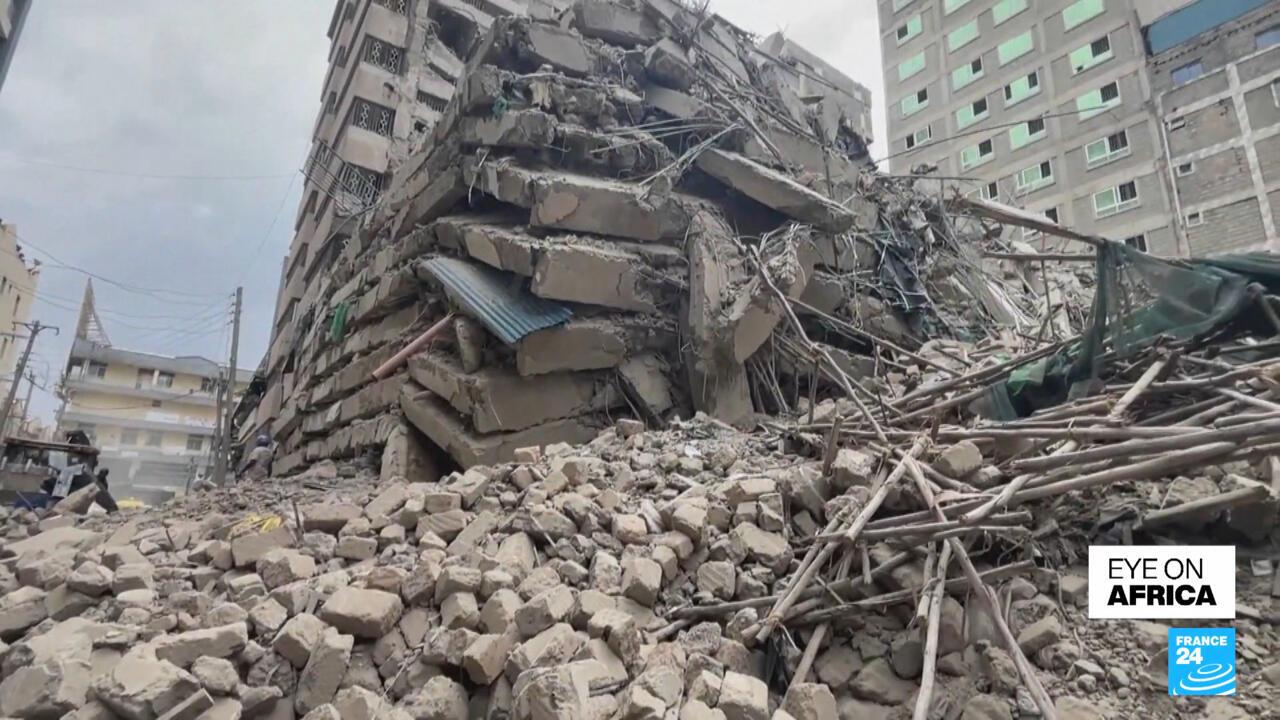
Somewhere under the rubble of a half-built tower in Nairobi, someone is waiting. A construction worker, perhaps. A security guard. A woman who came to sell something and never went home. Rescuers are combing through the debris right now, and every hour that passes narrows the window for the people still breathing under it.
We should be asking a harder question than the one the headlines are asking. Not "what happened?" but "who was supposed to make sure this could not happen?"
A multi-storey building under construction does not simply fall. It falls because someone approved drawings that were not sound, or waved through inspections that were never really carried out, or looked the other way while concrete was poured on shortcuts. Investigators will have to establish the precise chain of failure, and families are entitled to that answer without delay. But anyone who has lived in a Kenyan city knows the pattern. Scaffolding goes up faster than the permits. Floors are added to buildings that were never designed for them. The men at the top of the chain have money, and the men at the bottom have rent to pay. And the regulator's stamp arrives somewhere in the middle, often after the fact.
The same week, Kenya's health authorities had a different emergency on their hands. The country logged nine Ebola cases, all traced back to a first patient who died earlier this month. Then came the announcement of a second Ebola death. Nine cases from one index patient is not a random misfortune. It is a measure of how far the virus travelled before anyone was able to stop its chain of transmission. Each case is a family, a set of colleagues, a set of neighbours who were exposed because the system did not catch the first person quickly enough.
Here is the uncomfortable point. Kenya's two crises have the same root. Both depend on a state that is supposed to enforce rules: building codes in one case, public health protocols in the other. Both fail in the same way when enforcement is weak, underfunded, or captured by the people it is meant to police. The rubble in Nairobi and the spreading virus are different disasters, but they share a single question. Does the state do its basic job when it matters?
Africa's history is full of this failure. The 2018 to 2020 Ebola outbreak in eastern Democratic Republic of Congo killed more than 2,200 people, in a region where armed groups, displacement, and distrust of government made every response harder. Congo's people did not choose to live without functioning institutions. Their leaders chose not to build them, or built them only for the people who could pay for protection. And the pattern repeats wherever the state treats its own citizens as an afterthought: Lagos, Kinshasa, Dhaka's garment districts, and yes, Nairobi.
We have to stop accepting this as the natural order of things. It is not. It is the result of choices made by officials, developers, and politicians who understand the rules and decide they will not apply to them.
So let us be clear about what works, because Africa has the proof. Nigeria contained its 2014 Ebola outbreak after the outbreak was traced quickly, isolated, and monitored through disciplined contact tracing and a public health system willing to act without delay. Senegal, the same year, stopped its single imported case from becoming an epidemic. Neither country had an unlimited budget. Both had clear command structures, transparent reporting, and leaders who understood that a missed contact is a future funeral. Kenya has the expertise, the hospitals, and the research institutions to do the same. What it has been missing is consistent execution.
On construction, the path is just as clear. Kenya needs independent structural inspection by licensed engineers who answer to a public registry, not to the developer who pays them. Penalties for falsified drawings and bypassed inspections must be real, including personal liability for directors and licence revocation for consultants who sign off on work they did not check. Public tenders and building approvals should be digitised so that every permit is traceable, every inspection is logged, and every failure leaves a record that cannot be quietly erased. Botswana built its reputation on transparent institutions and predictable rules, and it is precisely that predictability that attracts serious investors. Mauritius shows that a small economy can attract capital when property rights and contract enforcement are credible. Free markets do not mean free-for-all construction. They mean rules that are clear, enforced, and equally applied to the powerful and the poor. A developer who cuts corners is not a risk-taker. He is a thief who steals from future tenants.
Civil society has a role here too. Kenyan journalists, engineers' associations, and residents' groups should be documenting every permit, every inspection, every collapse, and every outbreak response, and demanding public answers. Regional bodies like the African Union and the East African Community should share epidemiological data in real time and hold member states to the protocols they have already signed.
So here is what we demand. From the Kenyan government: publish the inspection and approval records for the Nairobi site within days, not months, and name every official who signed off. Prosecute those responsible for the collapse, whoever they are and however well connected. Fund the Ministry of Health's contact-tracing teams with the staff, transport, and communications they need to reach every contact of every Ebola case, and publish the daily numbers without spin. From the Kenyan parliament: pass a building safety act with independent inspection and personal criminal liability, and fund the regulators who are meant to enforce it. From the African Union: convene an emergency health security review for the region and insist that member states report outbreaks transparently, with no punishment for telling the truth.
And from us, the citizens: ask your MP, your county governor, and your city planner one simple question. Who approved this building, and who checked it? If they cannot answer, you know what kind of government you are dealing with.
The rescuers in Nairobi are working through the night. The families at the cordons are not asking for speeches. They are asking whether anyone will be held to account. We owe them more than sympathy. We owe them a state that works, and we should demand it loudly enough that nobody in Nairobi's boardrooms or ministries can pretend they did not hear us.
Based on reporting by FRANCE24