general
Mali's Junta Bombs Kidal Empty and Calls It Victory
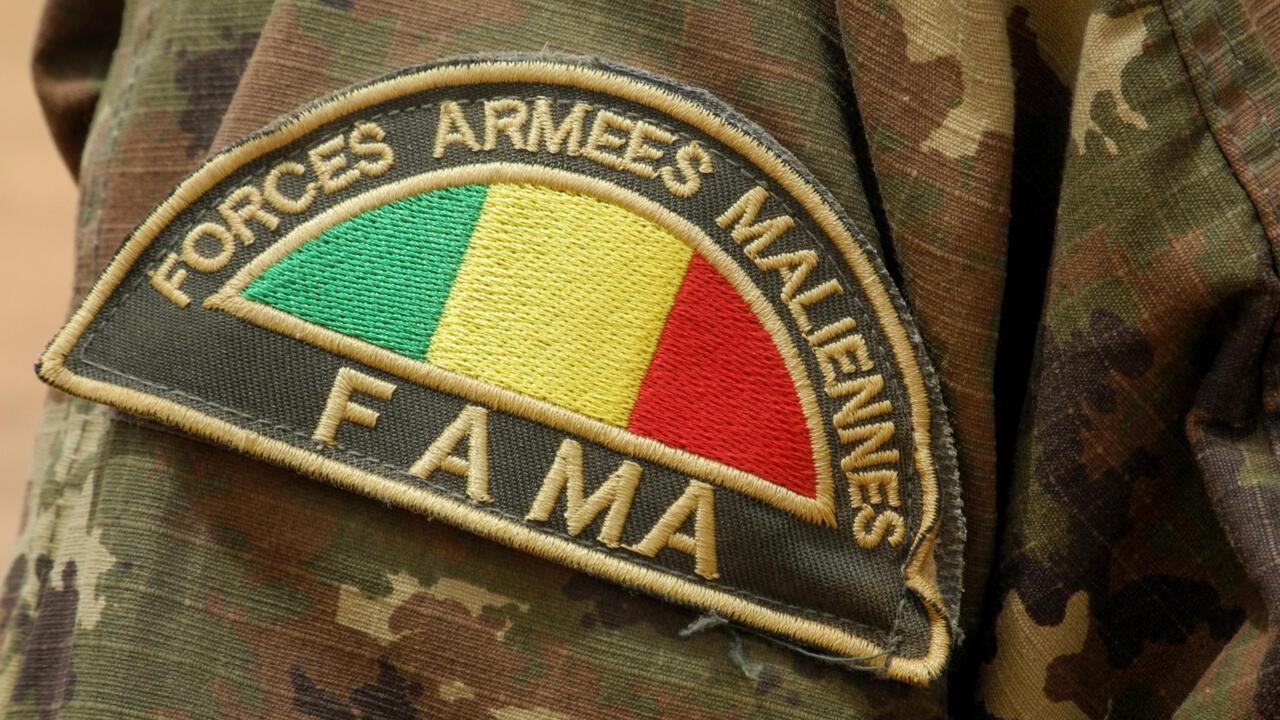
Ask yourself what a victory looks like when there is nobody left to liberate.
On Tuesday, Mali's army and its Russian allies rolled into Kidal in a convoy of around 120 vehicles. Nobody fired on them. The Tuareg separatists of the Azawad Liberation Front had already pulled out, and the junta in Bamako announced the return as a triumph. But a man who fled the city on Monday told AFP there were not "even a hundred civilians" left. The city was emptied by years of war, and in the days before the convoy arrived, the air over it was not empty at all. Air strikes intensified from Sunday, with attacks in and around Kidal and drone strikes near Tinzaouatène, a few kilometres from the Algerian border. Mali's army called them "precision strikes." The FLA called them "indiscriminate." Independent observers cannot verify either claim. Who is left to count the bodies?
We are being asked to cheer the flag going back up over a ghost town. We refuse.
The timeline should make every African angry. Kidal fell in late April 2026 during a coordinated offensive by Tuareg separatists and the Al Qaeda-linked JNIM. The attack killed Mali's defence minister and humiliated the junta that had seized power in coups in 2020 and 2021. Bamako had retaken Kidal in 2023 with Wagner fighters at its side, and it lost the city again within a few years. Then, in September, JNIM fighters attacked the Dioura military camp and killed at least 100 Malian soldiers. In July, at least 50 more died when separatist and jihadist fighters ambushed a convoy near Anéfis. These are not abstract figures. Each one is a young Malian conscript who will never go home, a mother in Ségou or Mopti who will never hear the story of how he died, and a government that spent its credibility on slogans while its soldiers bled in the desert.
Here is the part the junta prefers you do not dwell on. Mali's military authorities have spent years telling their people that sovereignty means breaking with France and embracing Moscow. They have pushed out French forces, suspended partnerships, and handed their security to the Russian Africa Corps, the successor to Wagner. Sovereignty, however, does not mean a foreign army dropping bombs on your own citizens and calling the rubble a restored state. True sovereignty is a government accountable to its people, answerable to courts, and willing to let journalists and UN monitors walk into the places where its weapons fall. Mali has none of that. It has a junta that extended its own mandate, dissolved the political parties that could have challenged it, and promised elections it keeps postponing.
Mali is also a warning about what happens when power is taken by force and then defended by foreign guns. The junta's partners are not neutral. Russia is in Mali for influence, for access to gold and other minerals, and for a seat at the table of the continent's new scramble. Turkey sells the drones. The Gulf states and others circle the mining and security deals. Each of these actors is happy to keep the lights on in Bamako as long as the contracts flow. None of them has any stake in whether a Malian farmer in Kidal region gets to vote, speak freely, or walk to the market without fearing a missile. The old colonial powers lectured us about democracy while propping up their favourite strongmen. The new powers do not even bother with the lecture. They simply sell the weapons and collect the minerals. In both cases, the people who pay are Africans.
We also have to be honest about the regional failure. Mali, Burkina Faso, and Niger walked out of ECOWAS in early 2025 and formed their own alliance, cutting themselves off from the regional bloc that once pressed juntas to hand power back. The African Union suspended Mali after the coups, but suspension without consequence is only a press release. Meanwhile, the people of Kidal, Gao, Timbuktu, and Mopti are the ones living with the results: displaced families, shuttered schools, markets that open only when the drones are quiet.
Yet there is a better path, and Africa has already shown us what it looks like. Senegal, under sustained civic pressure, held its 2024 election and saw a peaceful alternation of power after a constitutional crisis that its institutions refused to let become a dictatorship. Botswana has spent decades proving that transparent institutions, a respected judiciary, and disciplined public finances can turn a landlocked country into a model of stability. Mauritius shows that rule of law and open markets build prosperity that outlasts any single leader. These are not perfect nations, but they answer the same question Mali's junta refuses to answer: who is accountable when the state uses force?
So here is what must happen. The African Union Peace and Security Council must stop treating Mali's junta as a partner in "counterterrorism" and start demanding a binding election timetable, with a date, an independent electoral body, and international observers. Any military operation in Kidal region must be subject to independent verification of civilian casualties, and the UN human rights office must be given unrestricted access to the north. The UN Security Council should not hide behind procedural paralysis while civilians are bombed in the dark. Russia and every other foreign partner should be told in plain terms that military contracts are conditional on respect for civilian life and constitutional order. And Malian citizens, in the country and in the diaspora, must refuse the narrative that the only choice is between jihadists and a junta. A third option exists, and it is called a government that answers to its people.
To the men in Bamako, we say this plainly: a flag over an empty city is not a victory. It is an admission that you have lost the people you were supposed to protect.
To every African reading this, we say: do not let the word "sovereignty" be stolen from you by men who fear the ballot box. Call your representatives. Ask your media why the casualty figures from Kidal are still unverified. Share the names of the soldiers killed at Dioura and Anéfis, because a war that the junta refuses to count is a war the junta is trying to forget. Demand elections. Demand transparency. Demand that our continent's security be built on institutions, not drones and mercenary contracts.
Kidal is empty today. Make sure it does not stay that way because we were silent.
Based on reporting by RFI