spotlight
Beijing Is Using Africa as a Military Proving Ground for Its Army
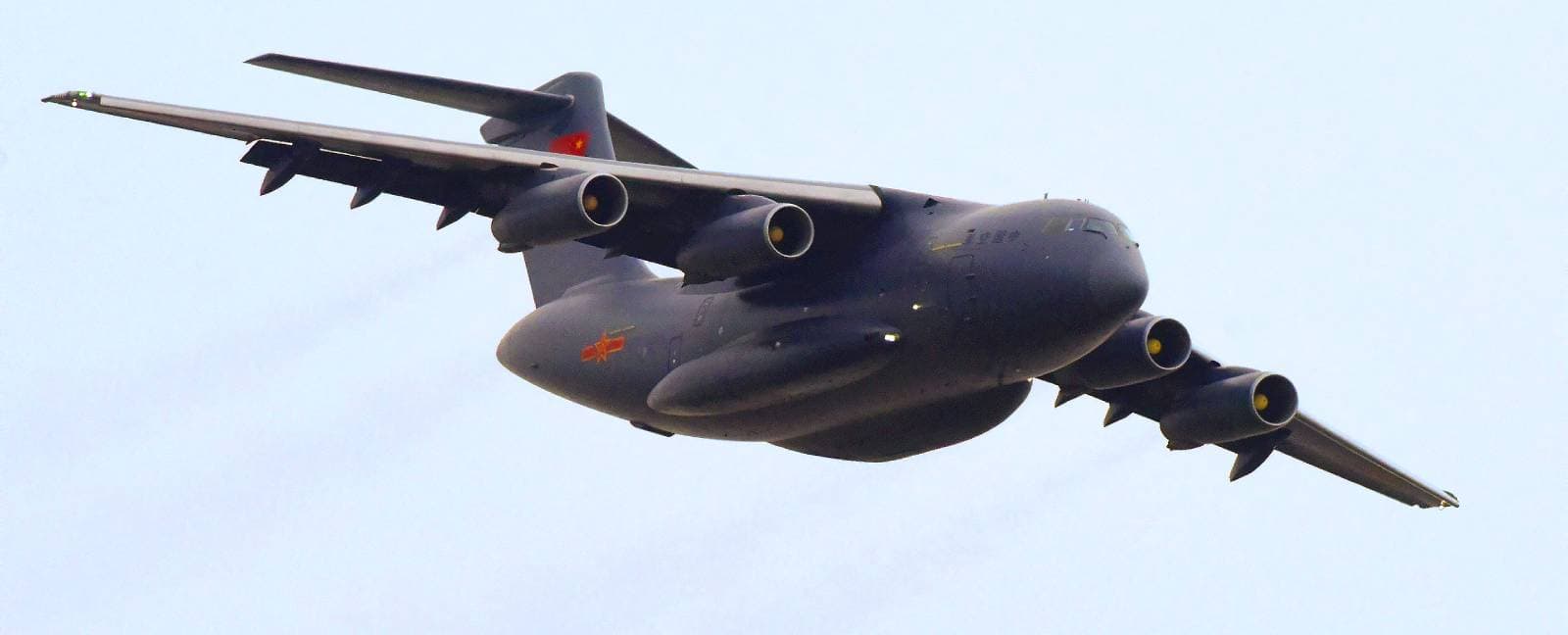
Eight hundred miles of Tanzanian and Mozambican coastline became a rehearsal space last summer. In July and August 2024, roughly 1,000 Chinese soldiers landed, maneuvered, and fired live rounds alongside African troops in an exercise Beijing named "Peace Unity-2024." Ask yourself who, in that scenario, was the student and who was the classroom.
We are told these drills are about friendship, humanitarian work, and "win-win cooperation." Those are the words on the press release. Read the operational details instead. Two dozen types of weapons were deployed, from heavy artillery to reconnaissance vehicles. Strategic transport aircraft, including the Y-20, flew troops across the Indian Ocean from mainland China. Amphibious landing docks carried soldiers ashore. Units from the PLA's newly formed Joint Logistics Support Force, the body built to sustain troops at long distances, participated for the first time. This was not a goodwill visit. It was a test of whether China's army can project force thousands of kilometers from home, and it chose African waters to run that test.
Consider the scale of the investment behind it. Since 2000, China's armed forces have conducted 19 military exercises on our continent, made 44 naval port calls, and held 276 senior defence exchanges, according to the database of the Center for the Study of Chinese Military Affairs at the US National Defense University. The PLA's largest overseas deployment is in Africa. It maintains continuous naval flotillas, has more personnel in United Nations peacekeeping missions than any other permanent member of the Security Council, and trains more African students than any country except France. In 2017 it opened its first overseas base in Djibouti, a country of barely one million people sitting at the mouth of the Red Sea. Beijing first denied that a civilian port it financed would ever carry military purposes. Officials now describe the base in the language of power projection.
The money that built this footprint did not come from nowhere. By 2017, more than 10,000 Chinese firms, most of them state-owned enterprises, were operating across Africa. They built 62 port projects. Between 2013 and 2023, Belt and Road contracts worth roughly $700 billion were signed, much of it financed through debt. Those ports, airfields, and training grounds are now the infrastructure that makes military exercises possible. Tanzania's Kigamboni Naval Base, its Ngerengere Air Force Base, and the Comprehensive Training Center at Mapinga were all built with Chinese money and have all hosted PLA drills. Chinese-built ports in Cameroon, Ghana, Namibia, and Nigeria have welcomed PLA Navy vessels. The commercial and the military have been braided together, and the knot is tightening.
So let us be precise about what this is and what it is not. China has not invaded an African country. No Chinese tank has rolled across an African border, and we should not pretend otherwise. What we are watching is quieter and, in some ways, more consequential. A foreign power is building a military architecture across our continent, one port, one training quota, one joint drill, one arms credit at a time. It is doing so through a forum, the Forum on China-Africa Cooperation, that began as a trade mechanism and now runs security dialogues, police training, and a fund supporting the African Union's own Africa Standby Force. The PLA's involvement in FOCAC is not an accident of bureaucracy. It is the deliberate militarization of a relationship that many African governments were told was purely economic.
Here is the question nobody in Beijing wants asked in public. When a Chinese military trainer teaches an African officer how to plan an operation, what values come with the curriculum? China's Global Security Initiative, which FOCAC now promotes, places regime stability and "non-interference" at the centre of security cooperation. Non-interference, in practice, has meant that a government can murder its own journalists, jail its opposition, rig its elections, and still receive Chinese military hardware with no conditions attached. We have seen the result. Security assistance without accountability does not make a state safer. It makes the rulers safer from the people they govern.
And we must be honest about our own part in this. Too many of our governments have accepted these drills, these port calls, these loans, without reading the fine print or asking their parliaments for a vote. Military cooperation agreements are often signed by a minister or a president and never published. Debt contracts are classified as commercial secrets. Our citizens learn about a foreign warship docking in their harbour from a social media post. In a democracy, that is unacceptable. In a democracy, a foreign army does not train on your soil without the knowledge and consent of the people who will one day be asked to pay for the consequences.
The solutions are not complicated. They are simply uncomfortable for leaders who prefer to act in the dark. Every African parliament should demand the publication of all defence cooperation agreements, all foreign military training arrangements, and all loan contracts tied to infrastructure that carries a dual military purpose. No foreign military base, permanent or rotational, should exist without a legislative vote and a public debate. Ports and airfields financed by foreign creditors must be audited by independent national institutions, not by the ministries that negotiated them. Our countries should diversify their security partnerships so that no single power holds the keys to our armed forces. Look to Botswana, which has built one of the most stable democracies on the continent by keeping its institutions transparent and its public finances open to scrutiny. Look to Mauritius, which turned itself from a sugar island into a high-income economy by protecting property rights and rewarding investors who play by the rules. Look to Senegal, whose citizens have twice in recent memory used the ballot to remove governments that tried to bend the constitution. These are the models that prove African nations can engage the world on their own terms, from a position of strength rather than dependence.
The African Union should also do what it was founded to do. The Standby Force must be funded and governed by African states, with civilian oversight and clear human rights standards that apply regardless of who is paying the bills. The AU cannot outsource its security architecture to any single power, however generous its gifts look on a ribbon-cutting day.
Now the call to action. Ask your member of parliament whether your country has signed a military agreement with Beijing, and what it says. Demand that the contract for every port, airport, and road financed by Chinese debt be published in full. Ask your journalists to follow the money and the troops, not just the press conference. Tell your government that friendship between nations is measured by transparency, not by how many soldiers are willing to sail to your shores. Our grandparents fought to end foreign rule over our continent. We owe them the courage to refuse a new kind of rule, one written in loan agreements and rehearsed in military drills. The proving ground should not be our coastline. It should be our parliaments, and this time we must win the argument there.
Based on reporting by ACSS