general
America Is Punishing Miss Zimbabwe for Her Passport
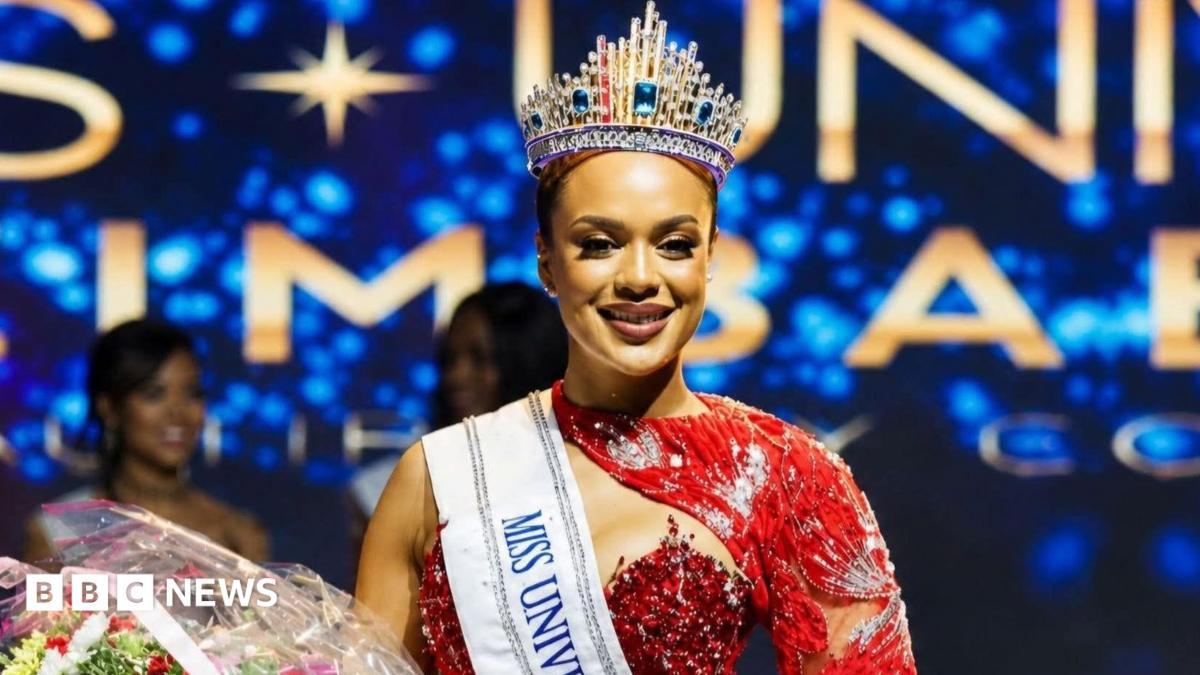
A young woman spends weeks in South Africa refreshing her inbox, waiting for a foreign government to decide whether she may stand on a stage in Puerto Rico. Her offence is not a criminal record, a fraud, or a lie on a form. Her offence is the passport in her bag, which says Zimbabwe.
Roseanna Hall is Miss Universe Zimbabwe. Pamela Mubanga, a 25-year-old registered nurse crowned Miss Universe Zambia on 8 October, has already been withdrawn from the competition. South Sudan's representative has said her chances of going are "50/50." Ask yourself what kind of system turns a nurse into a diplomatic casualty. Then ask who built it.
The system is Presidential Proclamation 10998, which took effect on 1 January 2026. It suspends the issuance of visitor, student, exchange and immigrant visas to nationals of 19 countries, and it tightens other categories of non-immigrant visas as well. Zimbabwe is on that list, and so is Zambia. The measure does not ask whether an individual applicant is a threat. It asks where she was born. That is the difference between a border control and a collective punishment.
The Miss Universe organisation in Zambia drew that line itself. Its statement separated Mubanga's case from the ordinary reasons a visa gets refused, such as missing paperwork or personal history, and attributed it to the US travel restriction affecting Zambia and other African countries. In plain language, the organisers were saying that nothing about this woman was the problem. Her nationality was.
Consider what this means in practice. Contestants began arriving in Puerto Rico on 8 November for registration and fittings. The final is set for 24 November at the José Miguel Agrelot Coliseum in San Juan, for the 75th edition of the pageant. Young women trained for months, sponsored by national organisations and carrying the hopes of small towns, were told to wait. Some will not board the plane. The crown is a small thing. The message it carries is not.
And there is a detail that should keep every African government awake tonight. The Zambian organisation said five other African countries faced similar difficulties, but it did not name them. We do not know who they are. We do not know how many of their citizens have been turned away, or quietly dropped, or simply never told why. A policy that operates in silence is a policy that expects no one to ask questions.
Here is the hypocrisy that should make us furious. Washington loves to lecture the continent about democracy, human rights and the rule of law. It sends delegations to summits in Addis Ababa and Nairobi to explain what good governance looks like. Yet its own travel restrictions say that a person's worth, and her right to move and to compete and to be judged as an individual, depends on the flag stitched to her passport. If a Zimbabwean woman with a clean record cannot enter the country, what exactly does the US mean when it speaks of universal values? You cannot preach equal dignity from a podium and practise nationality profiling at the consulate window.
Some will say this is a small matter, that a beauty pageant is frivolous and the West has bigger things to worry about. That is precisely the trap. Injustice is never small when it is aimed at us, and a principle that bends for a pageant will bend for a student, a doctor, a businessman or a mother trying to see her child graduate. Today it is a beauty queen. Tomorrow it is the nurse who could have treated your father. Ask why a nurse from Zambia, a country that has spent years fighting for every trained health worker it can keep, is now sitting at home because of a US proclamation. Who loses when African talent is treated as a threat to be filtered rather than a future to be welcomed?
So what should we do? Start with our own governments. Ministers of foreign affairs should demand, in writing, the criteria behind the restrictions and a clear review process for citizens who are caught in them. Reciprocity is a legitimate instrument of sovereignty, and any state that imposes blanket bans on Africans should expect African states to weigh their own visa policies in response. Governments should also publish, quarterly, the number of visa refusals affecting their citizens in the US and other Western capitals. You cannot negotiate with a problem you refuse to measure.
Our regional bodies must act as more than photo opportunities. The African Union, SADC and ECOWAS should table a joint demand in Washington. The AU's Protocol on Free Movement of Persons was adopted in 2018 to give African citizens real mobility across the continent, but it still needs more ratifications before it can take effect. Every government that has not signed or ratified it should be asked, publicly, why it is content to let Africans be free everywhere except on our own soil.
Look at the countries getting it right. Kenya scrapped visa requirements for visitors in 2024, and Ghana opened its doors to all Africans the same year. Mauritius and Seychelles have long offered easier access to visitors from many African states. These are not utopias. They are proof that a sovereign African state can decide who enters its territory on the basis of rules, not fear, and that openness can be a source of growth rather than risk. Free markets, transparent institutions and predictable rules are the building blocks of that model. Beauty queens do not need a favour from Washington. They need a continent that treats its citizens as partners and a world that keeps its own promises.
Civil society has a role too. Document every case. Name every country affected. Support the women who are being turned away so their stories cannot be quietly buried. Private partners, from airlines to sponsors to event organisers, should be pressed to explain why they accept rules that exclude their own customers and contestants. Silence from business is a choice, and it should be recorded as one.
And you, the reader, have a part to play. Write to your MP, your senator, your foreign ministry. Ask the question out loud: what is the criteria, and when will it be lifted for my country? Share the names of these women, not just the headlines. Tell your government that you will not vote for leaders who meekly accept second-class status for their citizens abroad.
Roseanna Hall wrote that she is not alone, and she is right. Millions of Africans are not alone in this predicament, in one form or another. The question is whether we accept it as the price of being African, or whether we demand that every visa application be judged on the person, not the passport. We know which answer is worthy of this continent. Now we have to say it loudly enough that Washington has to hear it.
Based on reporting by BBC