general
Abiy's Army Is Back in Mekelle and Tigray Is Paying the Price
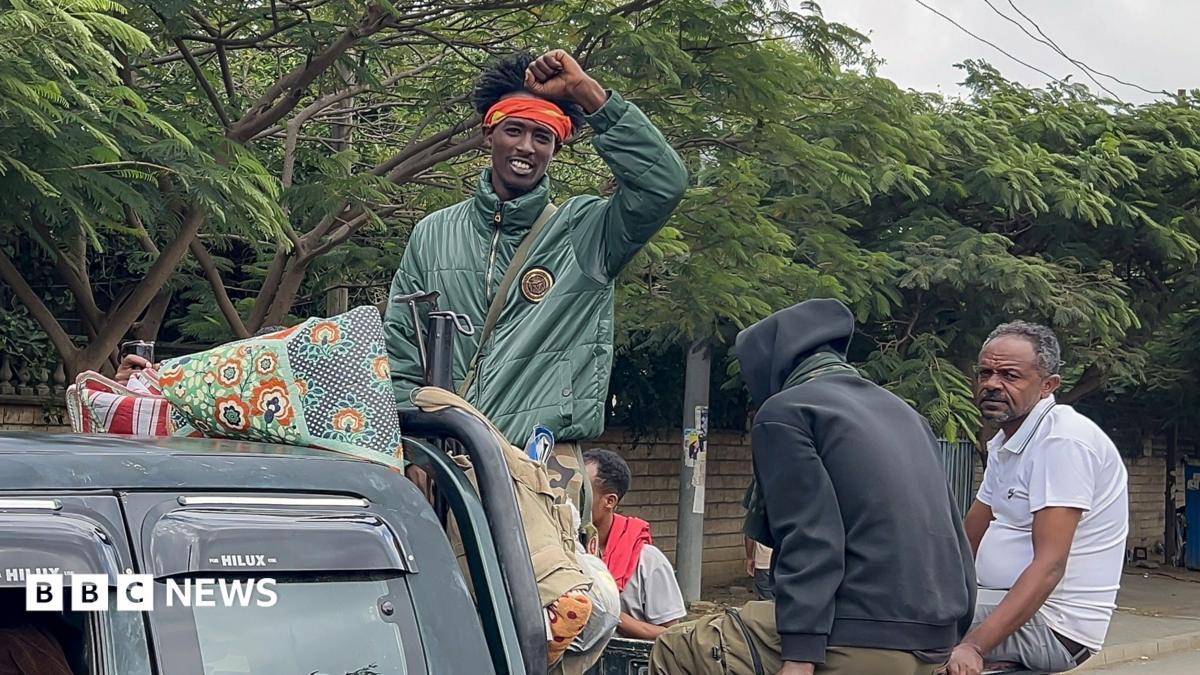
How many times must we bury Tigray before we stop calling its suffering a pause?
In Mekelle, a single mother runs a hair salon, and she cannot sell a single service. Her customers have no money for anything beyond bread and water. Her words should shame every capital on this continent that has looked away: people cannot prioritise beauty over basic needs, because they cannot feed their children. That is what war looks like after the headlines move on. It is not only artillery and drones. It is the quiet collapse of a household, a neighbourhood, a town.
Fighting broke out in late September between the Tigray People's Liberation Front and the Ethiopian National Defence Forces. This was the resumption of a war that Ethiopia's government and the TPLF had declared over in November 2022, when the Pretoria Cessation of Hostilities was signed under African Union mediation. Less than two weeks later, federal forces marched into Mekelle. The TPLF called its retreat from the city and Tigray's other main towns a "strategic withdrawal." Call it what you like. The result was the same: an army took a regional capital with little resistance, and civilians paid the price.
Hundreds of people are reported dead, including dozens killed in drone strikes and air raids. Since phone lines and the internet were restored, residents have described heavy artillery and drone attacks across central, northern and north-western Tigray. Near Sheraro, close to the Eritrean border, eyewitnesses reported heavy fighting involving ground forces and artillery. Military checkpoints remain active in towns like Yechila. Eyewitnesses also reported seeing Eritrean troops inside Tigray in early October, reportedly backing the TPLF. Those troops appear to have gone home. Ethiopian army sources say senior TPLF political leaders were briefly based in Eritrea before being ordered out in early November, shortly after President Isaias Afwerki returned from Russia.
Let us be precise about what this means. Foreign soldiers, reportedly from Eritrea, have crossed into a sovereign Ethiopian region. Regional and national armies are operating in towns where civilians are trapped. And the BBC, like every independent outlet, cannot report from Tigray. When journalists are locked out, the first casualty is the truth, and the second is the civilian who has no one to tell the world what happened to her family.
Seven Ethiopian armed groups led by the TPLF announced an alliance in September, which they call the Alliance for Survival, aimed at removing Prime Minister Abiy Ahmed's government. One analyst cited estimates of 70,000 to 80,000 fighters in the Amhara militia Fano. Another analyst argues that no combination of ethnic militias poses a serious threat to the federal army. Both can be true. What is certain is that every new militia, every new alliance and every new foreign backer means more guns in more villages, and more young men taken from their fields to hold them.
Remember what this region has already endured. The 2020 to 2022 war claimed hundreds of thousands of lives by most estimates. Western Tigray saw widespread abuses and allegations of ethnic cleansing. Eritrean soldiers were accused of some of the worst atrocities of that war, and now Tigrayans are watching those same soldiers return to their towns. Ask a grandmother in Mekelle what it feels like to see a foreign uniform at the corner of her street again. She will not need a press release to explain it.
The pattern here is old and ugly. Every party claims it is defending the people while the people die. The federal government says it is clearing "TPLF elements." The TPLF says its retreat is a trap for the enemy. Eritrea denies its role while its soldiers appear and disappear. Meanwhile, the drones falling on Tigrayan towns were bought from somewhere, and somebody is profiting from every sortie. We must ask who sells the weapons, who finances the militias, and who benefits when Tigray becomes a battlefield for rivals who will never sit in the cemetery with the families they bury.
The root grievance is not a secret. Tigrayan scholars, including Abraha Hailezgi at Mekelle University, argue that the conflict will not end until Addis Ababa addresses the region's sense of economic and political marginalisation. Many Tigrayan elites doubt that the federal government wants to solve Tigray's problems at all, suspecting instead that it is exploiting the region's weakness to expand its control. Whether that suspicion is fully fair or not, a government that wants trust must earn it through action, not slogans.
So what must happen? Start with the Pretoria agreement, the only framework that brought the last war to a halt. Its implementation has been partial and contested, and it must be revived in full, with African Union monitors on the ground and unhindered access for humanitarian agencies, the UN human rights office and independent journalists. Disarmament, demobilisation and reintegration must be real and verifiable, covering federal forces, Tigrayan forces, Amhara militias and any foreign elements. Eritrean troops must withdraw from Ethiopian territory, full stop, with no exceptions for "friendly" operations.
Ethiopia also needs institutions that outlast any single leader. Abiy's 2018 reforms, which freed political prisoners and opened space for dissent, deserve credit. Then the space narrowed again. Real reconciliation requires an independent judiciary that can prosecute abuses on all sides, a free press that can operate without fear, federal arrangements that give Tigray and every other region genuine economic and political stakeholding, and property rights that protect farmers and businesses from being caught in the crossfire. Africa already has proof this works. Botswana has built decades of stability on accountable institutions and disciplined public finances. Mauritius has shown that a plural democracy can deliver growth and dignity. Senegal's 2024 election, where an incumbent's attempt to delay the vote was checked by courts and citizens and power changed hands peacefully, proved that African democracy is not a Western import. It is ours to defend.
And now we come to the part where you come in. The African Union's Peace and Security Council must convene an urgent session on Tigray, with a clear demand for a ceasefire, independent monitoring, and a timetable for disarmament. Its member states must refuse to shelter any armed group that targets civilians, and they must say so in public. The UN Security Council must not hide behind the word "internal" while Tigrayan children sleep beside artillery impacts. Addis Ababa, the TPLF and Asmara must each be told plainly that the next massacre will be recorded, named and answered for.
As Africans, we must demand that our leaders stop treating Tigrayan lives as a bargaining chip. Write to your parliamentarians. Ask your ministers why an entire region can be cut off from the internet and the world without a single independent witness. Support the journalists and human rights defenders who risk their safety to document the truth. Share the names of the dead, not just the numbers. Firut Me'ar asked only for peace and a chance to rebuild. That is not too much to ask. It is the minimum that every government owes its people, and we should refuse to accept anything less.
Based on reporting by BBC