sudan-conflict
Salva Kiir Has Driven Millions From Their Homes and Called It Peace
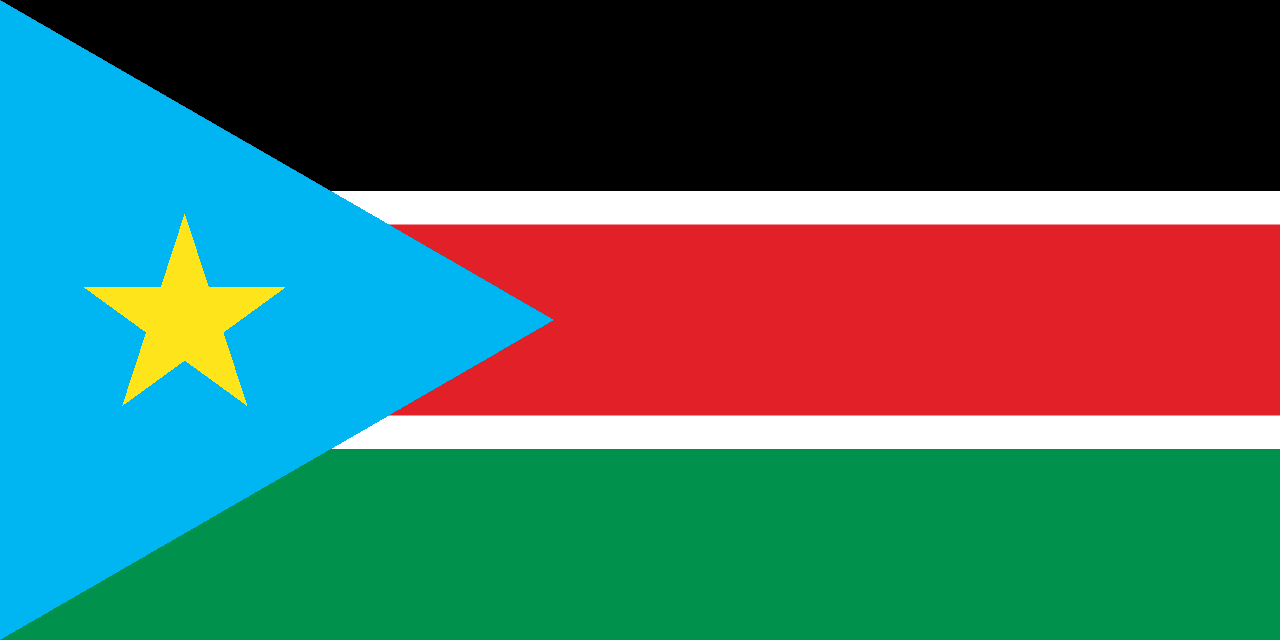
Ask a South Sudanese mother where she slept last night and she may not give you a village name. She may give you a river crossing, a church compound, a UN base, or a stretch of bush where she hid her children while gunfire moved through the next settlement. Displacement in South Sudan is not an event. It is a way of life, and our neighbours have been living it for more than a decade.
Let us be exact about what we are looking at. Millions of South Sudanese are displaced, either inside their own country or across its borders. Millions more depend on humanitarian aid to eat. This is a nation of roughly eleven million people that has been pushed into a permanent state of flight, and the people with the power to stop it have chosen to protect their positions instead.
The drivers are not mysterious. Communal clashes in Jonglei, Upper Nile, and the Equatorias have killed civilians, burned homes, and emptied villages. Land disputes, often inflamed by politicians who profit from local feuds, have turned neighbours against each other. Floods wash away harvests and fields almost every rainy season, and when the water recedes, the hunger remains. Then there is the violence that comes from the top: armed forces loyal to the government, opposition militias, and young men with rifles who were never paid, never trained, and never told what they were fighting for.
Now add the war next door. Since April 2023, the conflict between Sudan's army and the Rapid Support Forces has pushed more than a million refugees and returnees across the border into South Sudan, according to UN agencies. Families who fled Khartoum, Darfur, and Kordofan arrived in a country that could barely feed its own people. They found clinics without medicine, schools without teachers, and camps where the water runs out before the sun sets. Refugees did not cause South Sudan's crisis. They arrived in the middle of it, and they are now paying for it alongside the citizens who never had a chance.
Consider what the 2018 peace agreement was supposed to mean. It promised a transitional government, a unified army, power-sharing, and elections. Each promise was delayed, diluted, or broken. In March 2025, First Vice President Riek Machar was placed under arrest and charged, a move that many observers, including regional diplomats, read as a sign that the agreement had been hollowed out from within. Elections, repeatedly postponed, are again pencilled in for late 2026. Who believes that date? Certainly not the families sleeping in the rain.
Follow the money and the picture sharpens. Oil accounts for the overwhelming share of government revenue, and the wealth it generates has flowed to a narrow circle of officials, military commanders, and foreign partners. Oil moves through pipelines that cross the border into Sudan, which means the fates of two war-torn states are tied together by barrels of crude. Meanwhile, the state pays soldiers irregularly, schools sit empty, and the health system depends on international charities. Those who mine South Sudan's wealth are rarely the ones who starve for it.
And let us not pretend outside powers are innocent bystanders. Uganda's military has been deployed on South Sudanese soil in support of the Kiir government, a choice that shifts the balance of force without shifting the balance of justice. China, the Gulf states, and other external actors are deeply involved in the oil sector, the arms trade, and the wider Horn of Africa contest for influence. Every one of them talks about stability. Few of them ask whether the stability they are buying serves the citizens who must live with it.
This is the point we must not miss. South Sudan's displacement crisis is not a natural disaster that happens to a poor country. It is the predictable result of a political settlement built on the survival of leaders rather than the rights of citizens. When security forces answer to individuals instead of the constitution, when courts do not check the powerful, when oil revenue is hidden from public scrutiny, the outcome is exactly what we see: villages burned, children out of school, and a generation taught that survival requires a gun or a passport.
So what works? We do not have to guess. Botswana built one of Africa's most durable democracies on a simple formula: transparent management of mineral revenue, an independent judiciary, and a civil service that answers to law rather than to a president's cousins. Mauritius shows that a small, diverse nation can attract investment and build a middle class when property rights are protected and corruption is punished. Senegal, after its 2024 transfer of power through the ballot box, reminded the continent that citizens can demand accountability and win it. South Sudan can learn from all three. The first step is a public, audited ledger of every barrel and every dollar of oil revenue. The second is an independent electoral commission and a court system that can rule against the president. The third is a unified, professional army paid on time and bound to the constitution, not to a faction.
Regional bodies also carry responsibility. The African Union and IGAD must stop treating elections as a box to tick and start demanding preconditions: disarmament, security sector reform, and the release of political prisoners before any vote is held. Donors should tie humanitarian and development funding to measurable governance benchmarks, so that aid stops subsidising the very leaders who create the crisis. And the private sector, from oil services firms to banks, must refuse to launder the legitimacy of a regime that cannot pay its own soldiers.
Now to you, the reader. If you are South Sudanese, demand the audit of oil revenue, demand that the elections be real or be honestly postponed, and demand the release of anyone held without fair trial. Organise in your churches, unions, student groups, and diaspora networks. Call your legislators, your ambassadors, and the journalists who cover this country. If you are elsewhere in Africa, refuse the easy comfort of thinking this is someone else's tragedy. Our continent cannot claim to care about sovereignty while ignoring the fact that millions of our people have been made stateless inside their own borders.
We have seen what happens when leaders are allowed to treat a nation as a private estate. We have also seen what happens when citizens refuse to accept it. South Sudan's people have already paid enough. How many more villages must empty before we stop calling this a transition and start calling it what it is: a failure of leadership that we are all permitted to challenge?
Based on reporting by RELIEFWEB