sudan-conflict
Sudan's Generals Are Using Ethiopian Refugees as Collateral in Their War
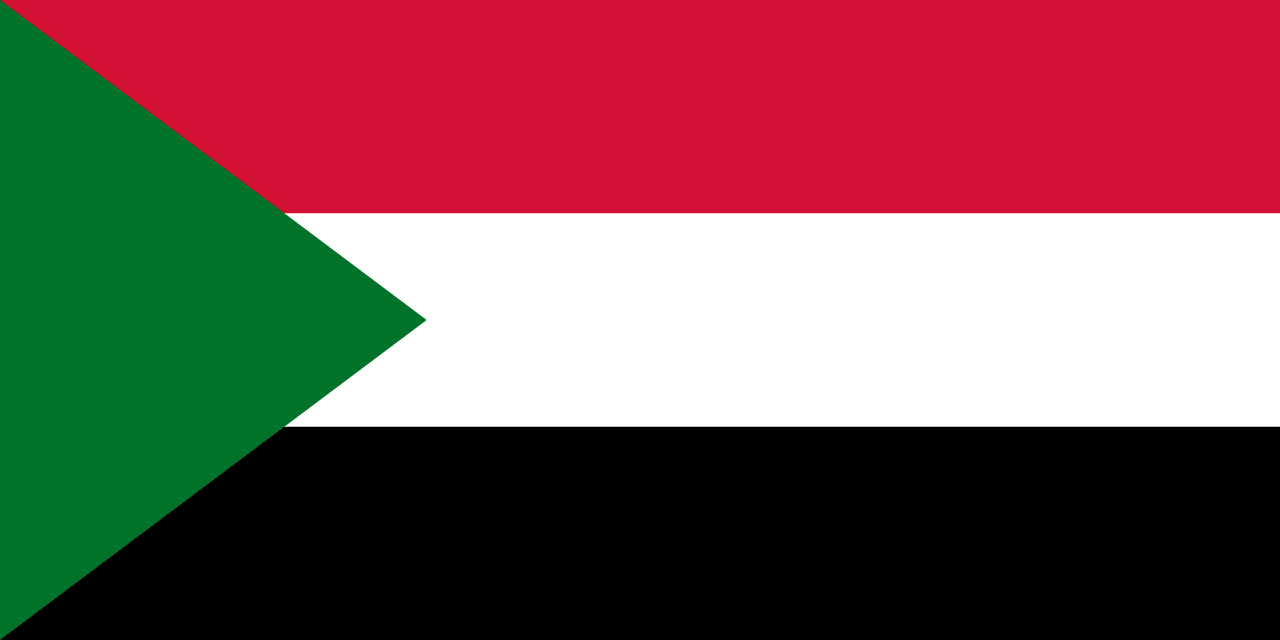
Ask yourself what it means to flee a war, cross a border with your children and whatever you could carry, and find another war waiting on the other side.
That is the situation facing Ethiopian refugees in Sudan. They left a country scarred by the Tigray war, one of the deadliest conflicts of this century, and expected a refuge. Instead they were swept into Sudan's own catastrophe, a war between the Sudanese Armed Forces and the Rapid Support Forces that began on 15 April 2023. By the UN's own count, more than 12 million people have been uprooted by that fighting. Among them are the Ethiopians, the Eritreans, the South Sudanese and the Sudanese themselves, all of them squeezed between two men who would rather burn a country than share it.
UNHCR's dashboard on Ethiopian refugees in Sudan, updated through 31 October 2026, is a ledger of human beings who have been failed twice. Each row in that data represents a family that had already lost one home. Each figure is a mother who must now decide which child to carry and which belongings to abandon at the next checkpoint. Numbers like these are easy to scroll past. We refuse to.
Let us be precise about who holds the guns. The Sudanese Armed Forces under General Abdel Fattah al-Burhan and the Rapid Support Forces under General Mohamed Hamdan Dagalo, known as Hemedti, have turned the country's cities into battlefields. Khartoum, Omdurman, Wad Madani and Gezira have seen shelling, looting, sexual violence and mass killings documented by UN investigators and human rights organisations. The Rapid Support Forces have been accused of ethnically targeted violence in Darfur, a horror that echoes the genocide of two decades ago. The army has conducted indiscriminate airstrikes on densely populated neighbourhoods. Neither side has earned the right to call itself a government. Both have behaved like warlords with flags.
Refugees are the first to pay when armed men treat borders and camps as afterthoughts. Ethiopian refugees who sheltered in Sudan's eastern camps and in urban neighbourhoods have faced the same bombs, the same extortion, the same loss of livelihoods as Sudanese families. Those with no citizenship papers, no embassy willing to protect them and no local patron have little protection at all. When humanitarian convoys cannot reach them, their hunger becomes a weapon that both commanders are willing to tolerate.
Now ask who is financing the guns. Investigations by the UN Panel of Experts on Sudan and by independent researchers have pointed to outside suppliers and paymasters. Reporting has linked the Rapid Support Forces to gold smuggled through the United Arab Emirates, and to military supply chains that reach beyond Sudan's borders. Reports have also tied the Sudanese army to arms and political backing from Egypt, Turkey, Iran and Russia, and Russian Wagner-linked networks have been connected to Sudanese gold mining, a commodity that should be building schools and hospitals rather than buying rifles. Every foreign capital involved speaks the language of partnership and stability. Every one of them has a stake in Sudan's gold, its ports, its land and its strategic position on the Red Sea. This is the new scramble for Africa, with new names and the same appetite. Foreign money is not neutral. When it arms a general, it is buying a country's future and selling its people's suffering back to them.
Context matters, because Sudan did not begin this war. It is the product of decades of military rule, of coups that promised transition and delivered plunder, and of a political class that treated the 2019 revolution as an inconvenience. The young Sudanese who filled the streets demanding civilian government were not asking for a miracle. They asked for the basics of democracy: elections, an accountable army, a judiciary that answers to the law. Their dream was crushed by men who understood that a militarised state is a profitable one for those holding the weapons. Ethiopia, too, has its own accountability questions, including the atrocities and displacement of the Tigray war and the continuing crises in Amhara and Oromia. Refugees from that conflict should never have had to stand in another country's crossfire. The regional body meant to manage such crises, IGAD, has been too slow, too divided and too willing to defer to whoever holds the capital.
So what must happen? First, the African Union must stop issuing statements and start applying its own rules. The AU Peace and Security Council should impose targeted sanctions and travel bans on commanders from both sides, freeze assets linked to war financing and demand unhindered humanitarian access to every camp and besieged city. The UN Security Council must renew and expand arms embargoes and refer documented war crimes to the International Criminal Court. Anyone who has ordered or enabled the killing of civilians should know that impunity is no longer on offer.
Second, the states funding this war must be named and shamed in the same breath as the generals. The United Arab Emirates, Egypt, Turkey, Iran, Russia and any other power that feeds Sudan's violence owes an explanation to Sudanese mothers and to the African Union. Their investments, port deals and mining contracts should be audited against the UN's findings, and any country that profits from atrocity should be barred from calling itself a partner in African development.
Third, Africa has the proof that a better path exists. Botswana built one of the continent's most stable democracies by protecting property rights, running transparent public finances and keeping its institutions independent of the army. Mauritius shows what rule of law and open markets can do for a small island state. Senegal completed a peaceful transfer of power through the ballot box and demonstrated that citizens, not generals, can decide who governs. Sudan's civilian movement, its lawyers, doctors, trade unionists and youth committees, have the same spirit. Their path must be funded and protected, not sidelined in favour of whichever general has the most foreign friends.
Finally, the people who must act are you. Demand that your government raise the Sudan and Ethiopia refugee crisis at every AU and UN forum, and ask why it has not already. Support organisations on the ground that feed, shelter and document the displaced. Call out foreign companies that buy gold or extract resources from conflict zones. Refuse to accept the language of "two sides" when one side is shelling a market and the other is starving a city.
The Ethiopian refugee in Sudan did not choose this war. The Sudanese child in a camp did not choose it either. But the generals chose it, and the foreign capitals that feed them chose to look away. We will not look away. Africa is watching, and history will ask what we did while our neighbours were turned into collateral. Our answer must be louder than the guns.
Based on reporting by RELIEFWEB