sahel-security
Burkina Faso's Junta Has Uprooted Millions While Russia Sells Them Guns
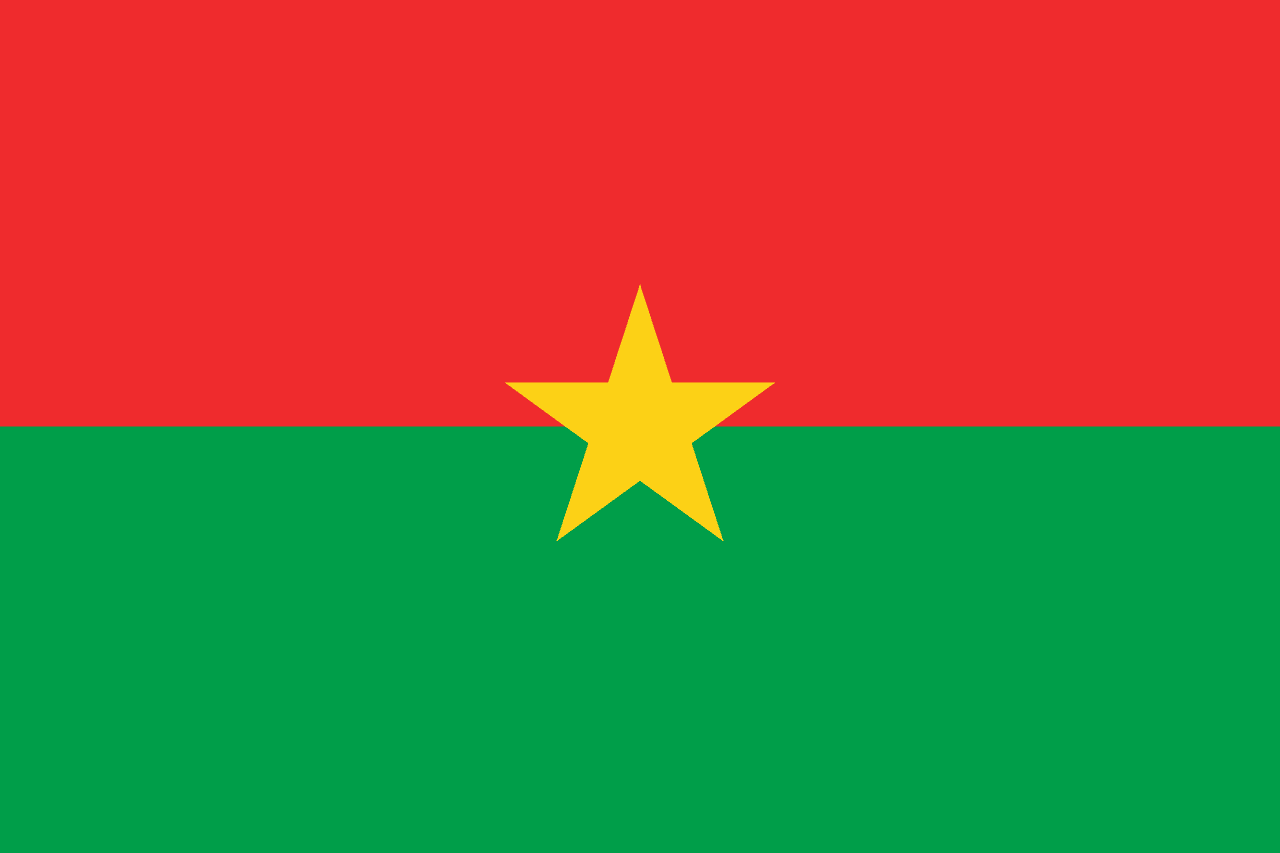
Millions of Burkinabè no longer sleep in their own homes. They sleep in schoolyards, mosque courtyards, and the dust outside provincial towns, because the men who swore to protect them have turned their villages into battlefields. The International Organization for Migration's Displacement Tracking Matrix, the same instrument that counts the displaced, has recorded well over two million people uprooted inside Burkina Faso at the height of the crisis. Two million people is more than the population of many African capitals. Each one is a farmer who lost a field, a child who lost a classroom, a mother who lost a son to a checkpoint or a jihadist's rifle.
So we have to ask the question the junta would rather we didn't. How did a country that once hosted a continental summit on development become a place where a soldier's uniform is as likely to mean danger as protection?
The answer begins in September 2022, when Captain Ibrahim Traoré seized power in his second coup of the year, promising to crush the jihadist insurgency that had already displaced vast numbers of people under the previous military government. Traoré pledged results. What he delivered was a deeper war. Jihadist groups tied to al-Qaeda and the Islamic State continue to control or contest large areas of the north and east. Attacks on towns, convoys, and civilians have not stopped. The Liptako-Gourma tri-border zone, shared with Mali and Niger, remains one of the most lethal corners of the continent, and it is now a region where three juntas govern by decree and close the door on the very institutions that once held them accountable.
Then consider who has been filling the security vacuum. Human Rights Watch and the UN's human rights office have documented killings of civilians by Burkinabè state forces and by the Volunteers for the Defence of the Homeland, the state-backed militia that has been armed, expanded, and deployed with little oversight. Villagers accused of collaborating with jihadists are executed. Whole communities are labeled enemies of the state. The same regime that claims to defend sovereignty is killing the sovereign. And the blockades of towns like Djibo have shown how a siege can starve a population while the rest of the world reads the dispatches and does nothing.
Who is paying for this? Follow the money, and the picture becomes uglier. The Russian security contractors that replaced Wagner in Mali under the Africa Corps banner have made the Sahel a marketplace for regime protection in exchange for gold, uranium, and political loyalty. Turkish drones have been flown over Sahelian battlefields with little regard for who lives beneath them. Chinese firms extract minerals and sign infrastructure deals whose terms are kept from the public. Emirati interests move through ports, airstrips, and investment vehicles that bypass parliaments entirely. Each of these actors speaks the language of partnership. Each one prefers a junta to a ballot box, because a junta does not ask questions about the contract.
Now look at the coast. Benin, Togo, Ghana, and Côte d'Ivoire are watching their northern regions bleed into the same violence. Benin lost dozens of soldiers in a single attack near the Park W area in April 2025, a stark sign that jihadist networks are pushing south along the corridors where herders, farmers, and smugglers already move. The displacement tracked in the Sahel does not respect borders, and neither does the cost. When a village in Burkina empties, its people walk toward Togo and Ghana, straining schools, clinics, and local budgets that were never designed for this.
We must be clear about what this crisis is not. It is not a natural disaster. It is the product of coups, of impunity, of security forces who answer to no court, of a regional body that lost its grip after Mali, Burkina Faso, and Niger announced their withdrawal from ECOWAS in January 2024 and formed the Alliance of Sahel States. Those three governments have traded democratic accountability for a promise of sovereignty, and the people who pay are the ones who never voted for any of it.
Here is what should happen, and it is not complicated. Africa already knows how to do better. Botswana built one of the continent's most durable democracies on diamonds and disciplined public institutions, and it has held regular elections since independence. Mauritius turned a sugar economy into a services and financial hub by protecting property rights and keeping its courts independent. Senegal, after a turbulent period, showed in 2024 that a peaceful transfer of power is still possible when citizens and institutions refuse to surrender. Ghana has repeatedly handed power to the opposition through the ballot box. These are not perfect countries. They are proof that strong institutions, transparent contracts, and an independent judiciary are the foundation on which security and dignity are built, not the luxuries reserved for peacetime.
So the African Union must act with the same seriousness it reserves for its own rhetoric. It should apply its suspension rules without exceptions, refuse to legitimize transitions that extend military rule indefinitely, and push for a binding timetable back to civilian government. ECOWAS must keep its door open for the Sahelian peoples, not for their juntas, and it must coordinate the coastal states' border security with humanitarian access, not treat displacement as someone else's problem. Independent investigators, including the UN and the African Commission on Human and Peoples' Rights, need unrestricted access to the regions where killings are reported. Any foreign partner that sells arms, drones, or security services to these regimes must be forced to publish the contracts and answer for the abuses that follow. You cannot claim to fight terrorism while arming the men who massacre civilians and call it counterterrorism.
And what should you, the reader, demand? Demand that your government stop treating the Sahel as a distant emergency and start treating it as a test of whether African democracy means anything. Demand that your parliament ask who is financing the security contractors operating in your region. Demand that your media outlets report the displacement numbers with names and faces, not just percentages. Demand that every African leader who calls a coup a "correction" be asked, publicly, whether they would accept the same logic if it were applied to their own capital.
Two million displaced people in one country is not a statistic. It is a verdict on the men who took power in our name and then took our futures too. We will not accept it as the price of stability. Stability built on displacement, massacres, and silenced press is not stability. It is a graveyard with a flag on top. We must refuse the junta's lie, demand the ballot, and insist that Burkinabè mothers be allowed to go home.
Based on reporting by RELIEFWEB