sudan-conflict
Sudan's Warring Generals Are Letting Cholera and Rape Kill Their Own People
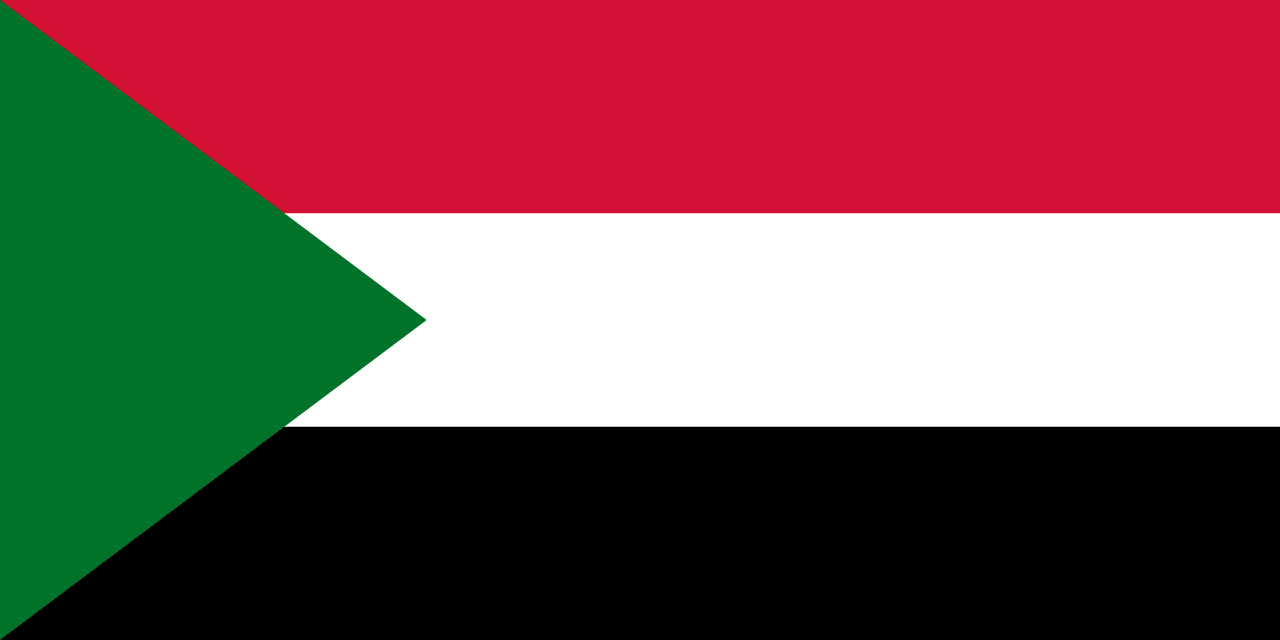
Two hundred and seven people are dead of cholera in North and South Kordofan. Nearly 2,800 more have been infected. Most of them were children, mothers, and elderly people who had no clean water, no working latrines, and nowhere to run. Nobody lost their life in a battle they chose. They died because the men who hold Sudan's guns decided that the country's water systems, clinics, and roads were acceptable collateral.
We need to say this plainly, because the language of "conflict" has been used too long to hide what is happening. This is not a neutral clash between two armies. This is a war in which civilians are the terrain, and the people commanding it, Lieutenant General Abdel Fattah al-Burhan of the Sudanese Armed Forces and Mohamed Hamdan Dagalo, known as Hemedti, of the Rapid Support Forces, have shown that they will sacrifice anyone to win.
Consider what the latest UNFPA situation report describes for September 2026 alone. In Blue Nile State, fighting that had been concentrated in one area spread south, uprooting 52,629 people in a single month. Almost 12,000 of them are now crammed into schools, many without functioning toilets, electricity, or a single clean tap. Think about what that means in practice. Children who should be learning their letters are sleeping on concrete floors beside open latrine pits, in buildings designed for a few hundred students and now holding thousands of desperate people.
Across the three Kordofan states, drone strikes and ground fighting around El Obeid, Bara, Dilling, Nuhud, and Abu Zabad keep forcing families onto the road. Every displacement is a family that lost its harvest, its livestock, its savings, and often its father. Every displacement is a cholera risk waiting to happen, because people fleeing a bombardment do not carry filters or chlorine tablets with them. The Sudan Health Cluster tallies the bodies. It cannot tally the grief.
Now look at what sits behind those numbers. The report flags gender-based violence risks as severe in North Darfur, North Kordofan, and West Darfur, and says those risks are intensifying. Safety audits and inter-agency assessments, the kind of careful, bureaucratic work that most people never read, are reaching the same grim conclusion again and again. Women and girls are being raped, trafficked, and terrorized in the places that are supposed to keep them safe. Sudan's own history should have taught the world what this looks like. The Darfur genocide of the early 2000s was built on the same weapon: sexual violence as a tool to break communities. Two decades later, the weapon has been picked up again, and the men wielding it are not hiding in caves. They are running armies.
So where is the outrage that should follow? Where are the emergency sessions? Where are the sanctions on named commanders, the arms embargo that actually bites, the flights that actually land with supplies?
Look at the money. UNFPA's 2026 appeal for Sudan asks for US$129.2 million to keep women and girls alive, safe, and able to give birth without dying. It is about 40 percent funded. That leaves a gap of US$78 million. Sixty percent of the lifeline is missing. Donors who issue statements every week about Sudan's "unprecedented humanitarian crisis" are the same governments that have been slow, selective, and stingy when it comes to paying the bill. We are told there is no money. There is money for battleships, for private security contracts, for mining concessions, for the diplomatic theater of "peace talks" that somehow never end. There is only no money for the women in those schools.
Even inside this disaster, the work is happening, and it deserves to be recognized. In September alone, UNFPA and its partners delivered more than 145,000 sexual and reproductive health services across 17 states, through clinics and mobile teams that drive into danger. They reached roughly 93,000 people with gender-based violence prevention and response services, including safe spaces, psychosocial support, and dignity kits. Those numbers show what happens when aid is funded and access is negotiated. They also show how much more could be done if the gap were closed. Every unfunded dollar is a clinic that closes, a midwife who stops showing up, a survivor who gets no help at all.
Sudan is also not an isolated tragedy. It is a warning about what happens when African states lose the will to hold their security forces accountable and when outside powers treat a country's collapse as a business opportunity. Across the Sahel and the Horn, we have watched foreign patrons pour weapons into factions they hope will deliver minerals, ports, and political loyalty. We have watched private military contractors and drone suppliers move into conflict zones with no regard for the civilians beneath them. The same logic that lets a general buy a drone and point it at a market is the logic that lets a foreign capital profit from the chaos. Ask who is supplying the drones. Ask who is financing the fighters. Ask who benefits when the lights go out in Kordofan. The answers should make every African government uncomfortable, and every African citizen furious.
We do not have to accept this. Africa has shown, again and again, that the path out of military rule and humanitarian catastrophe runs through strong institutions, not strongmen. Botswana built one of the continent's most stable democracies on accountable governance, a professional civil service, and a commitment to rule of law. Mauritius proved that small, open economies with independent courts and transparent budgets can attract investment and protect citizens at the same time. Senegal showed in 2024 that a population willing to vote, protest, and demand its constitution be respected can force even a determined incumbent to step back. Sudan's own civilian resistance committees and volunteer emergency response rooms have kept hospitals, water points, and food kitchens running in neighborhoods where the state has disappeared. Those are the building blocks of a Sudan that could exist, and they need to be protected and funded, not left to burn out.
So here is what must happen. The African Union's Peace and Security Council must stop issuing communiqués and start enforcing consequences. That means sanctions on named commanders from both the Sudanese Armed Forces and the Rapid Support Forces, frozen assets, travel bans, and public accountability for every drone strike that hits a civilian target. The UN Security Council must enforce its arms embargo rather than letting it leak like a sieve, and it must demand unhindered humanitarian access, including safe corridors for cholera response and gender-based violence services. Donors must close the US$78 million gap immediately, through direct funding to women-led and Sudanese-led organizations that have proven they can deliver where others cannot. Regional governments must stop tolerating the foreign financiers and suppliers feeding this war, and they must publish who they are.
And we, the people, have a job too. Demand that your parliament ask your foreign ministry what it is doing about Sudan, in writing, with dates. Support Sudanese journalists and documenters who risk their lives to record what is happening. Share the cholera numbers, the displacement figures, and the funding gap until they become impossible to ignore. Refuse to let anyone reduce 207 dead Sudanese to a line in a regional briefing.
Think about the girl sleeping in a classroom in Blue Nile State tonight. Think about the mother in Kordofan boiling river water over a cooking fire with no guarantee it will not kill her children. Think about the generals who have made their decisions in air-conditioned rooms far from the smoke. They are counting on our silence. Break it. The people of Sudan have already paid enough. It is time the rest of Africa and the world paid attention, and paid up.
Based on reporting by RELIEFWEB