acss-digest
Ankara Drew a Maritime Border with a Vanished Government
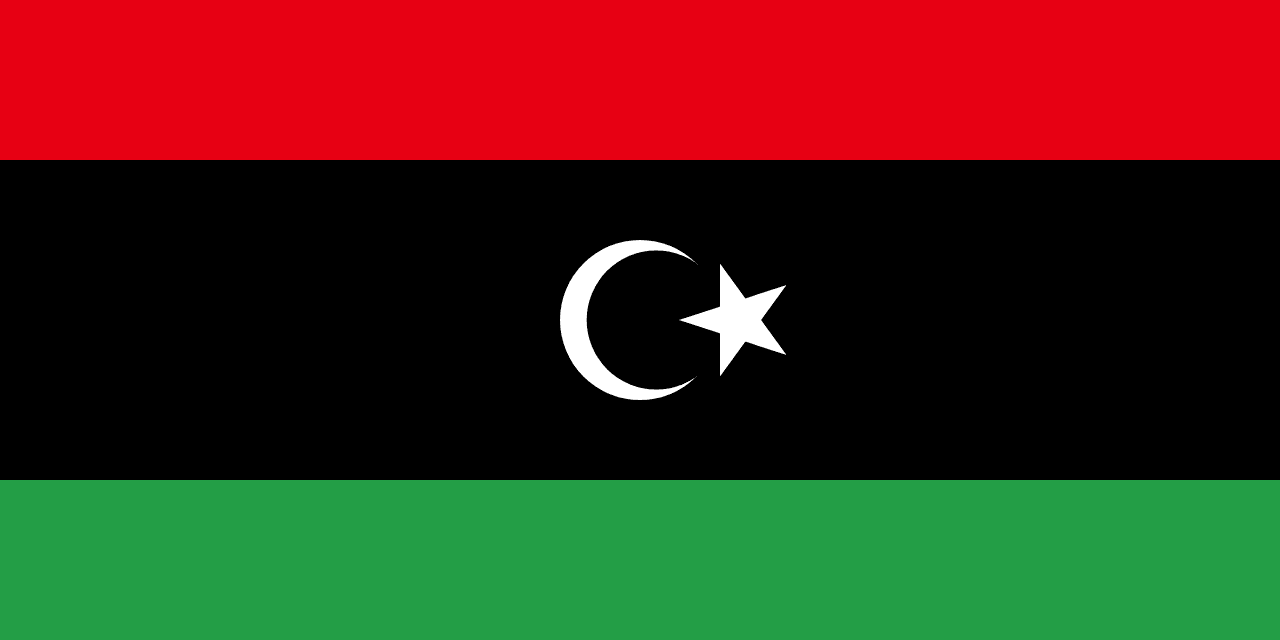
Imagine a foreign country drawing your nation's maritime border on a map. It negotiates with a man who no longer holds the power he claims to embody. Then the parliament of your country, elected in another part of the territory, rubber-stamps the paper, with no public debate, no consultation, and no one asking for your opinion. This is the situation in Libya. And it is a disgrace that we, as Africans, must face squarely.
On 27 November 2019, Turkey and the Government of National Accord led by Fayez al-Sarraj, then recognized by the UN and based in Tripoli, signed a memorandum of understanding on delimiting exclusive economic zones in the Eastern Mediterranean. The text carves up waters at the heart of the energy rivalry between Greece, Cyprus, Egypt, Israel and Turkey. It was designed to let Ankara expand its gas exploration rights at the expense of European neighbors, and Athens, Nicosia and Cairo rejected it outright. On 20 October, the Libyan House of Representatives, based in Tobruk in the East and long aligned with Field Marshal Khalifa Haftar, approved this memorandum. Six years after it was signed, an agreement struck with a government that no longer exists has received a blank cheque from a parliament that does not represent the whole country.
Cairo did not wait long to respond. During its meeting with Mohamed Al-Menfi, head of the Libyan Presidential Council, Egyptian officials demanded that Egypt's concerns be taken into account in drawing the maritime boundaries, in accordance with international law and the United Nations Convention on the Law of the Sea. Cairo maintains that the memorandum can produce no legal effect with respect to it. Let us say it clearly: Egypt is not an innocent victim in this story. In August 2020 it signed its own delimitation agreement with Greece, and its gas interests, notably around the Zohr field discovered in 2015, are just as real. But the question is not who holds the better cards. The question is who has the right to deal them.
And here the answer is simple: neither Ankara, nor Cairo, nor Abu Dhabi, nor Moscow has that right. The right belongs to the Libyan state, meaning a unified, legitimate power, checked by the ballot box and answerable to a Parliament functioning across the whole territory. That power does not exist. Libya has been split in two for more than a decade, with a divided central bank, two rival governments and an army fragmented into militias. The elections promised repeatedly since 2018 have never taken place. In that vacuum, every foreign power writes its own contract, and Libyans learn the consequences from the newspapers.
The reports of the UN Panel of Experts on Libya have documented, year after year, violations of the arms embargo imposed by Security Council Resolution 1970 in 2011. These reports describe deliveries of drones, armoured vehicles, air defence systems and foreign fighters sent to both sides. The sponsors of the Tripoli government and those of the East pass the blame back and forth, but the facts are there: weapons and mercenaries are circulating in defiance of the Security Council's decision, and it is Libyan civilians who pay the price. Entire neighborhoods of Tripoli were hit by fighting in 2019 and 2020. Families fled, children grew up in the rubble, young graduates left the country by boat. Every drone delivered to a militia becomes one more grave in an improvised cemetery.
How did we get here? In 2011, the NATO military intervention toppled Muammar Gaddafi, but it built no replacement state. The country, rich in oil, became a playground for actors whose interests have nothing to do with the well-being of Libyans. The West, which drapes itself in democratic principles, left behind a chaos it did not want to manage. Turkey, Russia, the United Arab Emirates and Egypt came to pick up the pieces, each backing one camp, each demanding its share of the oil, the gas and the migration routes. This is not the 19th-century scramble for Africa with Maxim guns; it is the same logic, with drones, construction contracts and maritime memoranda. The powers change their names, but the method stays the same: divide a country in order to negotiate better with its ruins.
We cannot accept this pattern as fate. There is a way out, and it begins with rebuilding Libyan sovereignty on democratic foundations. First, a binding electoral timetable, supervised by the African Union and the United Nations, with a written commitment from all factions to respect the results. Next, the unification of the central bank and full transparency over the revenues of the National Oil Corporation, so that oil serves Libyans and not militia networks. A state that does not control its finances does not control its borders. Finally, any maritime delimitation must be negotiated by a government recognized across the whole country, ratified by a unified Parliament and, in the event of a dispute, submitted to arbitration under the Convention on the Law of the Sea, rather than to corridor deals concluded in foreign capitals.
Africa also has its models. Botswana built remarkable prosperity around its diamonds because it insisted on transparent contracts and the separation of powers. Mauritius built a diversified economy on legal stability and the rule of law. Senegal and Ghana showed in 2024 that peaceful alternation of power, accepted by the losers, is possible on our continent. These countries are not perfect, but they prove something essential: when institutions are strong and elections are genuine, no foreign actor can decide on behalf of a people.
So what must we demand? We must call on the African Union to make Libya a real priority, with mediation that does not stop at protocol photos in Addis Ababa. We must call on the Security Council to enforce its arms embargo, with sanctions against every country that violates it, whether Turkish, Emirati, Russian, Egyptian or any other. We must call on Libyans themselves, in their divided cities, to refuse to let the sea of their children be sold for a few exploration contracts. And we, citizens of the other African countries, must question our governments about their partnerships with the sponsors of these militias. Who is financing the drones? Who is selling the armoured vehicles? Who is signing infrastructure contracts in exchange for silence? Sovereignty is not defended only at the border. It is defended in the offices where decisions are made about who has the right to speak in the name of a people. Libyans have the right to vote, to choose their leaders and to decide the shape of their own sea. Until they do, every map drawn without them will remain a stolen map.
Based on reporting by ACSS-EMAIL