general
South Africa's Voters Just Cut the ANC From 65 Percent to 31
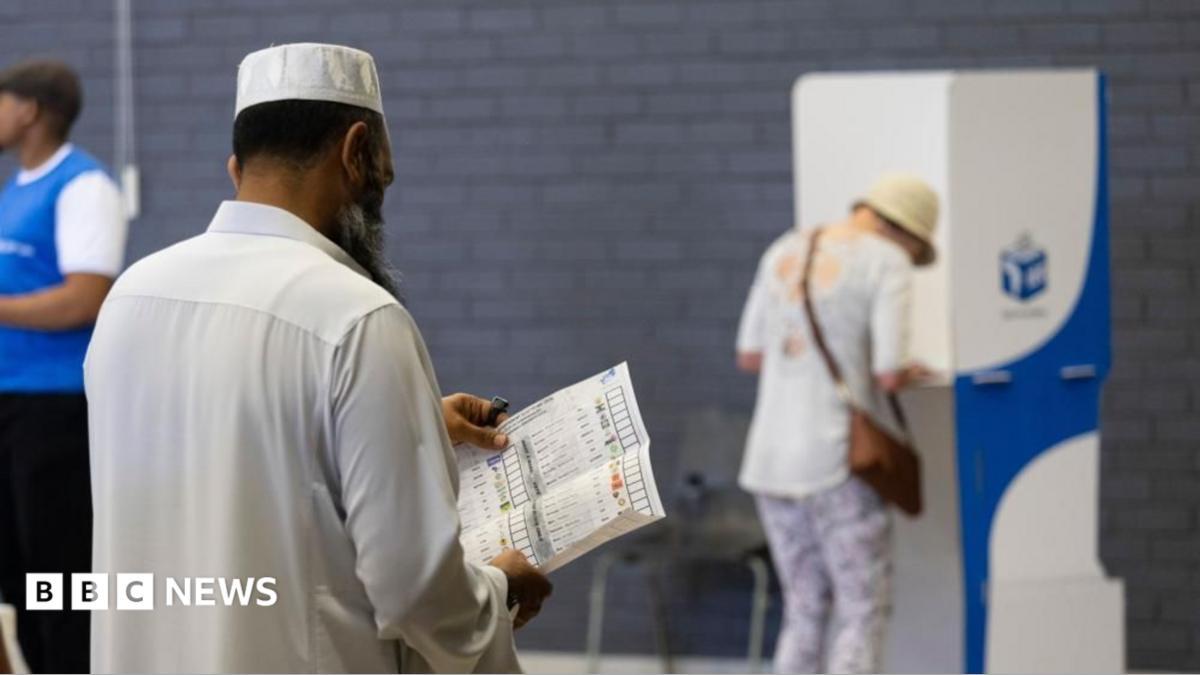
Thirty years after Nelson Mandela led South Africa out of apartheid, the party that carried him to power has won less than a third of the national vote. Think about that. The movement that broke the chains of white minority rule now cannot command even one in three ballots. And the people who did the breaking are the ones saying it out loud: this is a catastrophe.
Let us be clear about what happened, because the numbers tell a story no spin doctor can bury. In 2006, the African National Congress took 64.82 percent of local votes. In 2021 it fell to 46 percent. In this round it sank to 30.76 percent. That is not a dip. That is a free-fall, and it came at the ballot box, not in a coup or a conspiracy. South Africans simply stopped believing.
The Evidence Is in the Ballot Boxes
The ANC won a majority in just one of nine provinces, Limpopo. Five years ago it held six. In the eight major cities, it finished first in only two, down from six. Johannesburg and Pretoria, the economic heart of the country, now sit in the shadow of coalition talks that could leave the ANC shut out entirely.
The Democratic Alliance came second nationally with 24.64 percent and held Cape Town. Jacob Zuma's MK party, a force that did not exist as a serious electoral contender a few years ago, finished third with 9.76 percent and took Durban from the ANC. The Economic Freedom Fighters, once billed as the party that would replace the ANC, managed 6.22 percent. The ruling movement is being hollowed out from the left, the right, and the centre at once.
Turnout rose to 52.29 percent from 45.9 percent in 2021. Read that carefully. South Africans did not stay home in disgust. They lined up, they voted, and they punished. Democracy did not fail here. It worked, and it worked fiercely.
The DA's overall share barely moved, from 21.83 percent in 2021 to 24.64 percent now, and remains below the 26.9 percent it won in 2016. Its gains are concentrated in the cities, where it is attracting more Black voters than ever before. Political analyst William Gumede argues that South Africa is moving toward a post-racial voting pattern. We should welcome that signal. A country where voters choose by performance rather than by the colour of a skin or the memory of a struggle is a country growing up.
Who Paid for the Failure
Now for the question every ANC official would rather avoid: why did this happen?
Secretary-general Fikile Mbalula admitted that the cost of living became too high for ordinary people, and that the middle class turned on the party in big numbers. Political analyst Susan Booysen pointed to something more basic. Water does not flow. Power cuts hit homes and businesses without warning. Sanitation fails in townships and suburbs alike. These are not abstract failures of governance. They are a grandmother carrying water in plastic containers for kilometres. They are a small business owner who loses a day's trade to another blackout. They are children learning by candlelight in a country with some of the most advanced mining, engineering, and financial sectors on the continent.
South Africa has the money, the talent, and the institutions to deliver these basics. What it has lacked is competence and accountability. Years of state capture under the Zuma administration, the looting of state-owned enterprises, and the hollowing out of Eskom and municipal governments did not happen in a vacuum. They happened under a governing party that treated the state as a source of patronage rather than a service to citizens. Voters have now made that connection, and they are right to.
A Coalition Country Is Not a Crisis
Some will call this instability. We call it democracy doing its job. Since losing its national majority in 2024, the ANC has governed within a government of national unity. Now local councils face weeks of coalition negotiations, with the parties given 14 days from the announcement of results to strike deals.
Coalitions are uncomfortable. They can be messy. But they are the natural outcome when voters refuse to hand any single party a blank cheque. The answer to a dominant party that failed is not to crown another dominant party. It is to build a system in which every party must earn its place, every councillor answers to residents, and every rand of public money can be traced.
Here is the lesson for the rest of Africa. Dominance breeds decay. Whether it is a liberation movement in Pretoria, a ruling party in Harare, or a military junta in Ouagadougou, power without the fear of losing it always ends in rot. South Africa's voters have refused to let that happen quietly.
The Way Forward Already Exists
Africa has blueprints for doing this better. Botswana built one of the most stable democracies on the continent by keeping its public institutions independent, managing its diamond wealth transparently, and rewarding competence over loyalty. Mauritius built an economy that outperforms its neighbours on governance indicators and investor confidence through open markets, strong property rights, and a judiciary that rules without fear. Senegal proved in 2024 that a peaceful transfer of power, driven by citizens and courts rather than tanks, is still possible. These are not fairy tales. They are proof.
South Africa can follow that path. Municipal governments must be judged on delivery, with clear performance targets for water, electricity, and sanitation, published openly and audited independently. Power generation and distribution must be opened to competition, including private and independent producers, so that no single failing state monopoly can keep the lights off for millions. Procurement must be digitised and publicly searchable. Anti-corruption agencies must be funded, staffed, and protected from political interference. And the ANC's own renewal, now due with a leadership contest next year, must mean a clean break from the patronage networks that built this crisis.
Civil society has a role to play too. Citizens' groups, independent media, and business associations should monitor municipal budgets, track service failures, and demand answers in public. Regional bodies like the African Union and the Southern African Development Community should make clear that democratic accountability at home is the price of their respect abroad.
The Demand
South Africans have spoken. The question now is whether their leaders will listen, or whether they will cling to slogans from a struggle that ended thirty years ago.
So we ask the ANC leadership directly: what will you do differently when your next budget reaches the townships? Name the officials who failed. Publish the audits. Open the power sector. Fire the patronage networks. Stop treating a voter's rejection as a PR problem to be managed.
And we ask every South African, and every African watching this continent-wide reckoning: do not let this moment fade into the news cycle. Attend council meetings. Demand service-delivery plans in writing. Vote with your memory of the water that did not come and the lights that did not switch on. The ballot box just proved it can change everything. Now make sure the change reaches the tap, the grid, and the classroom.
Based on reporting by BBC