sahel-security
Mali's Junta Swapped Its People's Future for Russian Mercenaries
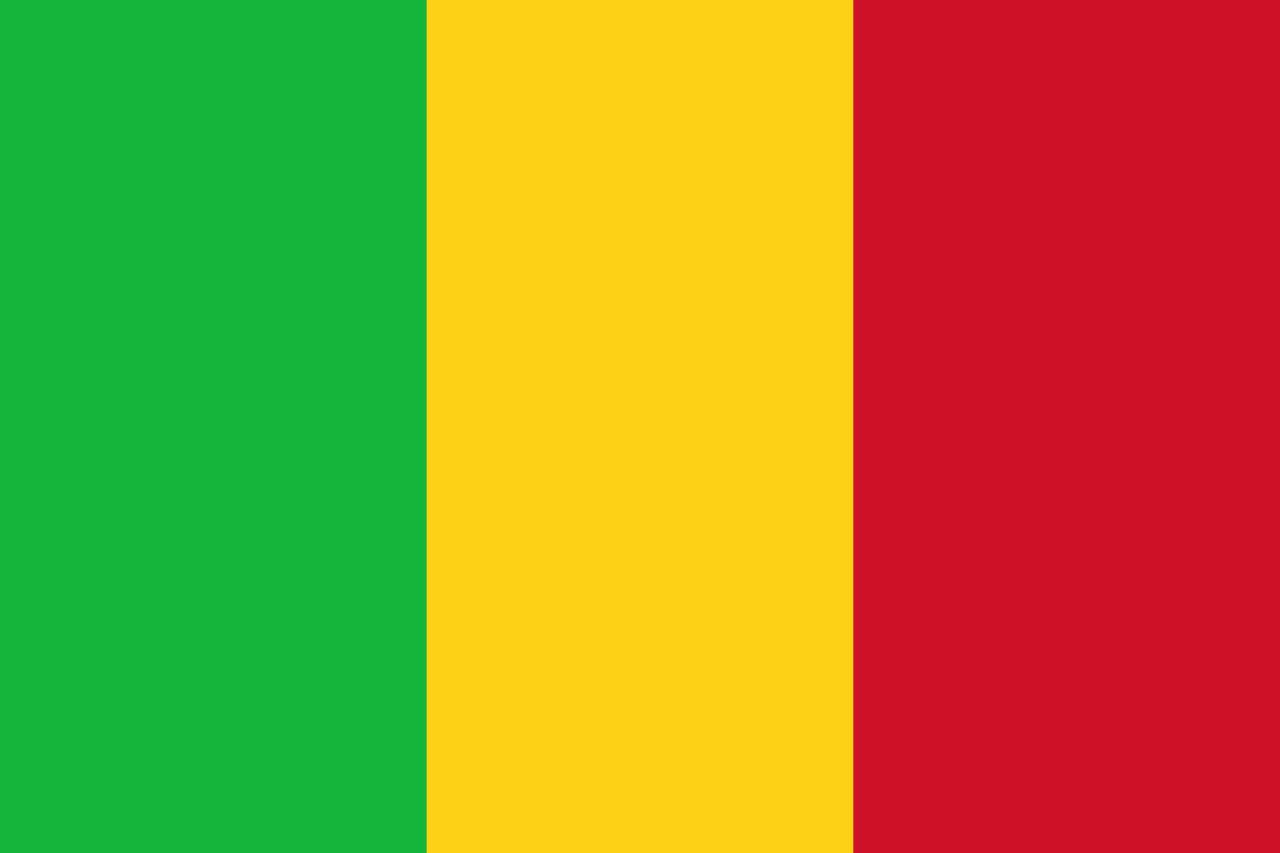
Ask a Malian mother where her children will sleep tonight. She may not have an answer. Across the Sahel, families are packing what they can carry and walking away from villages that no longer belong to them, because the men who seized power in their capitals promised security and delivered fear.
We have been told that the coups in Bamako, Ouagadougou and Niamey were acts of liberation. We have been told that expelling Paris and embracing Moscow would restore dignity. Look at the ground, not the speeches. Look at the roads closed by armed groups, the markets that no longer open, the schools shuttered, and the people who keep moving. Ask who has actually been liberated.
Mali's military government took power in two coups, in August 2020 and May 2021. It pushed out French counterterrorism forces, then turned to Russia. The Wagner Group, a private military company with a long record of abuses in Libya, the Central African Republic and Ukraine, was brought in to fight insurgents. When Wagner's commander died in August 2023, Moscow rebranded the operation as Africa Corps, and Russian personnel remained in the country under a new name. The uniform changed. The mission did not. Foreign fighters arrived with no obligation to Malian citizens, no commitment to the rule of law, and no interest in whether the people they were paid to protect survived the next season.
The Sahel's displacement crisis is the bill for this experiment. Burkina Faso alone has recorded more than two million internally displaced people, according to UN humanitarian agencies, in a country of roughly 22 million. Mali and Niger have seen their own displacement climb as armed groups, state forces and foreign contractors have all been accused of civilian killings. Each of these figures represents a household that once farmed, traded and sent its children to school, and now depends on aid convoys that can be looted or blocked. When a junta calls its enemies terrorists and its own people traitors, the displaced become the collateral of a power struggle nobody asked them to join.
And the junta has not stopped at the battlefield. In May 2025 Mali's ruling authorities dissolved all political parties, removing the institutional channels through which citizens could challenge the men in uniform. Consider what that means. A country that once produced some of the most celebrated democratic traditions in West Africa has been told that political opposition is a threat to national security. The same generals promise elections on a timeline they keep revising, and the same security services that cannot protect a village from armed raiders are used to silence journalists and critics in the capital.
Mali's Sahelian neighbours have followed the same script. Mali, Burkina Faso and Niger announced their withdrawal from the Economic Community of West African States in January 2025, forming their own bloc and abandoning the regional body whose free movement protocols were designed to make migration a choice rather than a desperate flight. ECOWAS was never perfect, but it was the one framework that tied West Africa's governments to shared rules. Leaving it did not make anyone safer. It made it harder for young people to work legally across borders, and easier for smugglers, traffickers and armed brokers to exploit the people left behind.
Who benefits from this? Not the Malian farmer whose field sits empty. Not the Burkinabe teacher whose school is closed. The beneficiaries are the officers who control licences, convoys and gold, the foreign contractors who sell protection by the month, and the external powers who have discovered that a junta asks fewer questions than a democracy. Russia gains a foothold on the Atlantic. The junta gains time. The people gain nothing but another season of uncertainty.
We are told that this is the price of sovereignty. That is a lie dressed up in the language of independence. Real sovereignty belongs to citizens who can vote out their rulers, challenge their decisions in court, and live without fearing the knock at the door. Sovereignty cannot be handed to a mercenary company by a general who has never faced a ballot box.
Look at the countries that have chosen a better path. Botswana has held regular elections since independence and built one of the most prosperous economies in Africa on transparent diamond governance and sound fiscal management. Mauritius turned a sugar-dependent island into a diversified services and finance hub by protecting property rights, independent courts and open markets. Senegal, in 2024, saw an incumbent accept electoral defeat and hand power to the opposition, a peaceful transfer that proved West African democracy can still function under pressure. Ghana has repeatedly survived close contests through institutions that people trust. None of these countries is perfect. All of them prove that the choice between order and freedom is a false one.
So what must happen? First, the African Union must stop treating junta timetables as acceptable and enforce its own suspension rules until credible, internationally monitored elections are held. Second, ECOWAS must keep its door open. The free movement protocol is a living right for every West African, and the juntas do not own it. Third, any security partnership must come with binding conditions on human rights, civilian protection and transparency, whether the partner is Paris, Washington, Moscow, Ankara or Abu Dhabi. A mercenary who cannot be held accountable is not a security guarantee. He is an occupying force with a better public relations budget.
Citizens have a role too. Demand a published election calendar and a date you can hold your government to. Support the journalists, lawyers and civil society groups still operating under pressure. Use the market, not just the ballot box: back businesses that create jobs that do not depend on a checkpoint. Refuse the lie that repression is the only route to stability.
We are the generation that will decide whether the Sahel becomes a graveyard of broken promises or a region of citizens who stay home by choice. Mali's people deserve more than a uniform calling itself liberation. They deserve a government that answers to them. Demand it from your leaders, from your regional bodies, and from every foreign power that claims to care about Africa. The mothers of Mopti and Ouagadougou are not asking for a favour. They are asking for the basic promise every African government was built to keep.
Based on reporting by RELIEFWEB