acss-digest
France Rolls Out the Red Carpet for a Military Dynasty That Has Never Faced the Ballot Box
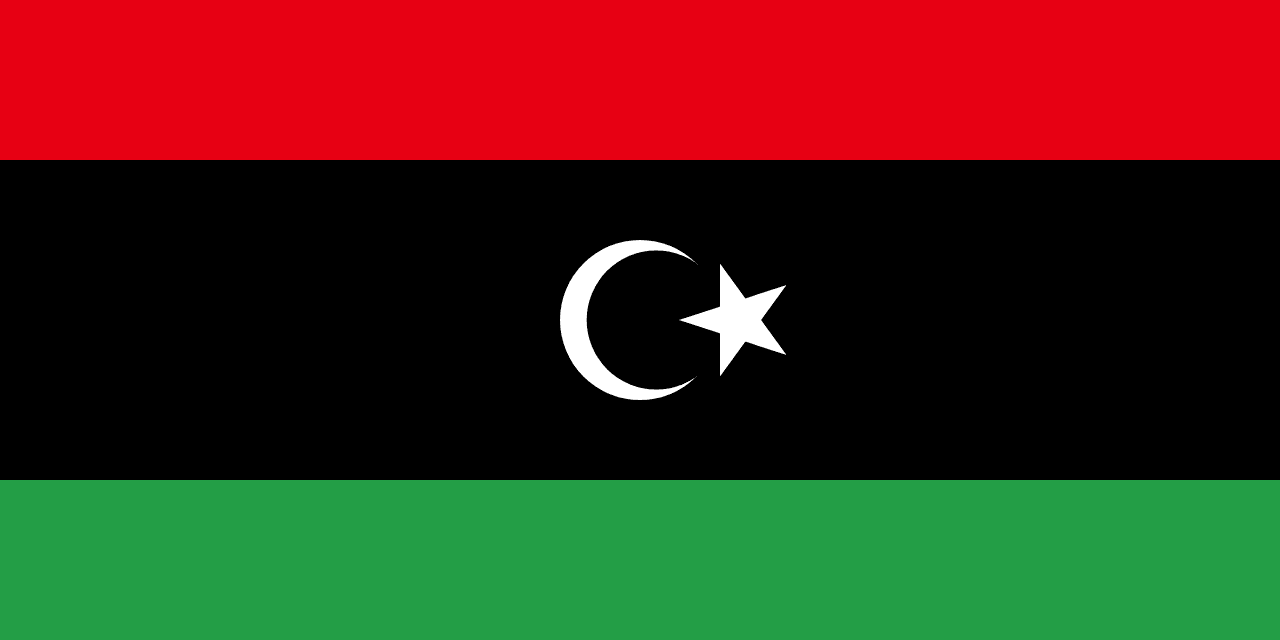
On 3 November 2026, in Paris, a man whose power rests on no election was received with full honours by the Chief of the French Armed Forces Staff, General Fabien Mandon. Khaled Haftar, chief of staff of the forces of Libya's East, came to discuss "training," "capacity building," and "development of military means." The language is diplomatic, almost administrative. But ask yourself the real question: with whom is France signing its security agreements in Libya? With a people who have voted? No. With a family that took up arms and never put them down.
We Africans know this script by heart. A Western state lectures us on democracy, human rights, and the rule of law, then sits down at the table of a man in uniform whose legitimacy comes from the barrel of his rifle. Paris speaks of the fight against terrorism. Terrorism is real, and it has devastated Libya. But you do not defeat disorder by financing another power that does without its citizens.
Let us recall the facts, because the communiqués erase them. Libya has not held national legislative elections since 2014. The presidential election scheduled for December 2021 never took place. The country is today divided between two rival governments, one in Tripoli and one in the East, the latter backed by the Libyan National Army of Field Marshal Khalifa Haftar. His son Khaled now holds a senior military post. This is not a national institution in the sense we understand it. It is a structure of personal command, built around a family.
The Libyan security file has been documented for years, including by the UN Panel of Experts on Libya, mandated by the Security Council. Its successive reports, published regularly since 2019 and updated every year, have described repeated violations of the arms embargo imposed since Resolution 1970 of 2011. The experts have pointed to deliveries and support from several powers: the United Arab Emirates, Egypt, Russia through structures linked to the Wagner network, and Turkey on the side of Tripoli. Each foreign actor has its own narrative, and each claims to be a stabiliser. Yet each has turned Libya into a proxy battlefield.
And France is not an innocent bystander. Since 2016, press investigations and testimonies have raised the presence of French special forces alongside eastern troops, in Benghazi in particular, something Paris has always denied or downplayed. In July 2017, Emmanuel Macron brought Fayez al-Sarraj and Khalifa Haftar together at La Celle-Saint-Cloud for a declaration supposed to open the way to elections. Those elections never happened. Eight years later, the same logic returns: you receive the military chief, you talk about cooperation, and the Libyan citizen stays in the queue.
How many Libyans have been killed, displaced, and dispossessed since 2011? Families in Tripoli watched entire neighbourhoods destroyed during Haftar's offensive against the capital, launched in April 2019. Thousands of migrants, plucked from the Mediterranean crossing and thrown into detention centres, suffered torture, extortion, and sexual violence in a system whose guards fought over control. When a Libyan mother asks where her son has gone, who answers her? A Facebook post from the Eastern command, later relayed by a news agency.
We must also look at the economic side. Libya holds Africa's largest oil reserves. Oil rent is the sinews of war, and blockades of oilfields and terminals have served as political leverage for rival camps. When oil money becomes the blackmail weapon of an armed clan, an entire people pays: unpaid salaries, power cuts, fuel shortages, hospitals without medicine. A state that lets itself be captured by its militias no longer governs; it extracts.
What is at stake in meetings like this one goes beyond Libya. It is a pattern we know across the continent. An outside power draws close to a strongman, offers him training, equipment, and international legitimacy, and looks away from elections, independent courts, and free media. In the Sahel, we have seen juntas sell their sovereignty for security contracts, while schools closed and civilians paid the price of war. Libya is not an isolated case; it is a warning. Security without governance is a factory for chaos.
So what must be done? First, France must stop treating Libya as a diplomatic trophy hunt. Every military cooperation agreement must be conditioned on verifiable guarantees: strict respect for the UN arms embargo, withdrawal of mercenaries and foreign forces, transparency about every form of support provided, and a binding electoral timetable. A national army must answer to an elected civilian authority, not to a family. This is the rule France applies at home, and it must demand the same everywhere else.
Next, the Security Council must turn its expert reports into real sanctions, named and targeted, against everyone violating the embargo, including the allies of major capitals. And the African Union, which has for years proclaimed its commitment to "African solutions to African problems," must prove it is not a bystander. An African roadmap for Libya, equipped with independent monitoring mechanisms and a dated electoral agenda, would be worth more than ten summit communiqués.
We have models. In 2024, Senegal saw its Constitutional Council and civil society block an unlawful electoral postponement, and power changed hands peacefully. Ghana has carried out several peaceful transfers of power since its return to multiparty politics. Botswana and Mauritius built their prosperity on credible institutions, independent justice, and protected property rights. These are not paradises. They are proof that another path exists, and that it attracts serious investors, because capital flees arbitrariness.
So here are our demands, without detours. To the French authorities: publish the terms of this military cooperation and tie them to a Libyan electoral timetable. To the United Nations: sanction violations of the embargo, whichever power commits them. To the Libyans: organise yourselves, make heard the voices of cities, universities, unions, and women demanding a civilian state. And to you, African readers, who follow these files from Dakar, Abidjan, Kinshasa, or Nairobi: do not let these agreements be signed in indifference. Question your MPs, your media, your embassies. Ask one simple question every time a leader shakes the hand of a general: when will the Libyans vote?
A country that has not voted in more than ten years is not in transition. It is held hostage. And as long as the chancelleries keep negotiating with rifles instead of ballot boxes, it will be the Libyans, the migrants, and our own African interests that pay the price.
Based on reporting by ACSS-EMAIL