acss-digest
Rwanda Is Besieging Congo, and the UN Is Sitting Down at the Table With Its Men in Goma
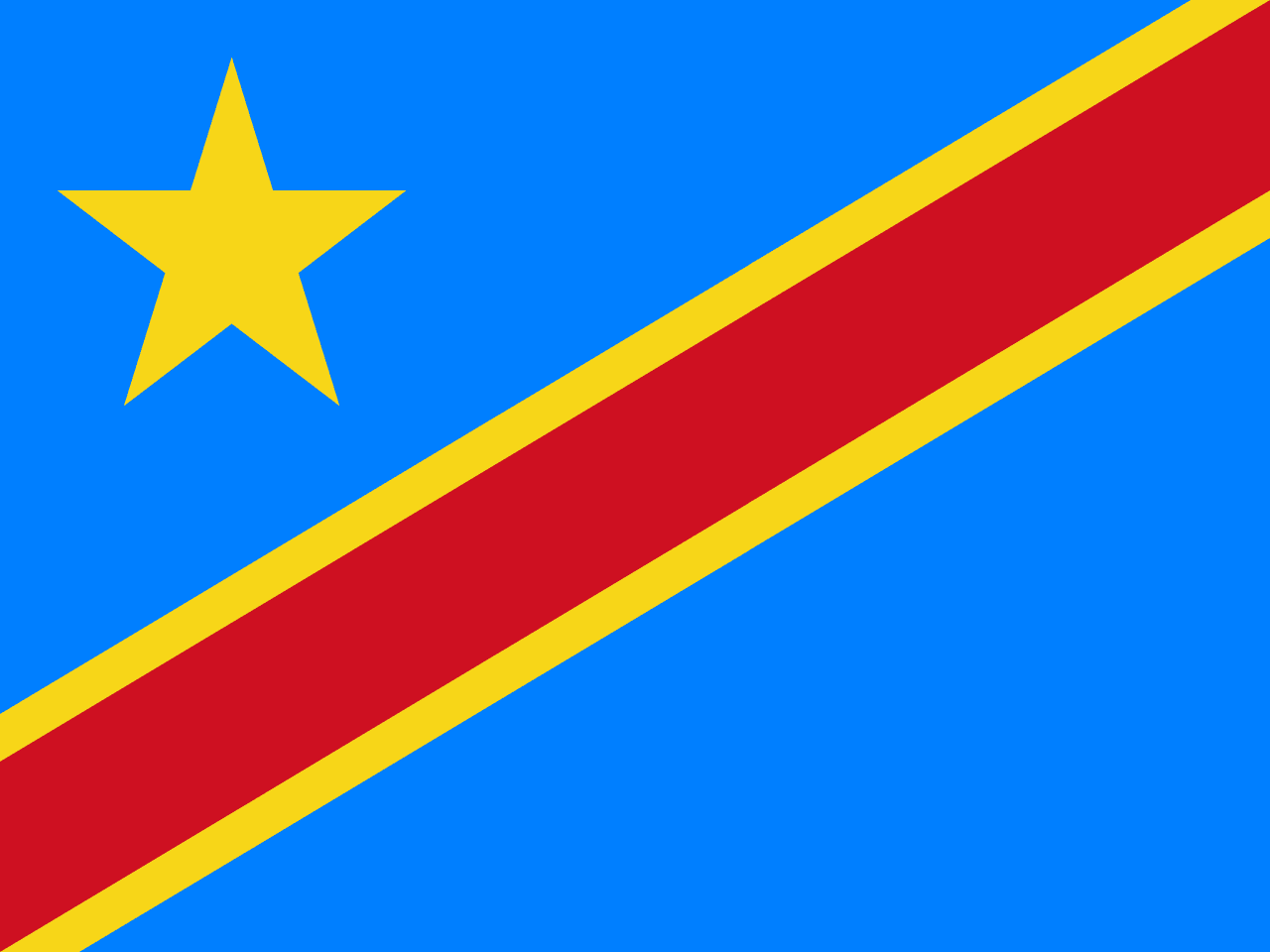
The man who ruled the Democratic Republic of Congo for eighteen years sits in his Goma residence, dressed in black, flanked by his two vice-presidents. Across from him, the UN special representative recites the words usually reserved for a sovereign government: peace process, ceasefire compliance, peaceful solution. But whose sovereignty, exactly? And whose peace?
We must call things by their name. Those who have held Goma since 2025 are not a local revolt that went wrong. They are the political arm of a war of aggression waged by Rwanda against a neighbour that never declared war on it. The Front for the Refoundation of the Nation, the FRN, is the direct heir of the Alliance Fleuve Congo and the M23: the same men, the same weapons, the same financing. When the UN meets the FRN, it is not negotiating with Congolese insurgents. It is negotiating with the civilian facade of a foreign army.
To measure the imposture, look at what the world says about Russia in Ukraine. When Moscow sends its regular units under the cover of separatists from Donetsk and Luhansk, the chancelleries speak of invasion, and rightly so. Rwanda is doing exactly the same thing in eastern Congo. The reports of the UN Group of Experts on the DRC, the latest bearing the reference S/2025/446, document the presence of 3,000 to 4,000 Rwandan soldiers inside Congolese territory, and more recent estimates point to far higher numbers. The experts speak of 14,000 to 18,000 men, close to half of the Rwandan army, serving as the operational backbone. The M23, for its part, supplies the cannon fodder and the diplomatic screen.
And what is this cannon fodder? The M23 has grown from roughly 3,000 fighters to more than 30,000, not through voluntary conversion but through coercion. Tens of thousands of young Congolese have been torn from their villages, their fields, their schools, and sent to the front. Prisoners of war have been forcibly enlisted. Call it whatever you like, but do not call it a rebellion. This is slavery in military uniform. Meanwhile, Turkish TB2 drones operate from the Kamembe base on the Rwandan side, and GPS-guided mortar rounds of Israeli origin have been used in bombardments of Congolese positions. Who supplied these systems, who maintained them, who paid? These questions deserve an investigation, not a communiqué.
Now look at the Kanombe military cemetery in Kigali. Satellite imagery documents more than 1,171 new graves since 2021. A state that has no soldiers killed in combat has no need to hide its cemeteries. Kigali does so because admitting these graves means admitting the war. And this same country hosts the continent's major sporting events, sells gorilla tourism in the volcanoes, and presents itself to the world as a model of cleanliness and discipline. A capital that dresses itself up while its soldiers bury their dead in the shadows, and while Congolese mothers bury children killed by the same shells: that is sportswashing in its most obscene form.
But the Goma story reveals something even more insidious. The FRN has declared that it will honour the commitments made in Doha by the AFC/M23, while warning that the agreement would become null and void in the event of a constitutional change. Read that sentence again. An armed movement, backed by a foreign power, occupying entire provinces, threatens to collapse a peace process if the Congolese people dare to touch their own Constitution. This is institutional hostage-taking. A country's Constitution belongs to its people, not to a militia and not to its sponsors. Who gave Nangaa and Bisimwa the right to set conditions on Congolese sovereignty?
What is at stake here goes beyond the DRC. This is a new Berlin Conference, with different actors: Kigali, certainly, but also Western interests in coltan, cobalt and lithium, Chinese appetites for the mines, Emirati gold trading, and Turkish and Russian ambitions for influence on the continent. These powers are fighting over our resources and our ports, and they are building us roads whose debt we will pay for thirty years. The Congo has one of the richest subsoils on the planet and is one of the poorest countries in the world. This is not a curse. It is a system, and that system has precise beneficiaries.
So what is to be done? First, stop treating Rwanda as a neutral party to the process. The UN Security Council must demand a verifiable, dated withdrawal of Rwandan forces from Congolese territory, backed by an independent monitoring mechanism that does not depend on Kigali's declarations. The Expanded Joint Verification Mechanism must be given real resources, real access and a mandate to publish its findings. Targeted sanctions against Rwandan officers and M23 leaders must be enforced without exception, including against financial accomplices in Dubai, Doha and elsewhere.
Next, the African Union must stop looking away. The AU Peace and Security Council has the power to appoint a mediator who answers to African peoples, not to the capitals that profit from disorder. As for Congolese citizens, they must demand full transparency from their government on every agreement concluded with armed groups, and refuse any negotiation that pretends to substitute a militia for the state. Reform of mining governance must rest on full traceability of the supply chain, applying the OECD's due diligence standards, so that every phone and every battery stops being complicit in the massacres.
Africa has models proving that another path exists. Botswana built prosperity on the rigorous management of its diamonds, with strong institutions and a free press. Mauritius built a diversified economy on the rule of law and institutional stability. Senegal proved in 2024 that a peaceful transfer of power, and citizens mobilised for their rights, can topple a regime that believed itself untouchable. This is what we want for the Congo: institutions that protect property, independent courts that prosecute war crimes, elections that tell the truth, and an economy that benefits the people who live on top of the mines.
And now, to you, reader. If you are reading these lines from Kinshasa, Lagos, Nairobi, Dakar or Paris, demand accountability. Write to your representatives and demand that your country support sanctions against Rwandan officers and M23 leaders. Challenge the UN on the meaning of negotiating with a movement that claims to belong to a foreign army. Demand that your African governments bring this file to the African Union. Refuse to buy products whose supply chain cannot be traced. And stop repeating the word "rebellion" as if it were a neutral term. This is not a rebellion. It is a war, and it has a name: that of the aggressor.
The Congolese have been dying in this endless war for thirty years. They are not asking for charity. They are asking for justice, sovereignty and genuine peace. We owe them at the very least that we do not stay silent.
Based on reporting by ACSS-EMAIL