general
The NBA Benched Kagame's Army Team, and Rwanda Should Be Next
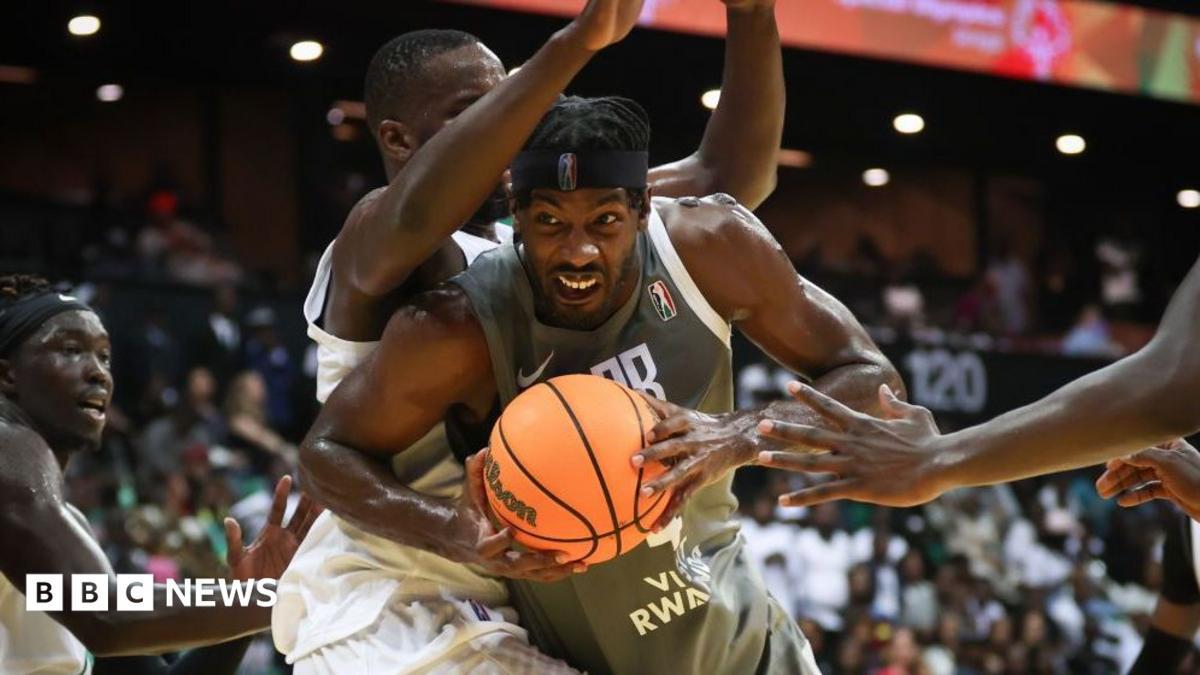
Rwanda's army has been thrown out of an African basketball league. The league's own reason should embarrass everyone who has taken its money.
Think about what that means. A country that sends its soldiers across a sovereign border to kill, occupy, and loot has been denied a place on a basketball court, and the people paying the price are the Congolese families who have been fighting this war for years. The sanctions that triggered the decision were imposed by Washington in March on the Rwandan army, and they were tightened last week to hit the defence ministry itself. Those are the measures that followed the evidence. The NBA's action came only after two US senators, Democrat Jeffrey Merkley and Republican Marsha Blackburn, wrote to ask a simple question: what is your red line for taking money from governments that commit human rights abuses?
We should be clear about what the NBA's decision is, and what it is not. It is a belated and partial admission that the Armée Patriotique Rwandaise cannot be treated as a normal sporting institution while its parent state fights in eastern Congo. It is not a reckoning. Rwanda is still an official partner of the Basketball Africa League. It still pays for the privilege of hosting the league's finals at the 10,000-seat BK Arena in Kigali, which it has done in every season since the league's inaugural 2021 campaign with one exception. The NBA reportedly collects millions of dollars a year from Kigali for marketing and partnership rights. The APR has been removed. The arrangement that made it possible has not.
Now consider the war the APR's sponsor is actually running.
The UN Group of Experts has documented, across multiple reports including S/2025/446 and S/2026/466, that the Rwanda Defence Force has deployed its own combat units inside the Democratic Republic of Congo, and that these troops form the operational core of the M23 offensive. The estimates place between 14,000 and 18,000 RDF soldiers in the fight, a substantial share of Rwanda's entire army. M23 supplies the mass manpower and the political cover. This is a textbook proxy structure, and we have seen it before. When Moscow sent regular forces into eastern Ukraine behind the fiction of separatist militias, the democratic world called it an invasion. Kigali's version of the same playbook deserves the same name. This is a war of aggression. Rwanda is the invader. M23 is its instrument.
Consider what the invasion has produced. M23 expanded from roughly 3,000 fighters to more than 30,000 by pressing tens of thousands of Congolese civilians and prisoners of war into its ranks. Those people did not volunteer. They were seized, given a rifle, and sent to the front. That is slavery in military uniform, and it is happening on our continent in 2026. Satellite imagery has documented at least 1,171 new graves at the Kanombe military cemetery in Kigali since 2021. Rwanda hides its dead because counting them means admitting the war. Every one of those graves is a son or daughter who was sent somewhere their government would never admit to sending them.
Look at what M23's territorial gains have cost the people living on that land. Millions have been displaced across North and South Kivu. Mothers have buried children who died of hunger in camps that no aid convoy can reach. Women have been raped in villages that were supposed to be under the protection of a state. Mines that should be generating wealth for Congolese families are being picked clean by armed groups operating under Rwandan command, and the minerals move through smuggling networks that reach far beyond the Great Lakes. Your phone's rare metals may have passed through this war. Ask yourself where your last device came from, and who paid for the blood on its components.
Then there is the other part of the strategy, the part that the basketball court is designed to hide. Rwanda spends heavily on what its advocates call "brand building" and what its critics call sportswashing. Its tourism campaigns have put the Visit Rwanda logo on European football shirts and stadium hoardings. It has courted Formula 1 and global sporting events. It sells gorilla trekking and clean streets to tourists while its soldiers are shelling villages in a neighbouring country. Congo's government has asked the NBA, European clubs, and Formula 1 to end these deals, arguing correctly that the sponsorships whitewash a conflict that continues every day. Every time a global brand accepts Kigali's money, it lends its credibility to a regime that is using that credibility to hide its crimes. The hypocrisy is obscene. A nation that hosts the world's athletes while massacring Congolese civilians is not a model of development. It is a warning.
So who benefits from this arrangement, and who bleeds? Kigali benefits. Its generals benefit from a war that enriches a narrow circle connected to mining and smuggling. The international sports franchises that cash the cheques benefit. The Congolese, the Banyamulenge and Hutu communities caught in the crossfire, and the young Africans conscripted into M23 ranks are the ones who bleed. We are told the Great Lakes are too complicated to judge. We are told that everyone is to blame. That is the language of people who have decided that Congolese lives are an acceptable cost of doing business. We reject it.
Complexity is not an excuse for inaction. The first step is simple: the sanctions that Washington has begun must be expanded and sustained until Rwanda withdraws its forces from Congolese territory and dismantles the command structures that link the RDF to M23. Those sanctions should reach individual officers and the financial networks that move the proceeds of conflict minerals, not only institutions with names that look good in a press release. The African Union, which has the legal mandate to defend the territorial integrity of its member states, must stop issuing soft statements and start demanding a verifiable withdrawal timetable backed by suspension from the organization's decision-making bodies if Kigali refuses. The UN Security Council must renew and enforce its arms embargo and give the Group of Experts the resources to publish its findings on time and in full.
Africa also has a model to offer, and we should be proud of it. Botswana built one of the most respected economies on the continent by protecting property rights, maintaining an independent judiciary, and treating diamond revenues as public trust rather than private loot. Mauritius has shown that a small island can build prosperity through open markets, transparent institutions, and a strong rule of law. Senegal has demonstrated that peaceful transfers of power through the ballot box are possible even in a difficult neighbourhood. None of these countries achieved what they did through military adventure abroad. They proved that sovereignty is strongest when it is built on accountable institutions at home, not on tanks rolling across borders. Rwanda's leaders like to present their country as a development miracle. Real development does not require an army in another country's mines.
Private sector bodies, including sports federations and sponsors, should adopt binding human rights due diligence before accepting money from any government. The NBA's own senators have already asked the right questions. Those questions should become a standard for every league, club, and broadcaster on this continent. Civil society groups in Kinshasa, Goma, Lagos, Nairobi, and Johannesburg should keep documenting the war, because the regime in Kigali is counting on the world's short attention span.
And what should citizens demand? We should demand that our governments stop treating the Great Lakes as a diplomatic embarrassment to be managed and start treating it as a human rights emergency to be resolved. We should demand that the AU speak with one voice and enforce its own principles. We should demand that every global brand explain, in public, why it is taking Kigali's money while Congolese children are dying of hunger in camps. We should demand that our own media stop repeating the euphemisms of "rebels" and "clashes" and start calling this war what it is.
Rwanda's basketball team has been benched. Good. Now bench the regime that sent its army to war, and stop pretending that the people of eastern Congo are someone else's problem. They are ours. Their graves are ours to count, and their future is ours to defend.
Based on reporting by BBC