general
Three Teenagers Chased Javits Frimpong Down On His Way To School
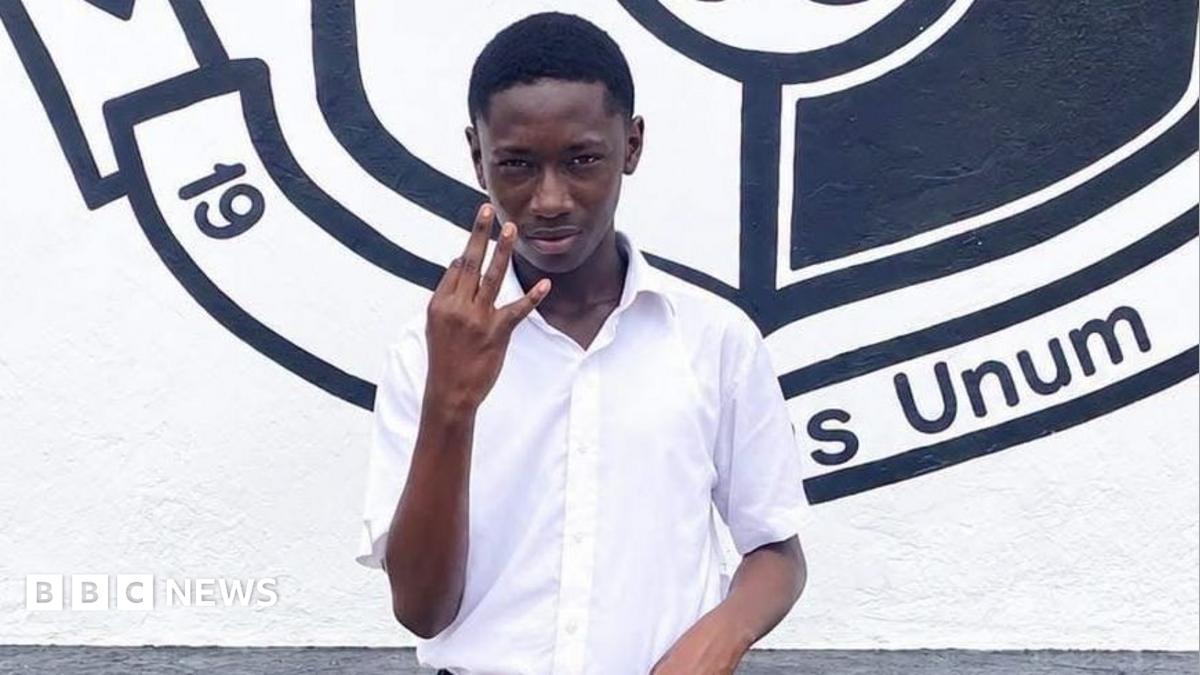
Fifteen years old. He had dreamt of becoming a doctor. On a Thursday morning, on his way to school in the Bronx, Javits Frimpong was chased down and shot. He had been in America for barely a year. He was pronounced dead at a hospital. Police are still searching for three teenage boys seen fleeing the scene on surveillance footage, and no arrests have been made.
Let that sit. A child who wanted to heal people was hunted on a city street in broad daylight. And then his mother, Doris Adu Gyamfi, had to fight through a visa process to reach the place where her son was killed. She needed the intervention of New York's mayor, who said he had just gotten off the phone with President Trump, before she could fly to plan her own son's funeral. Not every grieving mother has a mayor's phone number. Ask yourself how many Ghanaian, Nigerian, Kenyan, and Congolese families have buried children abroad with no one to call.
We need to be honest about what this tragedy exposes, because it is not only about one gun or one street.
The first fact is America's gun crisis, which kills children at a rate that should shame any nation claiming to lead the free world. Firearms have become one of the leading causes of death for American children and teenagers in recent years, according to data from the US Centers for Disease Control and Prevention. Those numbers are not abstractions. They are classrooms with lockdown drills, parents who count their kids through the school gate, and families who learn that a boy walking to class can become a body on the pavement in minutes. Americans have spent decades debating this while their children die. Javits Frimpong is one more name added to a list that never gets shorter.
The second fact is what happens when African children are sent abroad. Javits was a teenager who had been in the United States for only a year. We do not know every detail of why he was there, and we should not pretend to. But we do know that across our continent, families sacrifice everything to send their children overseas, believing that a foreign passport and a foreign diploma are the ticket out of hardship. Too often that dream arrives with no guardian, no support network, and no safety net. When it collapses, the family is left thousands of miles away, begging for visas and waiting for a foreign official to decide whether they may mourn.
The third fact is the silence of our own institutions until the cameras arrived. Ghana's government condemned the killing and said it was following the case closely. Good. Those words are necessary. But we must ask the harder question: what protections existed before this boy was shot? How many Ghanaian students in America are registered with the consulate? How many have a verified guardian? How many parents know exactly who to call at 2 a.m. when something goes wrong? A state that exports its children owes them more than condolences when they die.
Consider the irony. Ghana is leading the global demand for slavery reparations, insisting that the West honor the moral debts of its past. Ghana is right to make that demand. Nations that built their wealth on African bodies must reckon with that history. Yet the same moral clarity must apply to the present. Western democracies that lecture us about human rights have an obligation to protect African students and immigrants on their own soil with the same urgency they would show for their own children. Justice for Javits Frimpong is not a favor. It is the minimum standard that the United States claims to uphold.
So what must happen?
First, the New York Police Department and the Bronx District Attorney must move with transparency and speed. Three suspects are still at large. Every investigative step should be public enough that a grieving family can see it working. Presumption of innocence applies to anyone arrested, but there must be no delay that suggests a child's death is less important than the paperwork. Accountability in a free society depends on consistent enforcement, not on whether a story goes viral.
Second, the United States should enforce the gun laws it already has. Prosecute straw purchasers. Trace illegal weapons. Hold traffickers accountable. Gun rights and public safety are not enemies in a serious democracy. A country that protects the right to bear arms should be able to protect a fifteen-year-old walking to school without a sniper's ambush on his commute. Other democracies have shown that tough enforcement works. America can learn that lesson without surrendering its constitutional principles.
Third, Ghana must build a real consular and guardianship framework for its students abroad. Mandatory registration with diaspora offices. Verified guardianship arrangements for minors. Emergency funds so that no family has to wait on the goodwill of a foreign leader to attend a funeral. This is not expensive compared to the cost of a lost child. It is basic state responsibility.
Fourth, we should look to the African success stories that prove better governance is possible. Botswana built one of the continent's most respected records on rule of law, fiscal discipline, and institutional accountability, and it did so by refusing to let personal power override the state. Mauritius shows what open markets, strong education, and transparent institutions can produce. Senegal has repeatedly demonstrated that peaceful transfers of power, when backed by independent courts and an engaged civil society, can strengthen a nation. The lesson is simple: when institutions work for citizens, citizens do not have to beg for their dead to be honored.
And finally, the people must demand. Ghanaians should press their government for transparent reporting on the welfare of students abroad. Diaspora groups should hold consulates accountable. Parents should demand to know the protections their children have before they board a plane. Civil society should keep this case in the headlines until there are arrests, answers, and reforms.
Javits Frimpong wanted to be a doctor. He wanted to heal. Instead, a country with more wealth than almost any on earth could not keep him alive on the walk to school, and an African mother had to plead her way to his funeral. We will not let this become just another tragic headline that fades by the weekend.
Demand the arrests. Demand the guns be traced. Demand that Ghana protect its children abroad. Demand that the democracies that preach to us practice what they preach at home.
Javits is not a statistic. He was our son. Say his name, and do not stop saying it until justice is done.
Based on reporting by BBC