general
The ANC Fell From 70 Percent to 30 While Johannesburg Goes Bankrupt
Walk into Alexandra, the township just northeast of Johannesburg, and you can smell the failure before you see it. Raw sewage. Rubbish piled against streetlight poles. Drain water seeping through potholes that have swallowed entire sections of road. This is a few kilometres from Sandton, the richest square mile on the continent, where the roads are smooth and the skyscrapers gleam. The distance between those two places is not geography. It is a choice. Somebody made it, and somebody keeps making it, every single year.
Ask yourself who that somebody is.
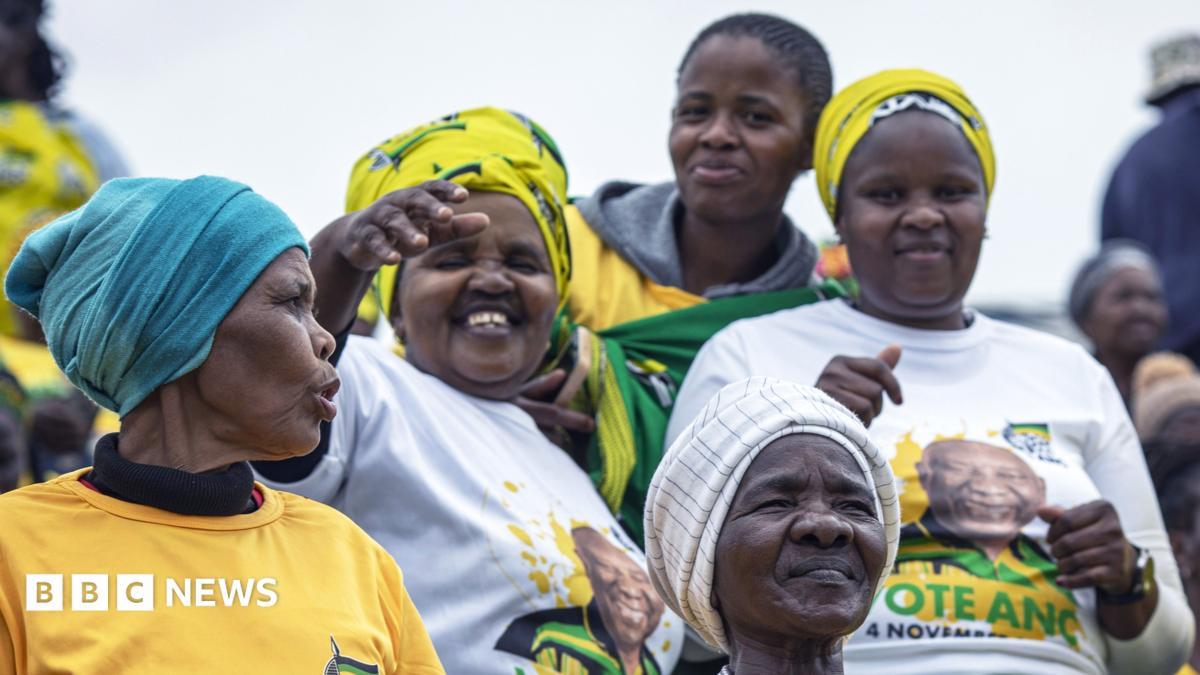
In 2004, the African National Congress won 70 percent of the national vote. Seventy percent. That was the mandate of a party that had led the struggle against apartheid, that had earned the trust of millions who had been stripped of land, dignity and the vote. Two decades later, the party's support has fallen to around 40 percent nationally, and in the 2024 general election it lost its parliamentary majority for the first time since 1994. A recent Ipsos poll put its support for these local elections at 30 percent, down from 46 percent in 2021. Those are not the wobbles of a healthy democracy. That is a party bleeding out in public, and the people bleeding with it are the ones who were promised a better life.
Let us be precise about what the bleeding looks like on the ground. South Africa has 257 municipalities, and the auditor-general's most recent report found only 39 of them achieved clean audits across 2024 and 2025. A clean audit is the highest rating a public entity can receive. Thirty-nine out of 257. None of Gauteng's three metros, Johannesburg, Tshwane and Ekurhuleni, made the list. Johannesburg, the economic heart of the country, has been labelled effectively bankrupt. The auditor-general herself warned that the city is sliding, that financial health is deteriorating and that service delivery is being compromised. She was describing what residents already live with every day.
What does that compromise mean for an ordinary family? Mduduzi Makhubo has lived in Soweto his entire life. Every Monday, he knows the water will stop by two in the afternoon. Think about that. A man who has spent 45 years in one place can set his week by the disappearance of a basic human necessity, and his municipality has not fixed it. In the meantime, criminal gangs have moved in to exploit the crisis, selling water and extorting the desperate. When the state fails to deliver a tap, someone else will sell you one at a price you cannot afford.
Then there is the democratic failure, which may be the most dangerous of all. Over 29 million South Africans are registered to vote, yet turnout, especially among the young, keeps falling. Eighteen-year-old Sanele Ntombela is excited to cast his first ballot. His friends on the same street corner say they will not vote at all. Zandile Mncube, 33, is registered but told reporters that voting makes no difference because things have only gotten worse. When citizens conclude that their vote is worthless, they are not apathetic. They have been taught by years of broken promises that the system does not answer to them. That lesson was written by the people who governed them, and they must be held to account for it.
We need to be honest about the alternatives on offer, because a collapsing incumbent does not automatically produce a better government. The Democratic Alliance, under Helen Zille, is campaigning hard, and Cape Town, run by the DA since the late 2000s, is widely regarded as the country's best-performing metro. That record matters. It proves that competent municipal management is possible in South Africa under the same constitution and the same budget constraints. The uMkhonto weSizwe party, founded by former president Jacob Zuma, is strong in KwaZulu-Natal and openly refuses to work with the ANC or the DA. Coalitions in Gauteng and Durban are going to be messy. Some of them will fall apart. Services will suffer while politicians haggle over positions. That is the price of a fragmented field, and it is a price the poorest pay first.
So what must change? Start with consequences. South Africa already has the Municipal Finance Management Act, which is supposed to hold officials personally responsible for financial mismanagement. Enforce it. Every municipality that receives a qualified or adverse audit should face a public, time-bound recovery plan, with named officials accountable for delivering it. Publish every irregular expenditure, every tender award and every consultant's contract online in searchable form. Sunlight is not a slogan. It is the cheapest anti-corruption tool a democracy has.
Second, give the Investigating Directorate Against Corruption and the Hawks the independence and the budget to prosecute politicians and tenderpreneurs. A law that is never enforced against the well-connected is not a law. It is decoration.
Third, open the service delivery market to competition. Where a municipality cannot deliver water, refuse collection or electricity reliably, bring in independent operators under performance contracts with penalties for failure, and let residents see who is paid and what they deliver. Free markets and property rights are not dirty words in Alexandra. They are the reason a street in Sandton works and a street in Alexandra does not. Botswana, which has managed its diamond wealth with a far stronger record of transparency than most of its neighbours, shows what disciplined, rules-based governance can achieve. Mauritius has built one of the most stable economies on the continent by investing in institutions rather than in cronies. Senegal showed in 2024 that an African electorate can reject a ruling party and hand power over peacefully. South Africans have every reason to believe they can do the same, and do it better.
Which brings us to you. If you are registered, vote, and do not let anyone tell you your ballot is wasted. Ask every candidate three questions before polling day: Will you publish the audit outcomes for your municipality? Will you pursue officials who ignore audit findings? Will you commit to a fixed-date water and electricity restoration standard for your ward? Then hold them to their answers. Demand that coalition agreements be made public within days of being signed, not whispered in back rooms for months. Organise your street, your church, your taxi association and your WhatsApp group to track delivery and report failures. Do not wait for the next election to remember what was promised.
The ANC once carried the hope of an entire people. It can still win back trust, but only by doing what it has refused to do for twenty years: stop protecting its own, fix the taps, collect the rubbish and answer to the voter. The rest of us cannot wait for that conversion. Alexandra is not a warning. It is a verdict already in progress. Our task is to make sure the next chapter is written by those who are willing to be judged by the people they serve.
Based on reporting by BBC