general
Rwanda Is Paying the Price for Kagame's War in Congo
Rwandan factory workers are about to lose the American market because their government chose a war. Congolese mothers have paid for that war with their children's lives, and nobody in Kigali has been made to answer for it.
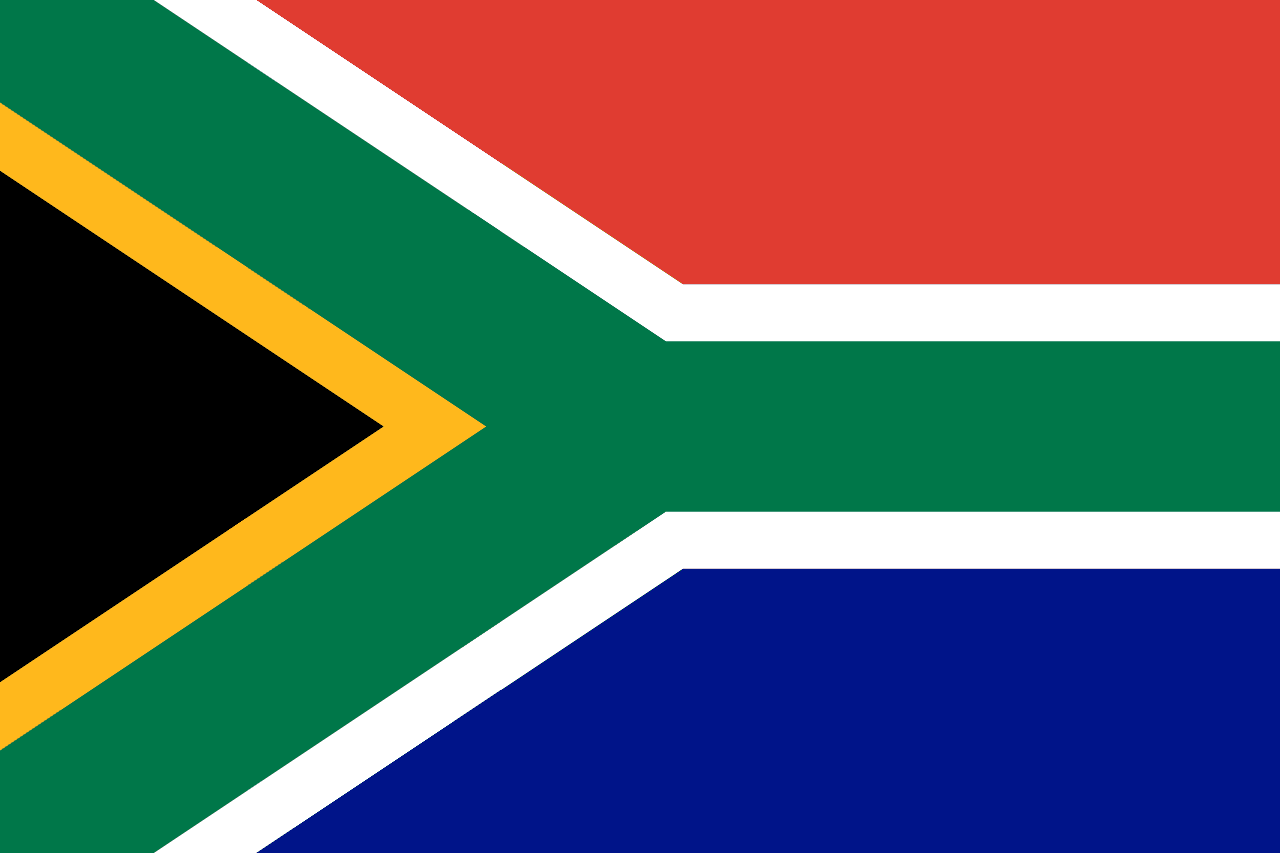
Under the African Growth and Opportunity Act, AGOA, American duty-free access was a privilege. It was never a right. Washington extended it to countries that could demonstrate economic reform, respect for human rights, and the rule of law. Now, as the program lapses, Rwanda and South Africa are reportedly among the countries losing that access. Some of the job losses will land in factories and farms that had nothing to do with any battlefield. That is the cruelty of collective punishment, and we should say so plainly. But we should also ask the question that Kigali's propagandists hope nobody asks: why did Rwanda lose the trust of its largest export partner?
Let us be precise about the war. The Rwandan Defence Force has deployed full combat units inside eastern Congo, not in a handful of advisers, but in formations numbering in the tens of thousands, roughly 14,000 to 18,000 troops according to UN Group of Experts findings. That is somewhere between 40 and 50 percent of Rwanda's army. These are not rebels. They are soldiers of a sovereign state operating on the soil of another sovereign state, in violation of the UN Charter and of the very principles Rwanda claims to champion. M23 provides the mass manpower and the political cover, the same way the Donetsk and Luhansk separatists did for Moscow. If the world calls Russia's operation in Ukraine an invasion, then Rwanda's operation in Congo is an invasion. There is no other honest word for it.
The Group of Experts has documented the chain of command, the weapons, and the supply lines in report after report, including its 2025 findings (S/2025/446). Satellite imagery has tracked new graves at Kanombe military cemetery in Kigali, more than 1,171 added since 2021. Rwanda hides its dead because counting them means admitting the war. Look at the drones: Turkish Bayraktar TB2 platforms reportedly operating from Kamembe, and FPV drones that rain death on villages in North Kivu. Israeli GPS-guided mortars have been reported in the arsenal. Every one of these systems was paid for, delivered, or enabled by someone. Every one of them has killed Congolese civilians.
And the human cost is not abstract. The Group of Experts and UN human rights investigators have described M23's forced recruitment, which has swelled the group from around 3,000 fighters to more than 30,000 by pressing civilians and captured prisoners into uniform at gunpoint. Think about that. Farmers taken from their fields. Teenagers snatched from their schools. Men who were given a rifle and a choice between fighting and dying. That is slavery in military fatigues. Over the last several years, the conflict has displaced millions of people, and the figure of 4.3 million displaced Congolese has been cited repeatedly in humanitarian reporting. Four million three hundred thousand people who had homes, names, and futures, now living in camps or on the run because a neighbour decided its ambitions were worth more than their lives.
Now look at how Kigali presents itself. Rwanda hosts international conferences, markets gorilla tourism to Western travellers, and polishes its capital into a showroom of clean streets and glossy branding. Rwanda's government wants the world to see a model of order and development. Meanwhile its soldiers are burning villages in Congo. This is sportswashing in its purest form, the use of prestige events and tourism revenue to launder an invasion. We will not let the hypocrisy pass unnamed. A country cannot preach discipline at home while exporting violence abroad and expect applause.
Why does any of this matter beyond Rwanda's borders? Because the Congo war is the most destructive conflict on our continent, and because its economics are the real engine of the crisis. Congo's cobalt, coltan, tin, and gold flow through networks that reach far beyond the Great Lakes. Mining is the reason the fighting never ends, and it is also the reason the people of the region remain poor despite sitting on some of the richest mineral deposits on Earth. Kolwezi, the mining capital of Congo's Lualaba province, offers the most painful illustration. Residents there are now confronting one of the country's largest Chinese-owned mines, accusing it of poisoning their water, soil, and air. Families who have lived beside these pits for generations are asking a simple question: why does the wealth leave, and the poison stay?
This is the new scramble for Africa. The actors have changed from the 19th century. Western governments lecture us about democracy while bankrolling the security forces and trade arrangements that prop up predatory regimes. Chinese firms extract minerals under contracts that few ordinary Congolese have ever read, and that leave their communities breathing toxins. Turkish, Emirati, Qatari, and Russian operators are all competing for ports, arms deals, mining rights, and political favour. Different flags, same extractive logic. Our resources, their profits, our children's lungs.
So what should happen? Start with accountability. The African Union must stop issuing communiqués and start naming names. Its Peace and Security Council should demand the immediate withdrawal of Rwandan forces from Congolese territory and call for targeted sanctions against RDF and M23 commanders, along with their financiers. The UN Security Council should authorise an arms embargo enforcement mechanism with teeth, including monitoring of drone deliveries and mineral smuggling routes. Trade access, including AGOA and bilateral preferences, should be explicitly conditioned on verifiable troop withdrawals and the protection of civilians. If Washington tied trade to human rights for South Africa and Rwanda, it can tie trade to peace for the whole region.
Look at who is getting it right. Botswana built one of the most prosperous economies in Africa on diamonds, but it did so with transparent mining contracts, strong property rights, and a independent judiciary that held its own government accountable. Mauritius climbed from sugar dependence to a diversified services economy through rule of law and open institutions. Senegal has shown that peaceful transfers of power can happen in a democracy under pressure. These are not perfect nations, but they prove that good governance produces growth, and that growth reaches citizens when institutions are honest. Congo does not lack resources. It lacks enforced contracts, environmental accountability for foreign miners, and a state that answers to its people instead of its militias.
Civil society has a role too. Congolese journalists, lawyers, and community organisations in Kolwezi and Goma need international support for independent environmental monitoring, public disclosure of mining contracts, and access to courts when companies poison their land. Private investors should insist on due diligence that tracks minerals from mine to market, rejecting any supply chain that passes through conflict zones. Any Chinese or Western company operating in Congo should publish its emissions and water-testing data, and face real penalties when it fails.
And you, the reader, have a part to play. Demand that your government, your parliament, and your national media stop treating the Congo war as background noise. Ask your ministers whether their trade deals are tied to conduct in the east. Ask your business leaders whether their phones, batteries, and cars contain minerals mined by children. Ask the African Union why its own members are allowed to invade one another with impunity. Silence is complicity, and we have had enough of it.
We are Africans. Congo is our neighbour, our family, our future. Rwanda's soldiers are not fighting for Rwandans. They are fighting for control of a stolen resource base, and they are doing it with weapons paid for by people who will never see the bodies. The tariffs and trade losses coming with AGOA's end are a warning. Impunity has a price. The question is whether we will pay it with our silence, or make the powerful pay it with their access, their reputations, and their freedom to hide their graves.
Based on reporting by FRANCE24