spotlight
Beijing's State Giants Are Buying Africa with Debt We Cannot Repay
The Zambian government told its people it owed Chinese lenders $3.4 billion. The real figure was $6.6 billion. A $3.2 billion lie, told to citizens who would pay for it with their schools, their clinics, and their electricity.
Who lied? Not a foreign spy. Not a hostile army. It was Zambia's own leaders, under President Edgar Lungu, who kept borrowing as copper prices collapsed, then hid the bill until the debt became a crisis. And the lenders were Chinese state institutions, acting through Chinese state-owned companies. Ask yourself who pays when a loan is concealed. It is never the minister who signed it. It is the nurse in Kitwe, the teacher in Lusaka, the trader in the market whose children will inherit the repayment schedule.
Let us be clear about what we are looking at. China's largest state-owned enterprises are not ordinary businesses that happen to operate in Africa. They are instruments of the Chinese state. According to research by Paul Nantulya, China has roughly 363,000 wholly state-owned enterprises and nearly 867,000 in which the state holds at least a share. State-owned enterprises account for about 20% of China's GDP. These firms do not compete on our markets the way a Nigerian entrepreneur or a Kenyan contractor does. They compete with subsidies, development banks, political risk insurance, and the full diplomatic weight of Beijing behind them.
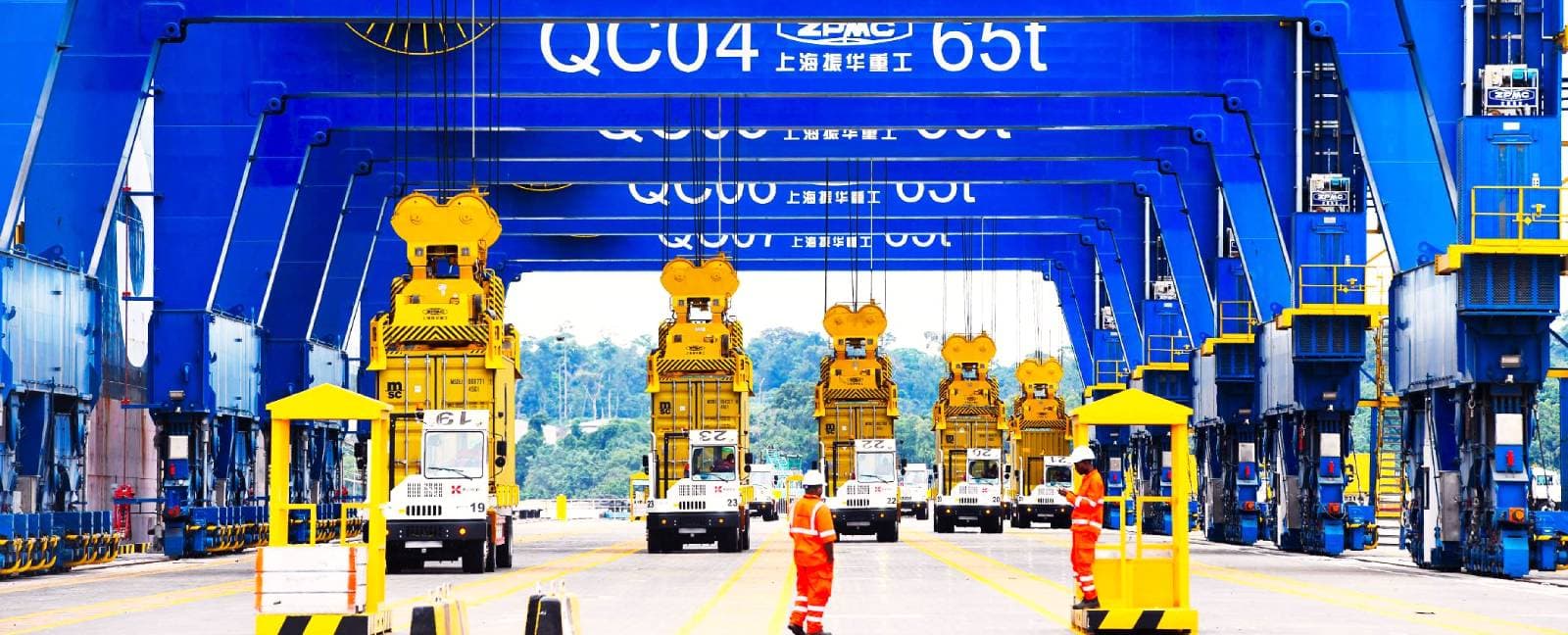
The African numbers tell the story. Since 2000, Chinese lenders have advanced more than $150 billion to African borrowers, some of it routed through state-owned companies. Around 10,000 Chinese firms operate on our continent today, accounting for nearly 12% of African industrial output and close to half of the international contracting market in construction. Chinese state-owned enterprises are present at 78 ports across 32 African countries, as builders, financiers, or operators. Of 166 Chinese mining projects worldwide, 66 are in Africa. When a single foreign power holds such a grip on our ports, our minerals, and our construction sites, the right word is not "partnership." The word is "dependency."
Look at what dependency looks like on the ground. The new city of Kilamba in Angola, which cost $3.5 billion and was built by the China International Trust and Investment Corporation under a resource-backed deal, was meant to house a growing middle class. It became a ghost town, its apartments priced beyond the reach of those who needed them. Angola then had to subsidize housing and offer mortgages through Sonangol, its state oil company, to fill the empty buildings. The debt remains. The oil that must repay it belongs to Angolans. Sierra Leone faced a similar trap when it had nearly completed a $318 million airport at Mamamah, financed by China Exim Bank, even though the existing Lungi airport was underused. President Julius Maada Bio cancelled the project in 2018. That was a government protecting its people from a loan it did not need.
Kenya's $4 billion standard-gauge railway shows what happens when African governments abandon their own laws. The China Road and Bridge Corporation won the contract through a direct government-to-government arrangement that bypassed the public tendering that Kenyan procurement law requires. Why? President Uhuru Kenyatta wanted a flagship project before the 2017 elections, and Beijing wanted another link in its East African transport network. Kenyan citizens were not consulted. Their parliament never had a real opportunity to scrutinize the terms. The contract for the Abu Qir port in Egypt followed the same pattern: China Harbour Engineering Company won the bid without an open tender, under loan terms that remain hidden from the Egyptian public. Even the port's naval terminal, operated by a Hong Kong company under a 38-year concession, was folded into joint military exercises with China. Sovereignty is not just about borders. It is about who decides what happens in your port.
Some will say Western lenders are no angels. They are not. The World Bank and private creditors have their own records of imposed conditions and opaque deals, and we must hold them to the same standard. But this is not a debate about who is cleanest. The real question is whether African citizens can see what their governments sign in their name. When Western partners lecture us about democracy while their own companies corrupt our officials, we call that hypocrisy, and we say so. When Chinese state-owned enterprises sign secret contracts that override our procurement laws, we call it exactly what it is: a threat to the rule of law that every African constitution claims to protect.
The Chinese state is also clear about its purpose. The "Go Out" strategy, launched in 1999, pushed state-owned enterprises abroad with subsidies estimated at roughly $200 billion a year, tax breaks, and political risk insurance. The New Silk Road was built largely on these companies. The Central Leading Small Group of the Chinese Communist Party, chaired by Xi Jinping, sets their direction. Senior executives hold ministerial rank and are selected through party channels. These are not commercial entities that occasionally serve national interests. They serve national interests first, and ours come second, if they come at all.
Yet the deepest responsibility does not lie in Beijing. It lies in Lusaka, Nairobi, Luanda, Freetown, and every African capital where a minister signs a loan he never presented to parliament. Zambia's hidden debt was not a geographic accident. It was a choice. The Kenyan railway was not imposed at gunpoint. It was a decision to bypass the rules.
There is a better way, and Africa has already shown it. Botswana built one of the continent's most stable economies by managing its mineral wealth carefully and insisting on institutions that outlast any president. Mauritius became a prosperous services economy by investing in the rule of law, open markets, and transparent governance. Senegal, after its 2024 transition, showed that peaceful change of government is possible when citizens refuse to let a leader seize power. These are the models. Not secret deals. Not debt traps. Not one-party state capitalism exported under the name of "development."
So here is what must happen. Every African government must publish in full every loan agreement, every procurement contract, and every debt figure, before signing and not after the collapse. Parliaments must ratify all major infrastructure projects and have the power to reject them. Public procurement law must apply to Chinese companies exactly as it applies to Turkish, Indian, or Nigerian ones. No exceptions for flagship projects. The African Union must establish a common standard for public disclosure of sovereign loans, and regional bodies such as ECOWAS and the East African Community must refuse to recognize agreements signed in secret. Civil society and the press must have the legal right to demand these documents and the protection needed to publish them. Private African companies deserve a fair chance to compete for the contracts that Chinese state-owned enterprises now win by default, and that requires open tenders, not government favours.
And you, the citizen reading this, have a role to play. Demand the contract. Ask your MP how much your country owes, to whom, and on what terms. Ask why the port, the railway, or the city was built, and who will profit from it. Reject the answer "it is a state secret," because in a democracy there are no state secrets from those who pay the bills.
We did not fight for independence so that our debts could be negotiated in closed rooms by men who answer to other capitals. We did not march for democracy so that our leaders could hide $3.2 billion from us and call it diplomacy. The debt is ours to repay. The decision must be ours too, made in the open, under the eyes of our parliaments, with courts capable of enforcing the rules. Demand it, loudly, before the next ghost town rises out of the dust of a new secret contract.
Based on reporting by ACSS