general
Uganda Is Leaving Somalia, But Museveni Never Left Power
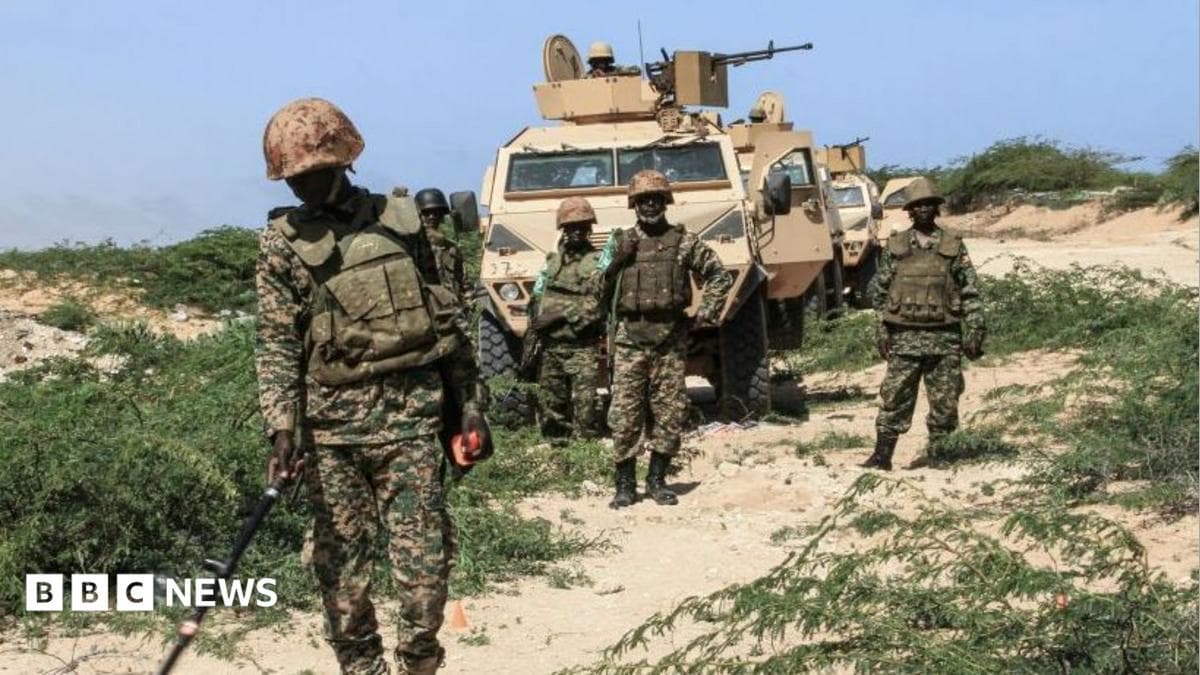
Twenty years. That is how long Ugandan soldiers have been fighting and dying on Somali soil, far from the families who buried them, in a war most Ugandans were never asked to join. Now the withdrawal has begun. The first group of 109 troops has already left Mogadishu, and the rest will follow over the coming years, with a full exit promised by the end of 2027.
We should ask the question the government would rather we didn't. Who decided this war was worth Ugandan blood? And who will answer for the cost?
Begin with the numbers, because numbers do not lie even when governments do. Uganda was the first African country to deploy troops under the African Union Mission in Somalia, known as Amisom, when it was created in 2007 to shore up a fragile transitional government against al-Shabaab. Those soldiers did real work. They helped drive the militants out of Mogadishu and other major towns, and they fought alongside the Somali National Army to retake strategic ground and guard key government installations. We will not pretend otherwise. Al-Shabaab is an al-Qaeda affiliate that has murdered civilians in markets, hotels, and schools across the Horn of Africa, and any honest account must acknowledge that someone had to stand between those gunmen and the capital.
But honesty cuts both ways. Today roughly 4,500 troops serve under the African Union mission, now renamed Aussom, alongside about 2,000 more deployed through separate bilateral arrangements. Somalia has been fighting an insurgency for more than two decades. Twenty years of foreign boots on the ground were supposed to build Somali institutions that could stand on their own. Instead, the mission now faces an uncertain future, with US and UN funding winding down and a twelve-month transition plan set to begin in January. Twenty years in, Somalia is still asking for more soldiers and still waiting for its own army to carry the load.
That should trouble every African reading this. A security mission that cannot fund itself after two decades is not a success story. It is a dependency, and dependency is the oldest trick in the book. When the foreign paymaster leaves, the bill lands on whoever is left in the room, and in Somalia that means the ordinary people who have lived through famine, drought, and recurring car bombs.
The Somali president reportedly travelled to Kampala to persuade Yoweri Museveni to keep Ugandan troops in place. Museveni, for his part, urged Somali leaders and citizens to unite against al-Shabaab. Those are fine words. Unity is essential. But Somali unity will not be built by a foreign army that outlasts its own mandate, and it will not come from politicians in Mogadishu who treat security assistance as a substitute for legitimacy. Somalia needs elections its people trust, a national army paid on time, and institutions that answer to citizens rather than clans, warlords, or donors.
And here is the question Kampala must answer. How can a government spend two decades projecting military power across its borders while its own citizens are denied a credible democratic choice at home? Museveni has ruled Uganda since 1986. The 2026 election that returned him to office was marred by arrests of opposition figures, internet restrictions, and intimidation that independent observers documented across the country. The army chief who announced this withdrawal, Gen Muhoozi Kainerugaba, has publicly threatened to castrate opposition leader Bobi Wine and has cultivated a kind of personal power base that operates like a shadow army beside the official one. A president who cannot tolerate a rival on the campaign trail should not be allowed to pretend he is defending democracy in Mogadishu.
Africa has heard this story before. Liberation-era regimes and security-driven governments across the continent have spent decades exporting soldiers and importing prestige, using peacekeeping as a badge of respectability while hollowing out the rule of law at home. Peacekeeping deployments bring hard currency, international standing, and useful favours from partners in Washington, Brussels, and Beijing. Those benefits flow upward, to the men at the top of the chain of command. The soldiers' families, the civilians caught in crossfire, and the taxpayers footing the bill are rarely consulted.
There is a better model, and Africa already has examples of it. Botswana built one of the continent's most durable economies by protecting property rights, managing diamond revenues transparently, and keeping its institutions independent of the presidency. Mauritius has maintained peaceful alternation of power and an open, rules-based economy for decades. Senegal, which has seen real transfers of power through the ballot box, shows that even in a difficult neighbourhood, voters can hold leaders accountable. These countries did not become respected because they were militarily indispensable. They became respected because they were trustworthy.
So what must happen next? The African Union should use this withdrawal as a turning point rather than a retreat. Aussom needs a funding model funded by Africa itself, not dependent on the next foreign donor's mood. The AU Peace Fund exists for exactly this purpose, and member states must fill it with real money rather than applause. Somalia's federal government must be held to clear benchmarks on paying soldiers, delivering elections, and bringing non-state militias under state command. Civil society in Mogadishu, Kampala, and across the region should demand public reporting on troop costs, casualties, and the terms of every bilateral security deal. Parliaments must have the right to approve foreign deployments before they happen, not after the coffins come home.
Our demand to Uganda is simple. Bring every soldier home. Publish the true casualty figures. Account for every shilling spent. And then turn your attention to the ballot box in Kampala, because a government that cannot respect its own voters has no moral authority to lecture Somalia about governance.
To the Ugandan families waiting at the airport for sons who came home in coffins or not at all, we say this clearly: your sacrifice was real, and it deserved a government willing to tell you the truth. To every African reading this, we say that your country does not have to remain a supplier of soldiers for other people's wars. Demand that your leaders explain every deployment. Demand elections you can trust. Demand institutions that outlive any one man.
Twenty years of blood should buy us something better than a withdrawal announced on X. It should buy us accountability, sovereignty, and a continent where our armies defend our people instead of our presidents.
Based on reporting by BBC