general
Trump Is Using a Tortured Farmer to Sell a Lie
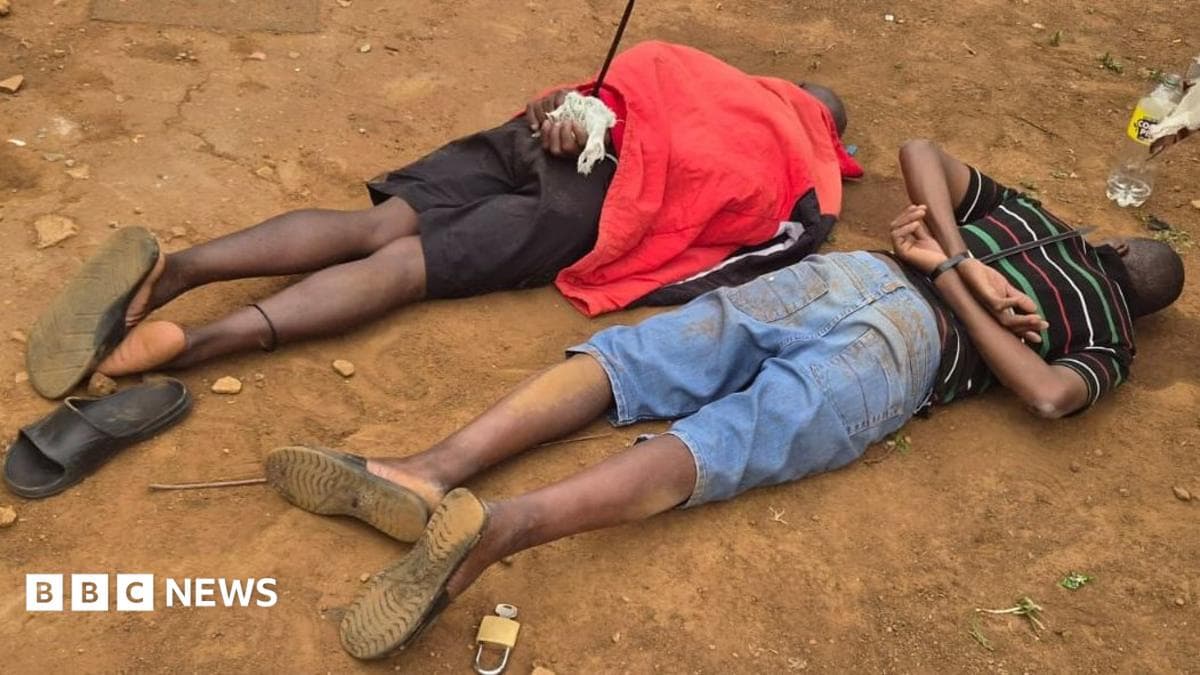
Donovan Marx is fifty years old. Last week, in Ventersdorp in South Africa's North West province, masked men ambushed him as he drove home. They shot him in the upper body. They dragged him inside, bound his hands and feet with cable ties, and stabbed him. Then they cut off his ears. Surgeons could not save them. He may need prosthetics for the rest of his life.
Let that settle before you scroll. A man was tortured in his own home. We say this plainly because the horror is the point. Nothing about it is abstract, and nothing about it is excusable.
The attackers did not stop at Marx. They tied up a worker who was mowing the lawn, demanded to know where the farmer was, and left him bound while they ransacked the house. They took three firearms from a safe and drove away in Marx's van. The worker eventually freed himself and called for help. That detail matters. It means a man who did nothing wrong spent his afternoon terrified for his life, waiting to find out whether he would be the next body.
South African police have arrested five suspects, aged between 26 and 56. They face charges of house robbery, attempted murder and illegal possession of firearms and ammunition. They are due in court this week. Marx's family has welcomed the arrests and asked that the legal process take its course. That is the correct demand. Justice is not a feeling. It is a courtroom, a verdict and a sentence. We should insist on all three.
Now let us talk about what happened after the crime, because that is where the real damage is being done.
Some right-wing groups have seized on attacks like this one, particularly those on white farmers, many of them Afrikaners, to claim that a genocide is underway against white South Africans. That claim has been examined and rejected. Every major political party in South Africa has dismissed it, including parties that represent Afrikaner communities. A genocide is the deliberate destruction of a people. What South Africa faces is a violent crime problem that touches every community, and the claim does not survive contact with the data.
The official crime statistics for April to June 2026 do not even break out how many attacks took place on farms. They recorded a single robbery in a rural area over that quarter. Meanwhile, police data consistently show that most victims of crime in South Africa, including on farms, are Black. The farm worker who was tied up and left to fear for his life was almost certainly not a white man. Ask yourself why the genocide story never has room for him.
Then came the political theatre. US President Donald Trump repeated the genocide claim and offered white Afrikaners asylum in America. Think about what that offer really says. It tells the world that a South African crime wave is a reason to abandon South Africa rather than fix it. It treats a democracy with an independent judiciary, a free press and a constitutional court as a place to flee. And it does so from a government that, in its own country, has spent the last decade cutting refugee protections for people fleeing far worse than a burglary.
We have seen this playbook before. Outside powers, from Washington to Moscow to Beijing, arrive with grand gestures and loud opinions about our continent's problems. They are rarely interested in the boring, painful work of building courts, training detectives, or funding prosecutors. They prefer to make headlines. A tortured farmer becomes a prop in a foreign culture war, and the real victims, the workers, the shopkeepers and the township residents who die in their thousands every year, disappear from the picture.
So what must South Africa do?
First, it must fix the policing and prosecution pipeline that makes crimes like this so common. The arrests in this case are welcome, and they came quickly, which suggests the police can act when resources and focus align. The question is why they cannot do so consistently. Parliament's police committee has called for a strong, properly investigated case. Good. Now the committee should demand published conviction rates by province, rural-specific crime data that actually counts farm attacks, and an independent audit of how many cases collapse before trial. Accountability is not optional when people are being tortured.
Second, South Africa should follow the path of the countries that have shown Africa what good governance looks like. Botswana built one of the continent's most stable economies on strong institutions, transparent mineral revenue management and a culture of rule of law. Mauritius turned itself from a sugar island into a high-income economy by protecting property rights, attracting investment and keeping its courts independent. Senegal has demonstrated that peaceful transfers of power are possible when citizens and courts refuse to accept less. None of these countries is perfect. All of them prove that a state can protect its people when it chooses to.
Third, civil society and the private sector must do their part. Rural communities need reliable, funded community policing networks, not vigilante militias that replace one kind of lawlessness with another. Farming unions, business associations and township organisations should jointly press for the same thing: a police service that answers to the public and a justice system that works for everyone. Property rights are the foundation of rural prosperity. When a farmer cannot sleep without fear, investment dies, food production suffers and workers lose their jobs. Protecting property protects people.
And citizens must demand this from their leaders. Not in a tweet. In the ballot box, in the council meeting, in the courtroom gallery. Demand that every suspect in this case gets a fair trial and that every victim gets the same urgency, regardless of skin colour. Demand that the genocide myth be treated as the propaganda it is, and that anyone who profits from it, whether a local demagogue or a foreign president, be called out. Demand that Parliament stop talking about crime in seasons and start tracking it in months.
Donovan Marx deserves full recovery, a conviction and a sentence that matches his suffering. His worker deserves the same. So does every South African, Black, white, coloured and Indian, who lives in a country where a man can be tortured in his own home and the political class argues about what it means for someone else.
We are Africans. This is our continent, our democracy and our future. We will not let a farmer's agony be hijacked by people who never had to live with the consequences of our crime, or by outsiders who care more about our problems as a political prop than as a human crisis. Justice for Donovan Marx. Justice for the worker tied up on the lawn. Justice for every victim who never made it onto the cable news chyron. Demand it. Then hold the people who promised it to their word.
Based on reporting by BBC