drc-conflict
Congolese Women Are Dying of Cancer Under Kagame's Invasion
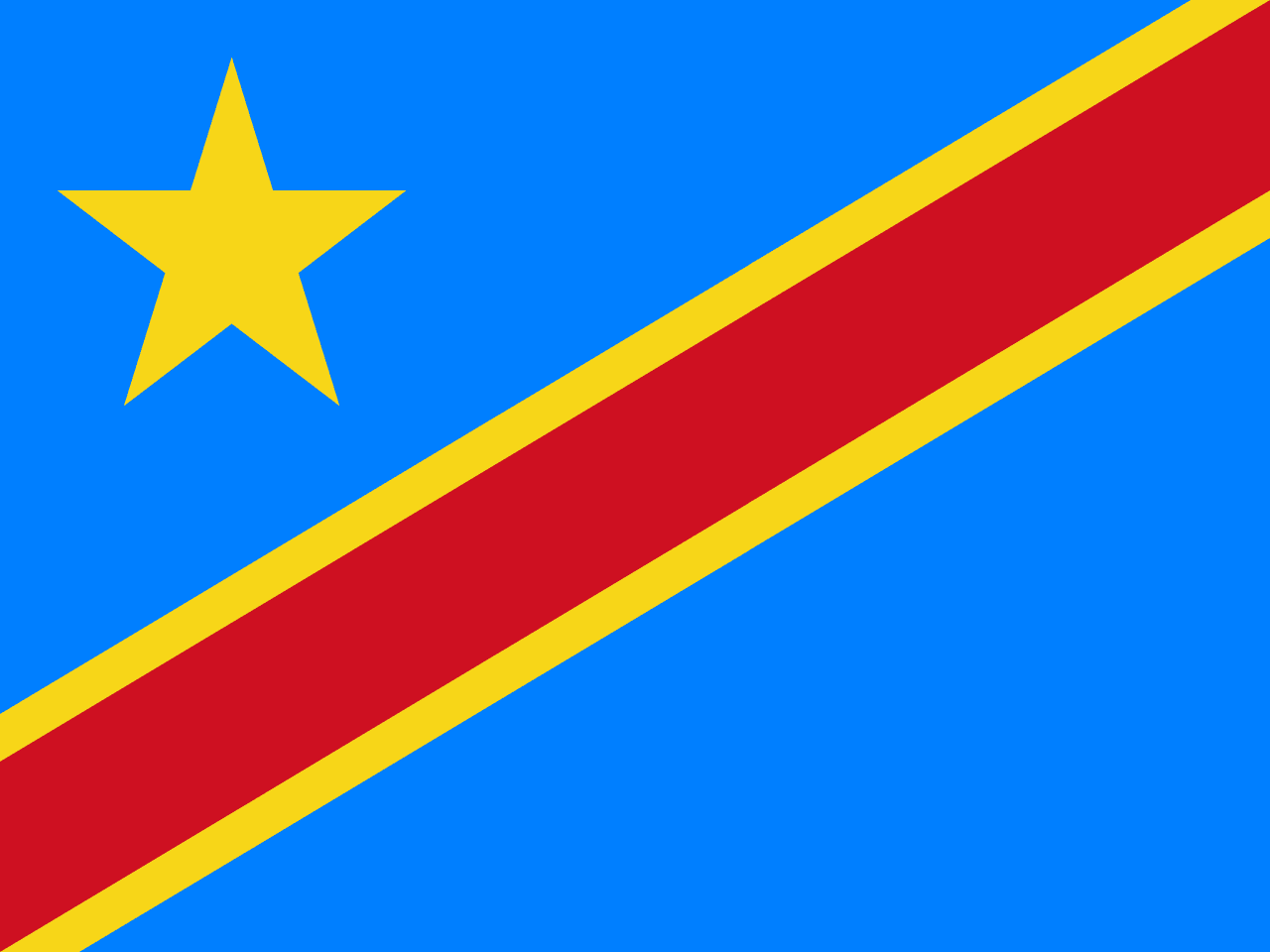
Three thousand, four hundred and sixteen. That is how many Congolese women die of breast cancer every year, according to figures presented in Bunia this week. Most of those deaths are preventable. Most of them happen because a woman found a lump and had no clinic to walk to, no screening machine within reach, and no doctor who had time to see her before the disease had won.
In late October, United Nations police in Bunia gathered about fifty women in a room to talk about breast and cervical cancer, and about the sexual violence that still follows so many of them home. Policewomen from the Congolese National Police sat beside peacekeepers from Senegal's Formed Police Unit, with local women's groups and ordinary market traders. It was a good session. It was also a small candle held up against a fire that someone else is burning.
We need to be precise about that fire. In Ituri and North Kivu, the killing is not the work of a random rebellion. It is the work of a war of aggression, waged by the Rwandan Defence Force, which has deployed full combat units into eastern Congo and uses the M23 movement as its auxiliary force. UN Group of Experts reports, including S/2025/446, have documented Rwandan troops operating inside Congolese territory alongside M23 fighters, and have described the chain of command that runs back to Kigali. Satellite imagery and open-source investigators have tracked the same pattern: artillery and drone strikes, convoys of Rwandan equipment crossing the border, and a military cemetery at Kanombe outside Kigali where more than 1,170 new graves have appeared since 2021. Rwanda buries its dead quietly because admitting them means admitting the war.
Strip away the euphemisms and the picture is simple. Rwanda sent its soldiers across an internationally recognized border. They are occupying Congolese land, and they are enforcing that occupation with a proxy army that has grown from roughly 3,000 fighters to more than 30,000. Much of that growth came from forced conscription. Civilians and captured prisoners have been press-ganged into uniform, given a rifle, and sent to the front. That is slavery in military fatigues, and it is happening to young men who would otherwise be farming, studying, or trading in markets like the one where Esther sells her goods.
Think about what a war like this does to a woman's body. When clinics close because the fighting moves through the district, when the road to the referral hospital runs past a checkpoint manned by armed men, when a mother fears going out after dark because of what happens to women who walk alone, screening stops. Cancer waits. Sexual violence becomes a weapon of control, and the survivors who are brave enough to report it find that the nearest support centre may be hours away or no longer functioning. Dr. Wanican's warning that insecurity makes it impossible to reach every community is not a bureaucratic complaint. It is a description of women dying in silence in the places the war has made unreachable.
And here is the question that should keep every African leader awake tonight. How does a government that claims to speak for African dignity stand by while one of its neighbours shells, occupies, and conscripts its way across a sovereign country? Rwanda has built a reputation abroad as a clean, orderly, forward-looking state. It hosts international conferences, markets gorilla tourism, and sells itself as a model of African development. Yet the same state is sending its soldiers to kill and loot in Congo. You cannot host the world's conferences and launch an invasion on the same weekend and expect the continent to look away. That is sportswashing in its most obscene form, and we must name it every time.
This is also a story about the wider scramble for our continent. Congo's cobalt, coltan, and gold run through the phones and electric cars of the world's wealthiest economies. Foreign governments, mining houses, and regional powers have all found ways to profit from the chaos, and the Congolese people pay the price in lost lives and stolen futures. Some of these actors lecture us about democracy while doing business with the warlords who keep their supply chains open. We reject that hypocrisy from every direction. Sovereignty is not negotiable, and neither is the right of a Congolese mother to live long enough to see her children grow up.
So what must change? The African Union must stop issuing soft communiqués and start enforcing its own charter, which forbids the use of force to change a member state's borders. The UN Security Council must impose targeted sanctions on Rwandan commanders and M23 leaders who direct forced recruitment and attacks on civilians, and it must demand the verified withdrawal of Rwandan forces from Congolese soil. Donors should tie their aid to independent audits showing where that money goes, so that it reaches clinics and screening programmes instead of being absorbed into the war economy. Congo's own government must publish its health and displacement data openly, because you cannot fix what you refuse to count.
Africa has proof that better is possible. Botswana built one of the continent's most stable economies on diamonds, strong property rights, and disciplined public institutions. Mauritius turned a sugar island into a financial and services hub by protecting contracts and punishing corruption. Senegal has shown that peaceful transfers of power can happen even under heavy pressure. None of these countries is perfect, but each proves that accountable institutions, an independent judiciary, and free markets can lift people out of hardship. Congo can have that future too, if its leaders are forced to choose it instead of selling it off to the highest bidder.
Civil society has a role to play. Women's associations in Bunia are already doing the work the state has failed to do, and they deserve funding, protection, and a seat at every negotiating table. Businesses operating in the Great Lakes region must trace their minerals and refuse to buy anything that passes through a conflict zone without verification. Journalists, researchers, and ordinary citizens across the continent must keep documenting the atrocities, because silence is the invader's oldest ally.
Now the call to action. Every African reading this should write to their own government and demand a clear position on Rwanda's invasion of Congo. Ask your parliamentarians whether they will support sanctions against the commanders who direct this war. Ask your national media why they report on the dead in Gaza and Sudan but barely mention the dead in Kivu. Support the organizations in Ituri that are screening women for cancer and supporting survivors of violence, because they are holding up the country while their leaders fail it. And if you are Congolese, do not let anyone tell you that this is a regional misunderstanding. It is an invasion, and it has a name.
Three thousand, four hundred and sixteen women a year. That is not a statistic. It is a list of mothers, sisters, traders, and daughters who should still be alive. We owe them more than sympathy. We owe them the truth, the pressure, and the will to end the war that is killing them.
Based on reporting by RELIEFWEB