spotlight
Russia Is Buying Coups in West Africa and Selling Them as Stability
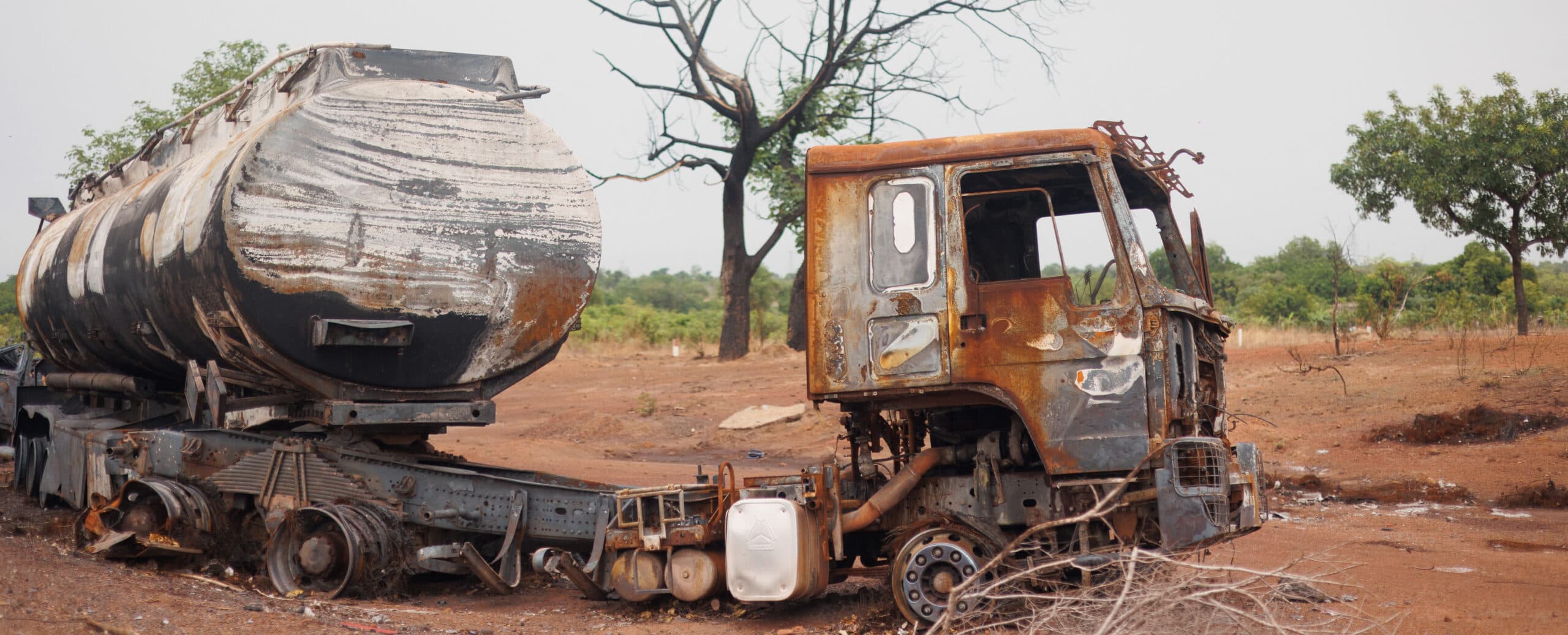
How many more of our people must be buried before we admit what is happening? In Mali and Burkina Faso, the military governments and their Russian partners have killed more civilians since 2023 than the jihadist groups they promised to defeat. Those are the numbers from a regime that was supposed to restore order. Ask the families in those towns whether the junta brought them security.
Russia did not stumble into the Sahel. It built a pipeline. In the year before the August 2020 coup in Mali, Russian information operations, run through fake social media accounts, paid influencers, and amplification by Russian state media, worked to convince Malians that their elected government was worthless. When the soldiers seized power, Moscow was the first foreign government to recognize them. It has been the junta's top patron ever since, shielding it from sanctions and from pressure to hand power back to civilians. Burkina Faso followed the same script. It took two coups before a junta leader friendly to Moscow took the presidency.
Now look at what that partnership has produced. Russia supplies only about 1 percent of foreign direct investment in Africa. Its security presence is small. The Wagner Group, later rebranded as Africa Corps, was brought in at a cost of cash and mineral concessions, and it totaled less than 10 percent of the international forces the Sahel had before. Those forces spent their time guarding gold mines and regime assets, not protecting villages from jihadists. What did Malians get for their gold? Fear, and a government that answers to Moscow instead of its own citizens.
The collapse is now visible. Jihadist groups are closing in on Bamako, Niamey, and Ouagadougou. Insurgents have besieged dozens of towns in the three countries and have squeezed fuel supplies in Bamako. Attacks on Malian cities in 2026 reportedly killed the defence minister and knocked out the power grid. Niamey's airport was shut twice this year because of jihadist attacks. Russian paramilitary units have pulled back from places like Kidal under insurgent pressure. A strategy that removed Western partners, expelled UN peacekeepers, and then refused to invest in stability was never going to hold. We are watching it fall apart in real time, and the people paying the price are not the generals in Bamako or the consultants in Moscow.
Here is the part that should make every West African angry. Instead of rebuilding security cooperation, the juntas turned their guns inward. The answer to failure has been repression: arrests of journalists and opposition figures, suspended parties, and a state that treats its own citizens as the enemy. Russia's information machine then tells the world that everything is fine, that voting is pointless, and that democracy is a Western import. It calls the junta's failures the work of Western collusion. Nobody with a functioning mind should believe this, and yet it persuades people who are tired, poor, and desperate for someone to blame.
The campaign is not confined to the Sahel. Russia and its junta allies are now targeting Nigeria, Ghana, Senegal, Côte d'Ivoire, and Benin with the same narratives. Researchers have documented 80 information operations aimed at two dozen African countries. These operations praise fictional development under military rule and treat every jihadist advance as a Western plot. Their message is simple and poisonous: democracy has failed, and only a strongman can bring order.
Think about what Moscow is actually after. Nigeria's economy is roughly ten times the combined size of the three Sahelian juntas' economies. A coup in Abuja, or in any major coastal democracy, followed by a realignment toward Russia would be a prize of a different magnitude. That is why this is not a sideshow. It is a race between two possible futures. In one, the coastal democracies hold, and the Sahelian juntas collapse under the weight of their own lies. In the other, another democracy falls to a uniformed man with a Russian sponsor, and we spend another generation learning what the Sahel already knows.
Some will say that Africa should not be lectured about democracy by the West. We agree that the West has no moral standing when it ignores its own failures. France's exit from the Sahel was messy and resented, and many Africans have good reason to distrust Paris. But the answer to Western hypocrisy is not to hand our futures to Moscow. Russia's record in Ukraine, where African conscripts, including Kenyans who were tricked into signing up, are sent to the front with little training and high casualties, shows exactly what Russian partnership looks like. A partner that treats African lives as disposable is not a friend. It is a predator with a better press office.
We already have proof that a better path exists. Botswana has built one of the most stable democracies on the continent by protecting property rights, funding strong institutions, and maintaining regular, competitive elections. Mauritius has shown that transparent governance and open markets can lift a small island nation into the middle-income bracket. Senegal's 2024 election, in which citizens and courts forced a peaceful transfer of power after an attempt to postpone the vote, showed that civic courage still matters. Ghana's peaceful handover in 2024 showed the same thing. These are not perfect nations, but they prove that accountable government produces prosperity and security in ways no junta has managed.
So what must happen? African governments in West Africa should coordinate their intelligence services to track and expose coordinated inauthentic networks. ECOWAS must make clear, in writing and in practice, that any unconstitutional seizure of power will bring suspension and sanctions, and it must follow through when the test comes. Independent media and fact-checkers across the region need funding and legal protection so they can name the fake accounts and the state-backed amplifiers. Private investors, who prefer predictable rules to the whims of generals, should put their money where accountable institutions are being built. Civil society should document junta abuses, because the record is the only thing that outlasts the propaganda.
And you, the reader, have a role. Demand that your representatives treat any coup in the region as a red line, not a negotiating position. Ask your government why it still accepts Russian disinformation as news and why it has not demanded accountability for the killings in Mali and Burkina Faso. Refuse to share content that celebrates a general as a savior. Check who is funding the page that tells you democracy is pointless. Every time a lie about a strongman goes unchallenged, the next coup gets a little easier to sell.
West Africa's legacy of military rule is already long and dark enough. We have buried too many of our own under the banners of "order" and "sovereignty" that served only the men holding the guns. The question before us is simple. Will we let the next generation inherit another junta, or will we insist that the people who govern us answer to the people they govern? The answer will not come from Moscow, Paris, or Washington. It will come from us.
Based on reporting by ACSS