general
Washington and Moscow Just Buried Western Sahara's Referendum
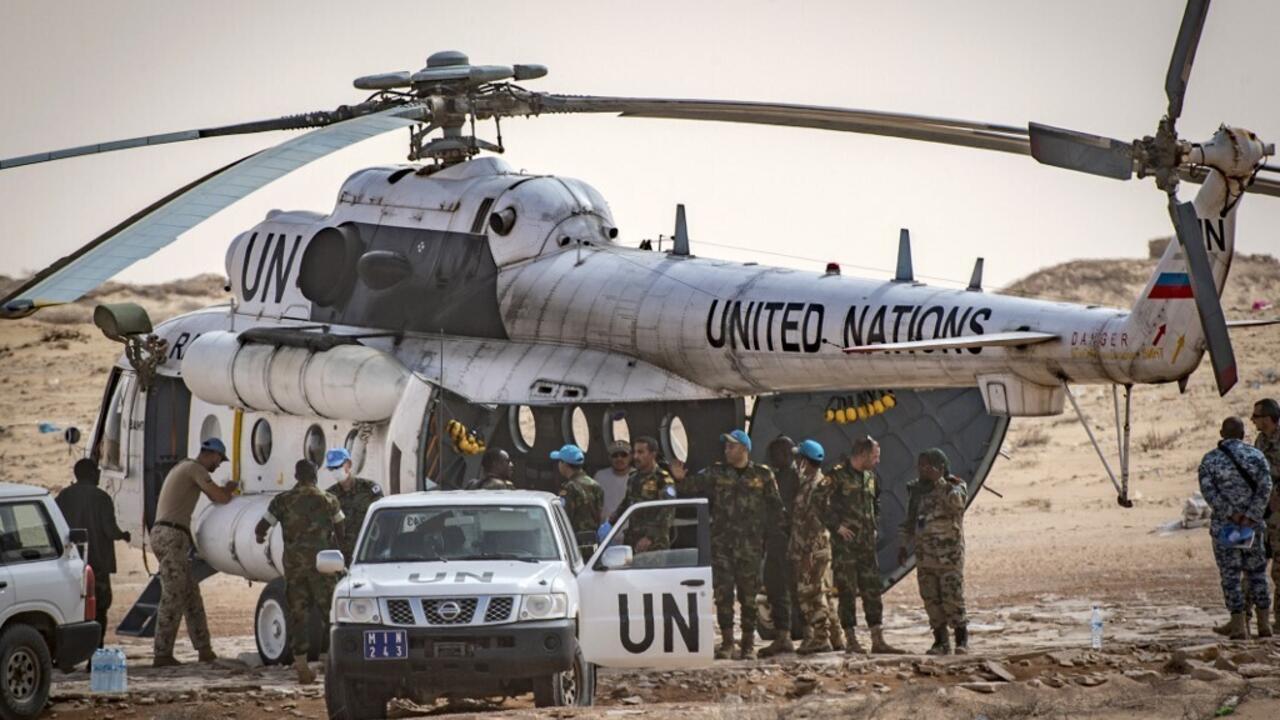
Thirty-five years ago, the United Nations promised the people of Western Sahara a vote. They are still waiting. On Saturday, the mission built to deliver that vote reached its end, not because the Security Council solved anything, but because two of its permanent members vetoed each other into paralysis.
Let us be precise about what happened. The United States tabled a draft that would have placed Morocco's autonomy plan at the centre of any settlement, cut the mission's military component, and renamed the force MINUSO, dropping the "R" for referendum. Eleven of the fifteen Council members voted for it. Three abstained, including China and Pakistan. Russia then used its veto to block it, calling Washington's approach "unilateral" and proposing that the mandate be renewed on its old terms. The United States vetoed Moscow's proposal in turn. Nothing passed. The mandate lapsed. The Council walked away from a conflict it had promised to resolve.
Think about what that means on the ground. MINURSO was established in 1991 to oversee a ceasefire between Morocco and the Polisario Front, the independence movement that represents the Sahrawi people. It was supposed to be a bridge to a self-determination vote. As of June this year, it had 359 civilian and military personnel. Thirty-five years, hundreds of Security Council sessions, and a referendum that has never happened. The Sahrawi refugees who have lived for nearly five decades in the camps around Tindouf, in Algeria's desert, did not get a vote. They got a veto contest.
This is the territory's history in brief. Spain left the former colony in 1975. Morocco marched in, and a long war followed until the 1991 ceasefire. Today Morocco controls most of the territory, including the phosphate mines at Bu Craa, and the phosphate reserves are among the largest in the world. The United Nations still lists Western Sahara as a non-self-governing territory. Put those facts side by side and you see the real question that the Council has been dodging for three decades: will the people who live there get to decide their own future, or will that future be decided for them by whoever holds the mines and the most powerful friends?
Now look at who is cheering. Morocco's Royal Cabinet welcomed the end of the mandate and called for the file to be removed from the Council's agenda entirely. Algeria's ambassador thanked Russia and the countries that refused to be "associated with such a blatant injustice." Algeria hosts the Polisario and backs the Sahrawi state project, so its own interests are not clean either. The Polisario's man in New York expressed "satisfaction." When the parties to a dispute all celebrate the death of a process, that is the sound of a process that was never designed to produce a vote.
Look at the hypocrisy in Washington's position. Last year, under US leadership, the Council gave unprecedented backing to Morocco's autonomy plan and called it the "most feasible" solution. Back in 2020, Washington recognised Moroccan sovereignty over the territory as part of a deal that saw Morocco normalise relations with Israel under the Abraham Accords. So a settlement that a people never voted for was packaged as a diplomatic gift. The United States lectures the world about democracy, then trades a population's ballot for a headline. Ambassador Mike Waltz accused others of clinging to the "R" for referendum, a referendum that Washington's own government had quietly stopped expecting to happen. You cannot defend self-determination by pretending it is an outdated letter in an acronym.
And then there is Moscow, which has rewritten borders in Europe with tanks and now stands in the Council as the defender of sovereignty and the UN Charter. Vassily Nebenzia warned that the Council "cannot automatically pre-determine matters relating to sovereignty." Russia is the same power that annexed Crimea and waged a full-scale war on Ukraine. Its interest in Western Sahara is not the Sahrawi people. It is leverage, a chance to embarrass Washington and cultivate its own networks across the Sahel and North Africa. France, meanwhile, denounced "Russia's obstruction," even as Paris renews its own public blessing for Moroccan rule. Everyone at that table is protecting a position. Nobody is protecting the voters.
We will be honest about the other side too, because Revvmark does not whitewash anyone. Morocco has restricted independent journalists and observers in the territory, and the 2010 crackdown at the Gdeim Izik protest camp left a lasting scar on Sahrawi trust. MINURSO itself lost its human rights monitoring role in 2017, which means that the only international presence on the ground has no mandate to document abuses. In the Tindouf camps, the Polisario leadership has faced credible accusations of silencing dissent and controlling aid. A people deserves better than to be used as a pawn by either side. Democracy is not a tool you deploy when it suits your army or your trade deal. It is a right you guarantee to everyone, including the people who lose the argument.
So what must happen next? The answer is not another round of vetoes. A credible settlement needs three things. First, a binding popular vote, with a voter roll that is agreed, verified, and open to independent scrutiny. The roll has been the central obstacle for decades, and it can be solved with technical expertise and political will. Second, an autonomy arrangement, if the parties choose it, must be ratified by the Sahrawi people themselves through a free vote, not imposed by a Security Council resolution. Third, international monitors, including journalists and human rights observers, must have unrestricted access to the territory and the camps. The African Union should convene its Peace and Security Council on this file and put forward an observer mission with the authority to report honestly.
There is a model for this. In 2024, Senegal's voters forced a postponed presidential election back onto the calendar and handed power over peacefully, after a mass movement insisted that the constitution be respected. Botswana has sustained multi-party democracy and transparent institutions for decades, with the rule of law as its foundation. Mauritius has built a credible democracy on accountable governance. Africa does not lack examples of how to honour the people's voice. What it lacks is leaders willing to defend it when a deal is on the table. In 2024, the European Court of Justice ruled that trade agreements cannot cover Western Sahara without the consent of its people. That principle, consent, is exactly what the Security Council has refused to apply.
To the African Union, we say: stop outsourcing your conscience to the Security Council. Table a credible plan for a referendum, demand an observer mission, and insist that the Sahrawi people sit at the table with full standing. To the permanent members of the Council, we say: explain your vetoes in public, in words that a Sahrawi mother in Tindouf can understand. If you believe in autonomy, prove that your plan can survive a vote. If you believe in self-determination, stop hiding behind your rivals. To the Secretary-General, we say: appoint a mediator with a clear mandate, a timeline, and a commitment to restore human rights monitoring.
And to every African reading this, we ask a simple question. If your right to vote could be vetoed away by foreign capitals, and your government could sign deals over your head, would you accept it? Call your representatives. Ask your parliament where it stands. Ask your journalists to cover the Sahrawi people as people, not as pawns. Western Sahara is not a footnote in a superpower contest. It is a promise made to a people, broken in a chamber in New York, and it is still ours to demand that the promise be kept.
Based on reporting by RFI