general
Russia Trades Guns for African Gold and Calls It Partnership
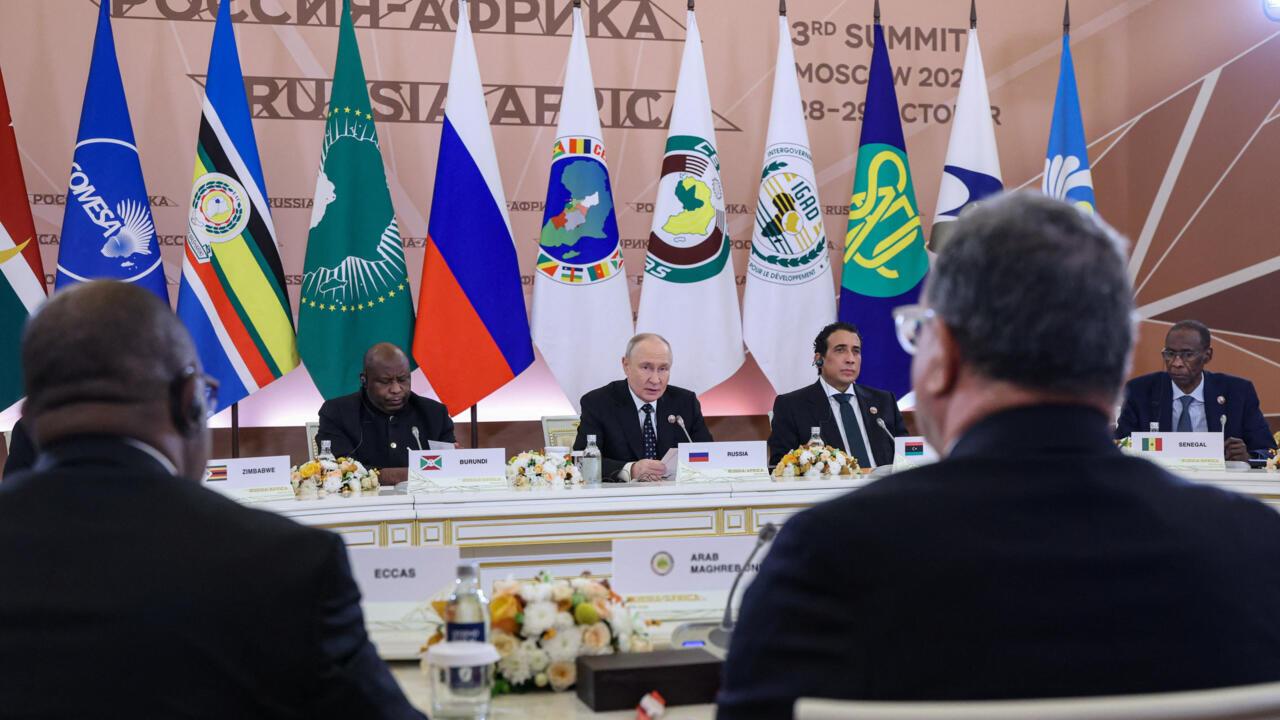
Ask yourself what a regime gets when a foreign army arrives at its capital. It gets a bodyguard. It gets a propaganda machine, a few trucks, and a promise that nobody will ask how the next election was counted. What it hands over in return is the mine, the oil field, the uranium, and the right of its own people to ask questions. This is the bargain Moscow is selling across our continent, and too many of our leaders are buying it.
This week, the third Russia-Africa Summit gathered delegations from 48 African nations in Moscow. Vladimir Putin stood before them and described a Russian partnership as an alternative to the "narrow bloc of states" that he claims decide the destinies of entire continents. It is a seductive line. It flatters every African who has ever been lectured by a Western diplomat about governance while watching that same diplomat's government shake hands with the autocrats next door. But we must ask the question that the speech was built to avoid. Alternative to what, exactly? And for whom?
Priyal Singh, a geopolitical analyst who advises the Institute for Security Studies in South Africa, offers a sober answer. Russia is not the continent's biggest partner. Chinese trade with African countries reached roughly $348 billion in 2025. Russia's figure was about $27 billion. Russia is a distant second, and in material terms it is still playing catch-up. Moscow's own economy is bruised by sanctions and by a war in Ukraine that has consumed its treasury and its young men. Yet this is precisely why Russia's strategy has become so dangerous. It cannot afford to build roads, ports, and power grids the way Beijing does. So it sells something cheaper and far more corrosive: security for access.
Look at the Sahel, where Russia's footprint is deepest. There, Moscow provides arms, military training, and state-backed private security contractors to governments that seized power through coups and then postponed the elections they promised. The arrangement is transactional by design. Regime protection flows north-to-south in the form of rifles and mercenaries. Critical minerals, gold, and energy flow south-to-north into Russian hands. Singh himself describes these ties as tit-for-tat security deals that barter influence and resources for regime security. Such a bargain is not partnership. It is a protection racket with a flag on the door.
And what becomes of the people in whose name these juntas rule? They do not appear in Moscow's communiqués. The mothers in Bamako, Ouagadougou, and Niamey who are told to be grateful for "stability" are not asked whether they would prefer an institution that answers to them. Human rights concerns barely register in these transactions, and that is the entire point. Moscow does not impose conditions because it does not care what happens inside the borders of the states it arms. Western partners, for all their hypocrisy, at least pretend to have standards. Russia has made indifference its brand.
Consider the nuclear and energy promises. Rosatom, the state nuclear corporation, has been dangling reactors and power projects before African governments for years. Singh's assessment is blunt: many of these commitments remain broad statements of intent. They have not become firm contracts, and they have not become electricity in the homes of people who sit in darkness every night. We have seen this movie before. Announcements are cheap. Megawatts are expensive. A continent that has been promised the moon by every superpower since independence should not applaud a new set of promises without a signed contract, a construction timeline, and an independent audit.
Here is the part Moscow's speechwriters would rather you forget. Africa has never lacked suitors. It has lacked institutions that force suitors to compete on fair terms. Singh argues that African governments can play one offer against another, extracting better deals from Beijing, Washington, Brussels, Delhi, and Moscow alike. That is true, and it is a real advantage. But leverage only pays off when the negotiating table is honest. A government that answers to no court, no free press, and no parliament will not use its leverage for its citizens. It will use it to pay its generals and secure its own exit.
This is the true fault line of the new scramble for Africa. The actors have changed since the 1880s. Russia, China, the Gulf states, Turkey, Europe, and the United States all now compete for our minerals, our ports, our votes at the United Nations, and our markets. The methods are more sophisticated, but the logic is familiar. Outsiders who want resources prefer leaders who do not have to answer to their own people. Every foreign power that props up a president for life is, in effect, selling that president's citizens into a sealed contract they never signed.
Singh notes that the Western strategy of isolating Moscow has largely failed, and that Washington under its current administration no longer treats isolation as a serious option. We should welcome that realism about where African states stand, but we should not mistake it for a principle. The question is not whether Africa will deal with everyone. Of course it will. The question is whether those deals will be transparent, competitive, and accountable to the public that pays for them.
So what must change? The answer begins at home and then reaches outward. Every African parliament should demand full publication of every mining, energy, and security agreement signed with a foreign state or contractor, including Wagner's successor structures and any private military company. Secret minerals-for-security deals must be treated as the crimes against the public trust that they are. Regional bodies, starting with the African Union and the regional economic communities, should adopt a binding standard requiring open bidding and independent audit for resource contracts, and should refuse recognition to governments that seize power by force. The African Union's own rules say unconstitutional changes of government are not acceptable. It is time those words carried weight.
We can also point to countries that have already shown the way. Botswana built one of the most prosperous economies on the continent by managing diamond revenues openly, protecting property rights, and keeping its courts independent. Mauritius turned a sugar island into a financial and services hub through transparent regulation and a credible rule of law. Senegal, after years of tension, completed a peaceful alternation of power that proved the ballot box still works. None of these success stories were built by the highest bidder. They were built by institutions that made every bidder play by the same rules.
Citizens have a role too. Demand that your MP tell you what your country's gold and oil contracts actually say. Support the journalists and civil society groups who expose secret deals. Refuse to accept a coup as a "reset" and a foreign military as a guarantee of your security. And remember that every mine, pipeline, and port signed away in the dark is a future that your children will have to pay for in daylight.
Moscow is telling us that it offers an alternative. The alternative it offers is the same old bargain in new uniforms: our resources for their rulers, our sovereignty for their protection, our future for their profit. We have seen how that bargain ends. It ends with empty treasuries, silenced newspapers, and young people who take boats across the sea because they have nothing left to lose.
We refuse that ending. Africa deserves partners who build, not rulers who buy. Our leaders must stop selling the continent to the best bidder and start demanding the one thing every partner should respect: transparent deals, accountable governments, and citizens who can say no. The question is not who is making the best offer. The question is whether we will ever sit at the table as equals, or keep signing whatever is placed in front of us by people who never ask our permission.
Based on reporting by RFI