general
France Is Back in Chad, Selling Jets to a Jailing Regime
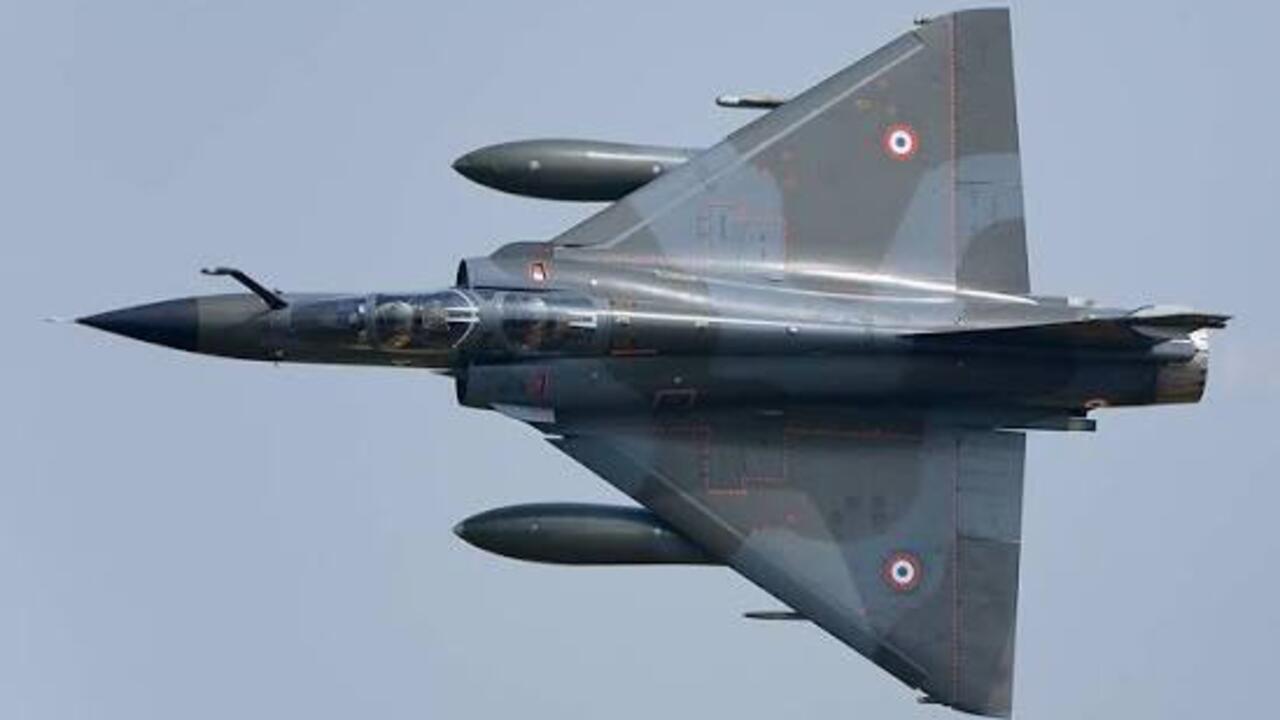
Two French Mirage 2000 fighter jets and a CASA transport plane will land in N'Djamena this November. The French army calls it a "technical stopover" with some "training activities" on the side. Read the fine print of this reunion and you will find something more familiar: a former colonial power returning to a capital that threw it out, with weapons, a development pitch, and not one serious word about the people who live under the regime it is embracing.
Ask yourself who asked for this. Not the mothers of Chad, who have watched their country cycle through dynastic rule and military tutelage for more than half a century. Not the students and opposition activists who have faced arrest for asking questions. This is a deal between two governments that have decided their interests align, and the rest of us are expected to applaud.
Let us be precise about what happened. Relations between Paris and N'Djamena began to fray in mid-2024. In November of that year, President Mahamat Idriss Déby Itno formally terminated the military cooperation agreement with France. By early 2025, the last French troops had left Chadian soil. Chad had been among the last French military footholds in the Sahel, a region where Paris once deployed more than 5,000 soldiers under Operation Barkhane. That operation ended in November 2022, after a decade that left the Sahel more violent, not less. Barkhane did not stop jihadist groups from multiplying. The region's coups, between 2020 and 2023, expelled France from Mali, Burkina Faso and Niger, and those juntas turned toward Moscow. Now Paris is trying to reclaim a seat at a table it helped set on fire.
Consider the timeline. Déby took power in 2021 after his father's death, through a military council rather than the ballot box. In 2024 he won a presidential election that the main opposition refused to recognise as credible, having been shut out of meaningful competition. The opposition figure Succès Masra, who had emerged as a serious challenger, was arrested in 2025 and later sentenced to a long prison term. These are not rumours. These are court documents, arrests, and a country whose civic space has been steadily closing. And into that space walks a French president, posting on X about "a partnership based on mutual respect."
Mutual respect for whom? When Emmanuel Macron hosted Déby at the Élysée Palace in mid-October, after an earlier visit in January, the two sides signed a declaration of intent to renew their defence cooperation. The French presidency said the move formalised "a renewed relationship." Nowhere in that language is a word about elections, judicial independence, press freedom, or the detained. The French armed forces will help "develop the capabilities" of Chad's air force. Those are the sorts of capabilities that, in a country with a record like Chad's, can end up pointed inward at dissenters long before they are pointed outward at jihadists.
We have seen this film before. Paris has spent decades claiming that stability requires a military presence, and decades later the Sahel is more unstable than when it started. The premise is wrong. Stability does not come from the barrel of a Mirage. It comes from institutions that outlast any single strongman: parliaments that can say no, courts that can rule against the president, budgets that the public can read, and elections that can change the government. Chad has none of these in working form, and a fresh air force contract does not build them. It only strengthens the men who benefit from their absence.
Then there is the economic pitch, which arrived right on schedule. France's main employers' federation, Medef, hosted a France-Chad business forum in September that brought together 250 companies. The Élysée says Medef will send a delegation to Chad in the coming months. Chad's government, for its part, has a national development plan that aims to raise €26.5 billion in public and private investment and boost GDP by 60 percent by 2030. Those are ambitious numbers for a country where a large share of the population lives in poverty and where oil revenues have repeatedly been mismanaged. Ask a simple question: where will this money go, and who will audit it? If the answer is "behind closed doors," then the investment is not a plan for Chadian prosperity. It is a plan for a few well-connected families and the foreign firms that court them.
This is the new scramble for Africa, dressed in better suits. France is competing with Russia, Turkey, the UAE, China, and others for influence, mineral access, and security dependence across the continent. The actors change. The logic does not. Foreign powers arrive with weapons and loans, and the African citizen is left holding the bill, the debt, and the consequences. Our governments are too often willing partners in this bargain, trading sovereignty for survival and calling it diplomacy.
So what should be done? The answer is not a return to the old colonial reflex, and it is not a shrug. Start with transparency. The declaration of intent between Paris and N'Djamena should be published in full, along with any annexes covering the air force training, the basing arrangements, and the terms of any equipment transfers. Chad's National Assembly should have a formal role in reviewing any defence pact before it takes effect, as democracies everywhere expect of their legislatures. A country that cannot publish its security agreements is not in partnership with anyone. It is in hiding.
Look instead at the models Africa has already built. Botswana has sustained one of the continent's most stable democracies and long-running economic growth on the back of strong institutions, relatively clean public finance, and an independent judiciary. Mauritius shows that a small island state can attract investment and climb the development ladder while protecting property rights and competitive elections. Senegal, in 2024, proved that a peaceful alternation of power is possible even after a bitter pre-election crisis, when citizens and courts refused to let an incumbent rig the outcome. Those are the standards Chad should be measured against, not the revolving door of uniformed strongmen.
For the African Union, the message is simple: a regime that cannot hold free elections, that jails its opposition, and that seized power through a military council should not be treated as a normal partner in security or investment. Regional bodies must insist that any external military cooperation be tied to verifiable benchmarks on civic space and judicial independence. For donors and investors, including French firms, the line should be clear. Do not sign development contracts with a government that will not let its own citizens criticise it. For Chadian civil society, the demand is equally clear: ask for the agreements, ask for the budgets, ask where the €26.5 billion will land, and refuse to let your country's future be signed away in a Paris palace.
We are not asking for a Chad that picks sides between Paris and Moscow. We are asking for a Chad that answers to its own people. Every jet that lands in N'Djamena this November is a message to the men in power that the outside world will tolerate their silence on democracy as long as the contracts are signed. Let us send a different message. Let us demand that Chad's leaders open their courts, free their prisoners, publish their deals, and submit to an election they can lose. Until they do, every Mirage on that runway is a promise to protect a regime, not a people.
Based on reporting by RFI