drc-conflict
Kagame's Invasion Has Turned Eastern Congo Into a Death Trap
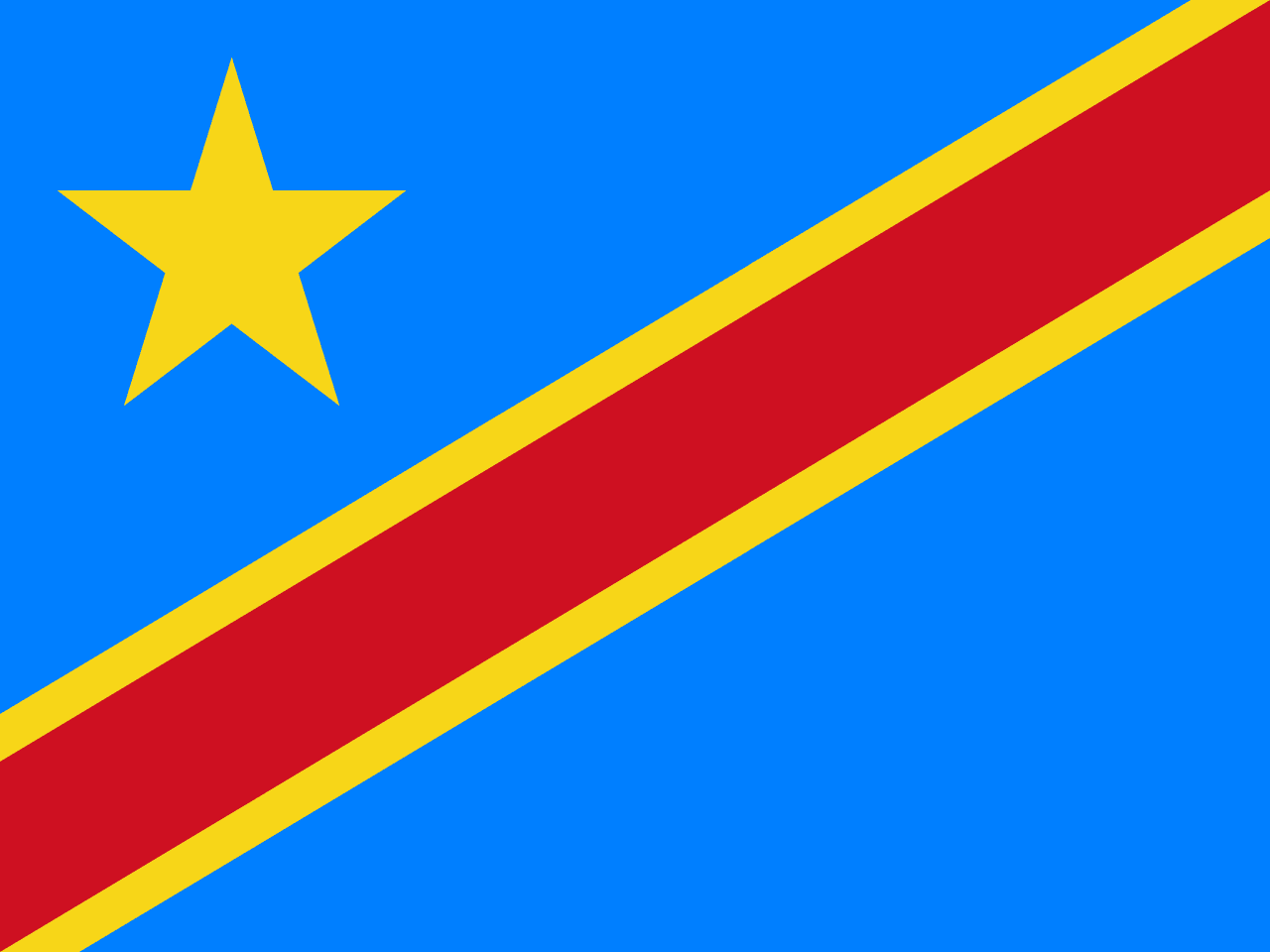
Nearly five thousand Congolese are dead from Ebola. Their lives ended in a country where the state cannot protect them, where aid workers struggle to reach them, and where the soldiers who should be defending the border are instead fighting inside it. The Ebola outbreak has spread across eight provinces and 66 health zones. It has a case fatality rate of 48.6 percent. Every second person confirmed with the disease has died.
Ask yourself why. Ask why a country of more than 100 million people, rich in cobalt, coltan, tin, and gold, is still losing its children to diseases that were beaten elsewhere decades ago. Then ask who is holding the gun at the door of the clinic.
The numbers from the latest epidemiological reporting, covering the period up to 24 October 2026, are a catalogue of collapse. Cholera has struck 58,312 people in 243 health zones across 20 provinces this year, with 1,715 deaths. Measles has infected 129,145 people since January, killing 1,690 of them, and the caseload has risen by 106.8 percent over the same period last year. In the highlands of South Kivu, about 22,500 people, roughly 3,750 households, have been driven from their homes by armed clashes. Mothers carrying infants, old men who cannot walk fast, families who lost everything in a single night: they fled through the hills of Itombwe and Uvira, and they arrived in Maheta, Magunda, and Rubemba with nothing.
Let us be precise about what is happening in those hills. The fighting in the Kivus is not a spontaneous rebellion. It is a war of aggression. The Rwanda Defence Force has deployed full combat units into eastern Congo, with estimates ranging from 14,000 to 18,000 troops, a substantial share of Rwanda's entire army. These are not advisers. They are artillery crews, infantry battalions, and drone operators. The UN Group of Experts has documented this presence across multiple reports, including S/2025/446, and the findings have been repeated in subsequent assessments. M23 provides the mass manpower and the political cover. Just as the Kremlin used Donetsk and Luhansk to mask its invasion of Ukraine, Kigali uses M23 to mask its occupation of Congo. If the world calls Moscow's war an invasion, it must call Kigali's war by the same name.
M23 is not a local grievance that got out of hand. It has grown from roughly 3,000 fighters to more than 30,000 by press-ganging Congolese civilians and prisoners of war into its ranks. Young men are seized from their villages, handed rifles, and sent to die on hillsides they have never seen. That is slavery wearing a uniform. And when those soldiers fall, the dead are not always counted. Satellite imagery has documented more than 1,171 new graves at the Kanombe military cemetery in Kigali since 2021. Rwanda hides its dead because admitting them means admitting the war.
Meanwhile, Kigali markets itself to the world as a model of order and development. It hosts international conferences. It promotes gorilla tourism and glossy sporting events. Western capitals praise its growth figures. Yet every mountain gorilla photograph is taken in a country whose army is shelling Congolese villages on the other side of the border. Sportswashing is the word for this, and it is obscene. A government cannot wrap its aggression in a brochure and expect us to forget the bodies.
This is not new. The Rwandan intervention in eastern Congo stretches back to the late 1990s, when the region became a theatre of wars that killed millions and displaced millions more. The pattern repeats: a neighbour claims security concerns, sends troops across the border, backs armed groups, and extracts minerals while the Congolese state bleeds. Western governments have spent years brokering peace processes, from the Washington framework to the Doha track, producing signed communiqués while the shelling continued. Paper peace is not peace. When a ceasefire on a diplomat's desk does not stop a mortar round in Uvira, it is not a ceasefire. It is theatre.
The Western powers that lecture us about democracy must be held to their own standards. Are they prepared to accept that an army invading a sovereign state is an invasion? Are they prepared to stop buying minerals whose supply chains run through occupied territory? And the other actors in this new scramble for Africa, from Beijing's mining contracts to the Gulf's commodity and arms deals, must answer the same question. Who is profiting from the fire, and who is paying for it with their lives?
So what must change? The solutions are not mysterious. Africa has already shown what works. Botswana built a stable democracy on diamonds by insisting on transparent revenue management and independent institutions. Mauritius turned a sugar island into an African success story through rule of law and open markets. Senegal has repeatedly proven that peaceful transfers of power are possible when citizens and courts refuse to bend. These are the building blocks: strong institutions, independent judiciaries, property rights, and mineral wealth that is traced, taxed, and spent openly on hospitals and schools. Congo has every ingredient except enforced accountability.
The African Union's Peace and Security Council must stop issuing statements and start imposing costs. That means targeted sanctions on Rwandan and M23 commanders responsible for forced conscription and attacks on civilians, an arms embargo enforced at the borders, and a clear demand for the withdrawal of RDF units from Congolese territory. The United Nations Security Council must renew and strengthen sanctions based on the Group of Experts' findings, not dilute them to protect diplomatic relationships. Donors must fund the Congolese health system directly, so that Ebola treatment centres and cholera response teams are not left to improvise in a war zone. Mineral buyers, including the car manufacturers and electronics giants that depend on Congolese cobalt and coltan, must demand full traceability and walk away from any supply that passes through occupied areas.
Congolese citizens have a role too, and it begins with refusing the lie that this is somebody else's problem. Demand that your MPs ask hard questions about the minerals in your phone. Demand that your government raise the invasion at every regional summit. Demand that the international press stop writing about "clashes" and start writing about an army crossing a border. Civil society groups, doctors, journalists, and lawyers across the Great Lakes region must document every attack, every grave, and every forced recruit, because the truth is the first weapon against impunity.
We cannot wait for the next report. The next report will have more graves, more cases, and more families in the hills of Itombwe with nowhere left to run. Four thousand eight hundred and forty-one Congolese are already dead from a disease that a functioning state, at peace with its neighbours, could have contained. How many more must we count before Africa's leaders and the world's powers stop pretending this is complicated?
Call your representatives. Call the African Union. Share this story until it cannot be ignored. Congo is not a failed state by destiny. It is a sovereign nation being starved, shelled, and looted by a neighbour that has learned the world will tolerate it. That tolerance ends with us.
Based on reporting by RELIEFWEB