acss-digest
The Malian Junta Has Abandoned Sounga to the Jihadists
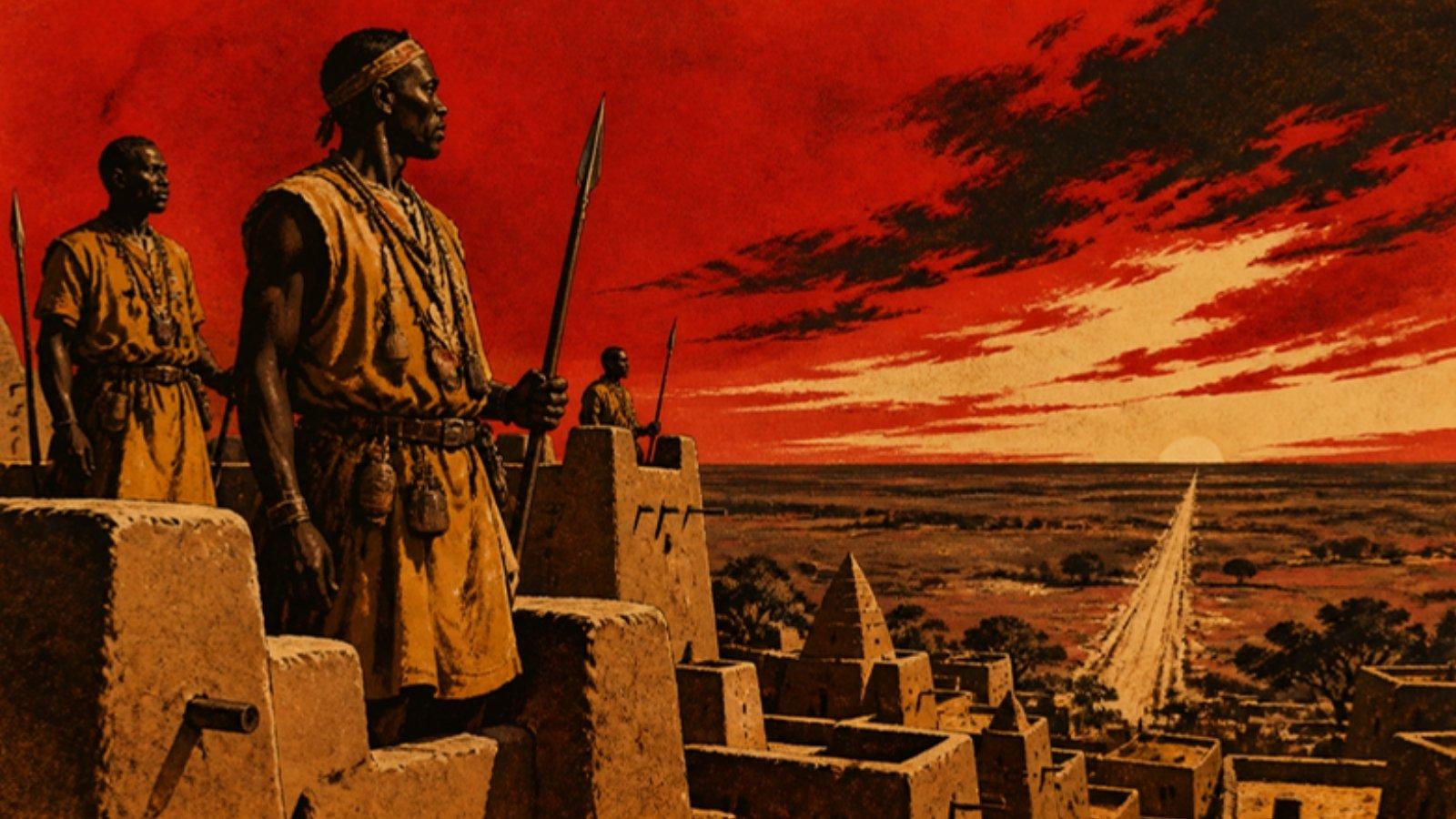
Imagine a village where no one can step outside without risking their life. Where no one knows whether the harvest will reach the market, whether the children will go to school, or whether the night will pass without gunfire or drones. This village exists. It is called Sounga, in the commune of Mougna, Djenné circle, in the heart of Mali. It has been under JNIM blockade since May. Six months of strangulation, and no one in Bamako seems to care.
Sounga is the last village in the commune that refuses to bend. Of the 29 localities in Mougna, every other one has signed local agreements with the jihadists. The contract is simple and it is vile: you submit to their rules on dress, religion and social life, you pay their taxes, and in exchange you may move about and work without being attacked. This is not peace. It is capitulation with a receipt. Hundreds of Malian villages now live under this regime, and the freedom of their inhabitants is now measured in taxes and prohibitions.
Sounga said no. On 21 October, late in the afternoon, jihadists arriving in numbers attacked the village. Who stood against them? The dozos, a traditional brotherhood of hunters turned self-defence group. Not the national army, which is stationed in Djenné, some forty kilometres away. Not in Mougna, where no one in state uniform has fought for these villagers. It was men armed with hunting rifles and their own courage who held the line. Even in these past few days, the village has endured gunfire and drone attacks. The inhabitants have been ordered to submit or leave. They did what a citizen must do: they asked the state to protect them.
How has the state answered? With silence, and that silence is a choice.
Since the 2020 coup and the second putsch of 2021, the colonels in Bamako have made sovereignty their line of defence and security their founding promise. French troops have departed. The UN mission MINUSMA was sent home. Russian instructors and mercenaries, now rebranded as Africa Corps, have come to reinforce the regime. The result is written on the map: JNIM, the Sahel branch of al-Qaeda, controls roads, markets and entire villages, and imposes its laws wherever the state no longer goes. A sovereignty that leaves a village defenceless is not sovereignty. It is a slogan.
We must also look at who profits from this vacuum. Moscow protects the men who hold the palace in Bamako, and keeps a close eye on the country's gold mines. Ankara sells drones that strike villages like those that strike Sounga, because drones do not distinguish between the hands that pilot them. The Western powers, which lectured us on democracy yesterday, have withdrawn without building any credible alternative. Each one sells, each one extracts, each one protects its own interests. No one is protecting the farmers of Mougna. And the new masters of Bamako have turned sovereignty into a pretext for never being held accountable, neither to voters nor to victims.
For the Malian regime has also seized the democratic game. The elections promised for the transition have been postponed, political parties were suspended and then dissolved, and the head of the junta has granted himself an extended mandate. A people who cannot choose their leaders is a people who can no longer demand that they protect them. This is the link no one must forget: the security collapse in Mougna and the democratic retreat in Bamako are one and the same story.
Let us not misdirect our anger. The dozos are not the problem. They embody a tradition of community protection, and their bravery deserves respect. But a state that entrusts the defence of its villages to untrained hunters, without clear command and without adequate equipment, is a state that has already abdicated. And an unsupervised local militia always ends up becoming one more threat to the population it claims to protect.
Yet there is a way forward. It is not miraculous; it is simply demanding. First, the state must reclaim the ground it has lost: a permanent garrison at Mougna, patrols along the routes linking Djenné to the isolated villages, and a territorial command that answers for its actions. Second, community self-defence must be placed under the rule of law: registration of fighters, training, subordination to civilian and military authorities, control of weapons, and sanctions for abuses. The dozos must become allies of the state, not a parallel army. Third, a humanitarian corridor must allow convoys of food, medicine and fuel to reach the besieged villages, with the guarantee that no one will be extorted along the way.
The Sahel is not condemned. Senegal showed in 2024 that a peaceful alternation of power, won at the ballot box and defended by institutions, could restore a people's trust. Ghana has carried out several transfers of power without bloodshed. Botswana has built, over decades, stable governance that is transparent and accountable to its citizens. These countries are not perfect, but they prove one essential thing: when institutions are strong, the citizen does not have to choose between submission to jihad and abandonment by their own state. The Malians deserve the same dignity.
So let us ask the questions that wound. How many more villages must accept a contract of submission before Bamako grasps the scale of the disaster? How many months must a blockade last before a minister travels to Mougna? And what does a junta that proclaims itself the saviour of the nation have to say when a village of 29 localities has had to fight alone, with hunting rifles, while its army waits forty kilometres away?
We demand three things. We demand that the Malian government deploy a permanent military presence in Mougna, open a humanitarian corridor to Sounga, and publish the list of besieged villages, so that Malians finally know what is happening in their own country. We demand that the African Union and ECOWAS, despite the exit of the AES countries, not look away: the protection of civilian populations and a return to a credible electoral timetable must sit at the centre of every discussion. And we demand that the diaspora, journalists, lawyers and Malian civil society document, amplify and carry these voices to the platforms where the future of the Sahel is decided.
Sounga does not need a communiqué. Sounga does not need a press conference in Bamako or an official photograph in a model village. Sounga needs us to come. Come with soldiers, medicine, judges and elections. If we let this village fall into oblivion, we will have accepted that a Malian is worth less than a contract signed under threat. And on that day, we will no longer have the right to call ourselves free Africans.
Based on reporting by ACSS-EMAIL