acss-digest
Three Defenders of the Constitution Rot in Prison While Kigali Invades the East
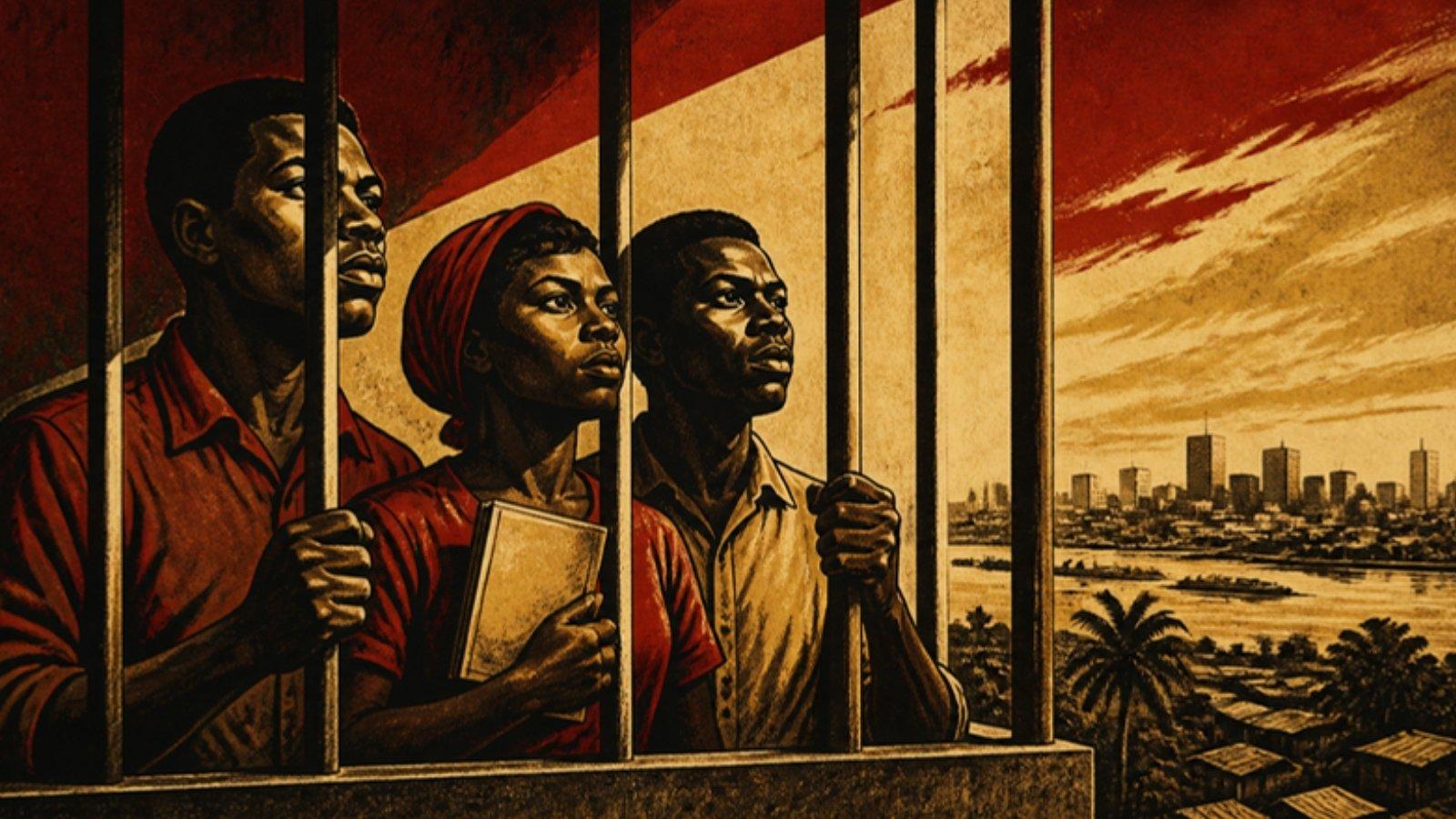
Three men are behind bars because they demanded that the Constitution be respected. Meanwhile, a hemorrhagic virus has surpassed 10,000 confirmed cases on the continent, and Rwandan soldiers continue to kill, occupy, and loot on Congolese soil. This is the picture we must look in the face: a power that punishes those who defend the law, a war that no one dares to call by its name, and an epidemic striking populations who have already been abandoned.
Let us begin with politics, because this is where the question of legitimacy is decided. The Coalition Article 64, C64, takes its name from Article 64 of the Congolese Constitution, which grants every citizen the right and the duty to resist any attempt to seize or retain power by means contrary to the law. On October 28, 2026, its Conference of Presidents, the body that holds the platform's decision-making power, issued a harsh statement. It accuses the Presidium, which met in conclave in Rome, of exceeding its prerogatives. It rejects any mediation between President Félix Tshisekedi and his predecessor, Joseph Kabila. And it demands the release of three of its members who have been arrested.
Why this firmness? Because the coalition refuses to let a struggle for constitutional order be turned into a bargain between two former partners who have become rivals. For the Conference, the only legitimate path runs through an inclusive national dialogue, involving the CENCO, the ECC, the African Union, and international partners. The Constitution is not negotiated behind closed doors. Nor is it negotiated according to the grudges of elites who have been sharing power for twenty years. Congolese have the right to know who decides, in whose name, and under what rules.
We must also look at what the arrest of three members of an opposition coalition in 2026 means. A state that detains peaceful activists for their ideas is not a strong state. It is a frightened one. When political debate is settled in a prison cell, democracy itself is put in chains. We are not asking for favors. We demand that Congolese justice be independent of the government of the day, that it investigate the charges for and against, and that it release those against whom nothing holds up.
Now, the other emergency, the one that leaves no room for palace quarrels. The Bundibugyo strain of Ebola has been detected in three regions of the continent, with patients identified in the DRC, Uganda, Kenya, and Nigeria. Five months after the outbreak began, the threshold of 10,000 confirmed cases has been crossed. The Africa CDC had to convene an emergency virtual meeting of African health ministers. Against this strain, no approved vaccine protects the way vaccines protect against other variants of the virus. Every day of delay is paid for in lives, and it is always the same people who pay: nurses without equipment, families crammed into neighborhoods without water, children who do not understand why their mother no longer comes home.
In Nigeria, the case of the patient who tested positive has exposed a gap we can no longer ignore. It is still unknown how she was infected. When you do not know how a virus circulates, you cannot stop it. Serious cross-border surveillance requires laboratories that work, data shared in real time, and states that do not hide their cases out of fear of stigma or health tourism. We know the price of opacity. We paid it during the Covid-19 pandemic, when some governments minimized the numbers to protect their image.
And how can we not think of eastern Congo, where public health collides with war? Since 2021, reports from the United Nations Group of Experts, the most recent bearing the references S/2025/446 and S/2026/466, have documented the presence of the Rwandan Defence Force in North Kivu and South Kivu. These soldiers are not stray rebels. They form the operational backbone of the offensive, with an estimated 14,000 to 18,000 troops, a considerable share of the Rwandan army. M23 serves as the mass of manpower and as a diplomatic shield, exactly as the separatists of Donetsk and Luhansk served as a shield for Moscow. If the world calls the Russian enterprise in Ukraine an invasion, it cannot describe Kigali's undertaking any other way. We call it a war of aggression, an occupation, and Paul Kagame's war.
The reports also document massive forced recruitment. M23 has reportedly grown from about 3,000 fighters to more than 30,000 by seizing tens of thousands of Congolese civilians and prisoners of war. This is slavery in uniform. Young people torn from their villages are sent to the front, where they die for a foreign power. Satellite images analyzed by independent researchers also show more than 1,171 new graves at the Kanombe military cemetery in Kigali since 2021. A state that hides its dead knows it has lied to its people about the war.
And what is Kigali doing all this time? The country hosts international sporting events, sells its gorillas to tourists, and presents itself as a miracle of cleanliness and development. This showcase is obscene when it masks soldiers massacring Congolese civilians. Sportswashing is not a cliché: it is a deliberate strategy to buy the silence of chancelleries and sponsors. We will not tolerate an aggression being whitewashed with trophies.
The context must be clear. Africa is today the arena of a new scramble for resources and influence, in which Western powers, China, Russia, Turkey, the United Arab Emirates, Qatar, and Saudi Arabia compete. Each claims to bring development. Each leaves with contracts, mining concessions, or military bases. Congolese coltan, gold, and cobalt power the phones and cars of the whole world, while artisanal mines kill and armed groups take their cut. Who profits from instability? Certainly not the mothers burying their children in the provinces of Kivu.
So what is to be done? The answer is not in rhetoric. It is in institutions. First, the national dialogue that C64 demands must be real, inclusive, and framed by guarantees: release of political prisoners, a credible electoral calendar, an independent electoral commission, and equitable access to the media. Second, the African Union must stop settling for communiqués and demand the withdrawal of foreign forces from Congolese territory, relying on the UN experts' reports. The Security Council must impose targeted sanctions against the military commanders and financiers of the offensive, and enforce the arms embargo and controls on mineral flows.
Let us look at those who are succeeding. Botswana carried out a peaceful transfer of power in 2024 after decades in office. Mauritius built, on solid institutions, an independent judiciary, and an open economy, one of the most remarkable successes on the continent. Senegal proved in 2024 that the street and the ballot box can save a threatened democracy when institutions hold firm. These countries are not perfect. But they show that political freedom, the rule of law, respect for property, and transparency in contracts are not Western luxuries. They are the foundations of African prosperity. The Congo can build them, on one condition: that its leaders stop sacrificing them to their calculations.
And we, as citizens, what must we demand? We must demand the immediate and unconditional release of C64 activists detained for their opinions. We must demand that any political mediation go through a transparent national dialogue, not through backroom deals. We must demand that our governments cooperate sincerely on health, with public data and funded laboratories. We must demand that the African Union and the Security Council name the aggressor and sanction him. And we must demand that our media not lower their eyes before the powerful.
The Congo is not condemned to humiliation. It is condemned to inaction, if we accept silence as our policy. Every jailed activist, every Rwandan soldier who crosses the border, every untraced case of Ebola is a collective decision on our part. Refusing this resignation is already the beginning of changing the course of things. The Constitution belongs to the people. Sovereignty belongs to Congolese. And dignity is not negotiable.
Based on reporting by ACSS-EMAIL