think-tank
Africa Is Sleeping Through the Fight for the World's High Seas
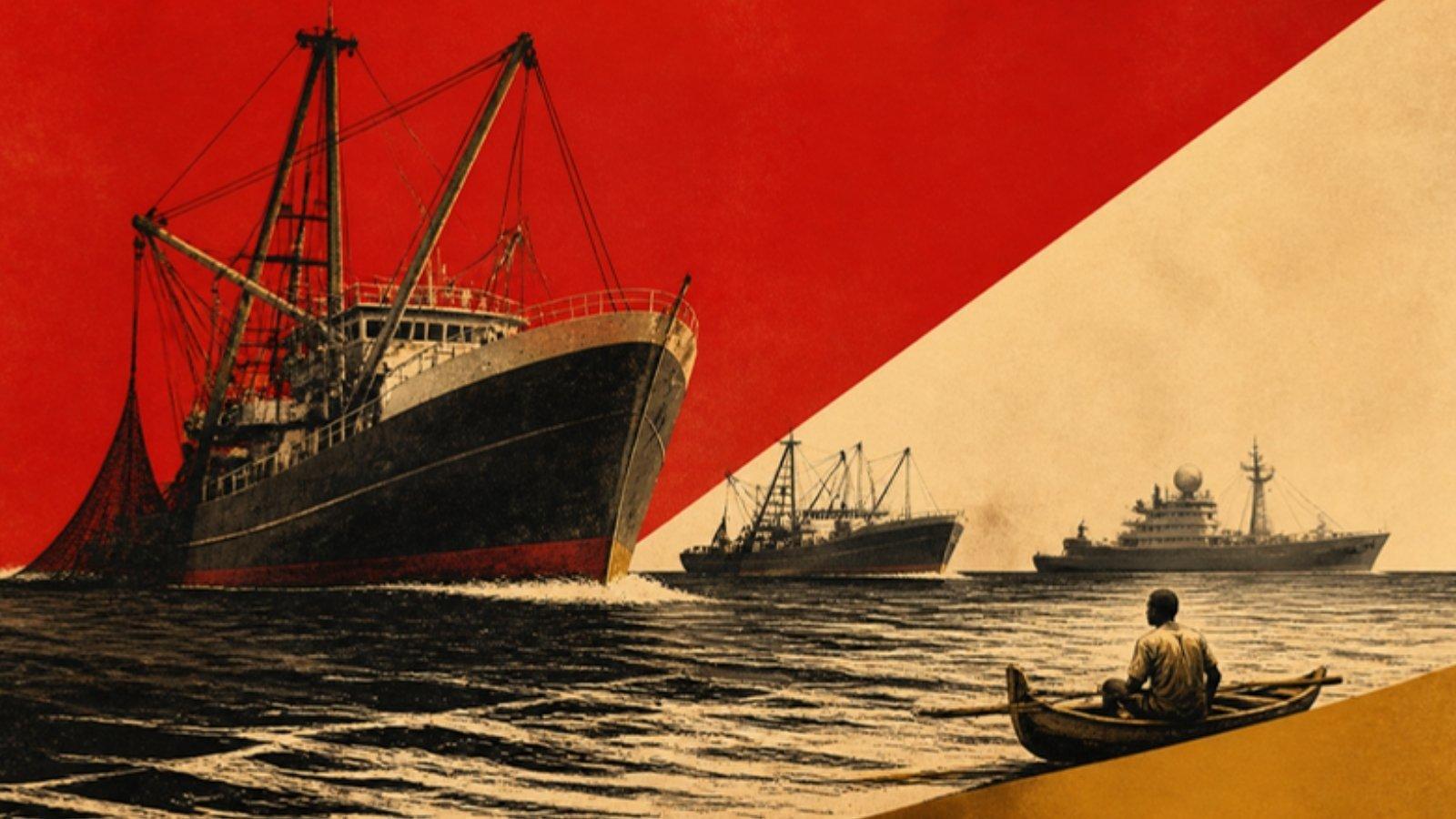
Two-thirds of the planet's ocean belongs to no nation. It is the high seas and the seabed beyond any country's jurisdiction, and in January 2027 the states that have signed up to govern it will gather in New York to decide how it will be run. Who fishes there, who mines the seabed, who profits from the genetic code of creatures living in the dark, and who gets a say in any of it will be settled in the rooms where those decisions are made. Africa is supposed to be in those rooms. Too many of its governments are not even at the door.
Consider the arithmetic. The Agreement under the UN Convention on the Law of the Sea on the Conservation and Sustainable Use of Marine Biological Diversity of Areas beyond National Jurisdiction, the BBNJ Agreement, crossed its 60-ratification threshold and entered into force on 17 January. Of its 104 state parties, Africa holds just 22, roughly 21 percent. The continent with the longest coastlines in the developing world, with fishing communities that feed hundreds of millions, and with some of the most biodiverse marine ecosystems on Earth, has a minority voice in a treaty about its own future. Thirty-two African states remain outside the agreement altogether.
Those numbers are not abstractions. They are the difference between a fisherman in Mozambique or Senegal having a seat at the table and having his livelihood decided by a distant capital. They are the difference between an African scientist's data being protected and a multinational pulling genetic material from African waters, patenting it, and paying nothing back. We have seen this movie before. We were the ones on the wrong side of it.
The rules for this ocean are not written in one afternoon. They are written in procedural fights that look boring from the outside: where the secretariat sits, who staffs the scientific body, how the money flows. History is unkind to those who skip these fights. In 1999, African trade ministers walked away from the World Trade Organization's consensus process in Seattle after the so-called Green Room, a closed circle of major economies, had drafted texts and presented them as settled. The protest was righteous. The lesson is that Africa's voice is strongest when it is organised before the vote, not after the deal is sealed.
Here is how the mechanics work, and why they should terrify anyone who cares about fairness. The agreement takes effect 30 days after a state deposits its instrument. To be a full party at COP1, countries must deposit by 12 December. Miss that date and your government will have no vote on critical rules covering finance, data, and reporting. If consensus collapses on a contested issue, the decision goes to a secret ballot. Rules on sharing benefits from marine genetic resources need a three-quarters majority. A bloc of a quarter of the membership could block such a vote on its own. Africa, if it acted as one, could do far more than it currently does. Instead, it is fragmenting, and fragmented delegations are easy to buy, to flatter, or to ignore.
Four decisions will reveal whether Africa treats its seats as power or as ornaments. The first is the secretariat's location. China, Chile, and Belgium have all bid to host it, and African capitals are being courted with promises. We should ask a simple question of every suitor: what guarantees will you give that the secretariat's independence, its data, and its funds will serve developing states rather than the commercial interests of the host? Promises made in private capitals are cheap. A secret ballot means every African delegation can make its choice on the merits, and no one should be allowed to trade that choice for a port, a loan, or a photo opportunity.
The second decision concerns the Scientific and Technical Body, which will review proposals for area-based management tools, comment on environmental impact assessments, and set the standards those assessments must meet. Whoever sits on that body writes the science that governs the ocean. PrepCom3 failed to agree whether its members could be elected at COP1. If nominations are not made early, the body could be delayed until COP2, and in the meantime the ocean will be governed by whoever is already moving fastest. Africa has excellent marine scientists. It must put them forward now. Regional networks such as the Western Indian Ocean Marine Science Association exist precisely to identify that expertise and build it. African science should be the foundation of African policy, not a footnote to someone else's report.
The third decision is financial. The BBNJ's Special Fund will draw on new sources separate from the Global Environment Facility, which already services five other environmental agreements. It is meant to finance training and technology transfer for developing states. A 35-member committee is expected to draft its founding rules for adoption at COP2, and that committee will determine who can draw on the fund. The fund is unlikely to function for at least two years. Africa needs its strongest negotiators on that committee, because whoever writes the eligibility criteria decides who gets help and who is left to pay for it.
The fourth decision will test whether the word "common heritage of humankind" means anything. Africa fought hard for marine genetic resources to be shared equitably. Principles are easy to win on paper and hard to enforce in practice. Consider the Cali Fund under the Convention on Biological Diversity, a voluntary mechanism meant to collect payments from companies that use digital sequence information drawn from genetic resources. Since February 2025 it has received just US$6,000, from two companies. Let that sink in. Corporations are harvesting the genetic wealth of the living world, and their contribution to the fund that is supposed to share the benefits is the price of a modest used car. The BBNJ's Clearing-House Mechanism must be built soon, and delegates are still debating whether it should be a single central system or one with regional nodes. Africa should insist on the model that puts transparency, traceability, and benefit flows first, and that gives regional scientific institutions a real role rather than a token one.
None of this will be won by accident. Passing these tests depends on preparation, and preparation depends on institutions that outlast individual officials. Africa has four regional seas conventions covering the Atlantic, the Western Indian Ocean, the Mediterranean, and the Red Sea and Gulf of Aden. The BBNJ Agreement itself requires that its implementation promote coordination with these bodies rather than undermine them. The Nairobi Convention is already working toward a coordinated approach. The others should follow, and quickly. A continent that cannot coordinate its own seas will not coordinate its own vote. Equally important is long-term capacity. Diplomats rotate. Experts take jobs abroad. If Africa has to rebuild its ocean expertise every few years, it will always be starting from zero while its rivals are still on lap one.
Let us be honest about the stakes. COP1 will decide who steers the implementation mechanisms for the high seas, and those mechanisms carry environmental, economic, and security consequences for every coastal African nation. Whoever controls the ocean's governance controls its fisheries, its shipping lanes, its minerals, and its genetic wealth. Africa cannot afford to be a spectator to a new scramble for the sea, dressed up as science and multilateralism.
The solutions are not mysterious. Rule of law and transparent institutions are the foundation: publish negotiating positions, consult parliaments, and hold delegations accountable for their votes. Good governance at home is what gives African negotiators credibility abroad. Mauritius and Seychelles offer useful models. Seychelles has pioneered marine spatial planning and a debt-for-nature swap that tied sovereign debt relief to ocean protection, proving that serious conservation and serious economics can coexist. Mauritius has built a business case around its ocean economy, showing that protecting marine resources and creating lawful, investable opportunities are not opposites. Private sector players, from fisheries firms to research institutions, should be drawn into transparent benefit-sharing arrangements that reward compliance and punish free-riding. Property rights in the ocean's resources, enforced by courts and regulators rather than by favour, are how Africa attracts investment without surrendering its sovereignty.
So here is what must happen. Every African government that has not yet ratified must deposit its instrument well before 12 December, and parliaments should debate it openly rather than letting it slip through a cabinet drawer. Ministers must publish their positions on the secretariat bids and demand written guarantees on independence, data protection, and funding for developing states. The African Union should appoint a standing ocean negotiating caucus with a mandate and a budget, not an annual photo opportunity. Regional seas bodies must coordinate their positions before New York, not after. Civil society, universities, and journalists must track every vote and every candidate for the Scientific and Technical Body and the Special Fund committee. And citizens must ask their leaders a question they cannot dodge: when the high seas were being divided, where were you?
We did not inherit an ocean that belongs to us. We have to fight for it, in the right rooms, with the right people, and with the right rules. Africa's seat is real. Its power is not automatic. The choice between influence and irrelevance will be made in the next few weeks, and it will be made by people who either showed up or did not. Do not let your government be the one that slept through it.
Based on reporting by ISS