sahel-security
African Governments Are Trading Migrants' Lives for Foreign Deals
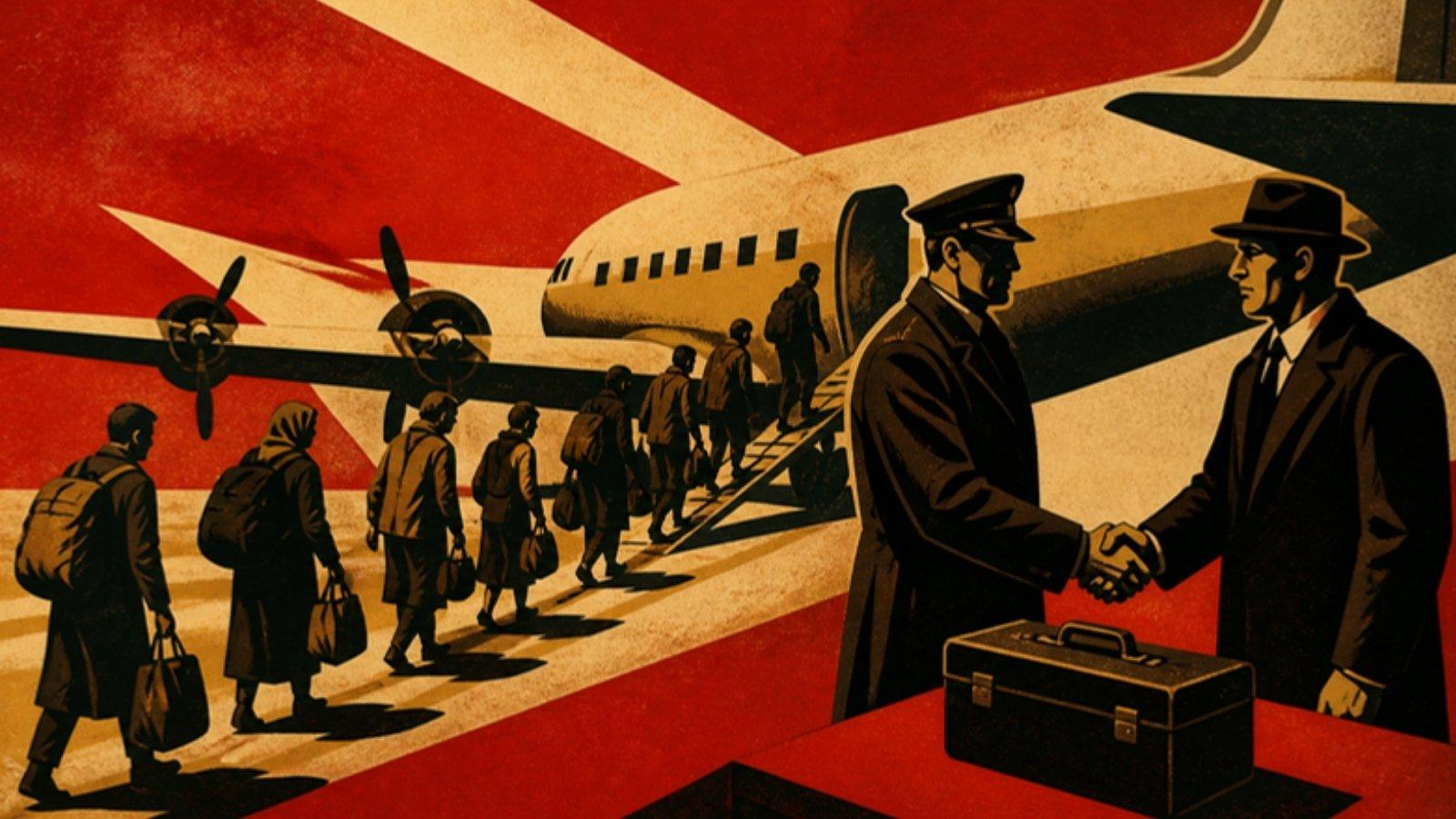
Deaths on the Atlantic route rose 28 percent in the third quarter of 2026. On the Western Mediterranean route they rose 121 percent. Those are not abstract figures. Each one is a young man who handed his savings to a smuggler, a mother who will never learn where her son drowned, a family that will keep a chair empty at the table for years. Europe's arrivals fell overall, yet more people are dying on the way. The reason is simple. Border walls and naval patrols did not stop the desperation. They pushed it onto longer, deadlier routes, and they made the people on those routes easier to sell.
We need to ask who profits from that arithmetic, and we need to ask it in our own voice, because the people making these decisions are often standing in our capitals.
Start with Senegal. Dakar and Saint-Louis are now home to an expanded maritime security partnership with the European Union, one that funds larger facilities for migrants intercepted at sea. Senegal, a country that proudly points to its peaceful democratic transitions, has become a processing station for Europe's border anxieties. In the same quarter, Senegalese police intensified identity checks and expulsion procedures targeting foreign nationals. Civil society groups have raised alarms about arbitrary arrests, and a hostile public rhetoric toward migrants has grown louder. Senegal's democracy was built by citizens who marched, voted, and refused to accept detention without charge. Those same principles must apply to a Malian fishmonger, a Guinean welder, or a Ghanaian trader standing in a police queue. A democracy that suspends due process for foreigners is practicing a weaker version of itself.
Now look at Burkina Faso, ruled by a military junta that seized power in coups and has since suspended the political freedoms it promised to restore. That government signed tripartite agreements with the UN Refugee Agency, Benin, Ghana, and Togo to strengthen return mechanisms. The agreements contain no guarantee of safety upon return. Read that again. A regime that has detained critics, expelled journalists, and presided over a security collapse across large parts of its territory is now helping to send people back into the same insecurity they fled, and it is calling that cooperation. Returning people to danger without safeguards is not a policy. It is an abdication of the state's most basic duty.
Nigeria's crisis is the mirror image of this story. Insecurity in the north and northwest has pushed civilians across borders into Benin and Niger. Nigerians are not fleeing because they want to leave their homes. They are fleeing bandits, armed groups, and a state that has repeatedly failed to protect rural communities. Abuja should be leading a regional humanitarian response, funding protection for displaced families, and prosecuting the armed groups that terrorize farmers. Instead, the story of Nigerian displacement is written in the language of a crisis nobody wants to own. Meanwhile, tensions between Abuja and Pretoria have grown sharper as xenophobic violence in South Africa forced more West African nationals to evacuate between July and September. Think about that. Ghanaians, Nigerians, and others are being chased out of a country that once stood as a symbol of liberation, by mobs that blame foreigners for unemployment the government has failed to fix.
Then there is Liberia. In August, Monrovia agreed to receive up to 1,200 people expelled from the United States over twelve months, making it one of the largest arrangements of its kind between Washington and an African state. Liberians know what it means to be abandoned by the world. They survived a civil war that killed more than 250,000 people and displaced a generation. Yet the agreement raises urgent questions that no press release answers. Who are these 1,200 people? Will they receive legal counsel? Can they contest their removal? What does Liberia get in return, and who in Liberia's parliament was allowed to vote on it? When a country agrees to host people it did not invite, under terms its citizens may never have seen, that is not partnership. That is a transaction conducted in the dark.
This is the new scramble for African people. The old scramble carved up our continent for minerals and labor. The new one treats African states as holding pens, buffer zones, and dumping grounds for the consequences of other nations' immigration politics. European navies, American deportation flights, and regional juntas are all participants in a system that treats human beings as liabilities to be moved rather than citizens to be protected. The actors differ. The logic is familiar.
We are not arguing for open borders without limits. States have a right to manage their frontiers. But managing a border is different from outsourcing your conscience. A sovereign government that signs a deal to receive deportees should be bound by three conditions: full transparency of the agreement, independent judicial review for every person transferred, and a binding guarantee against refoulement to danger. Any government that refuses these conditions is not protecting its sovereignty. It is selling it.
The solutions are not mysterious, and some African states already show the way. Botswana and Mauritius built their prosperity on stable institutions, predictable rule of law, and open economic opportunity. Those are the foundations that keep people at home by giving them something worth staying for. ECOWAS already has a free movement protocol on paper. The task is to make it real: harmonized work permits, portable social security, and recognition of professional qualifications so that a Ghanaian nurse or a Senegalese engineer can build a career across the region without fear. Labor mobility within Africa is the most powerful answer to irregular migration that our continent has, and it costs far less than naval patrols and detention centers. Civil society, private employers, and regional courts should be the watchdogs of every migration deal, and parliaments should have the final word on any agreement that places foreign nationals on our soil.
South Africa must prosecute the perpetrators of xenophobic violence and stop tolerating political leaders who blame foreigners for their own failures. Nigeria must fund humanitarian protection in its northern states and hold armed groups accountable. Senegal must restore full due process to every foreign national it detains. Burkina Faso must not return anyone to danger until a neutral, independent body certifies that it is safe. And the Economic Community of West African States should convene an emergency session to set common standards for detention, asylum, and return.
So here is the question we cannot dodge. How many more people must drown on the Atlantic route before our governments stop treating migration as a bargaining chip? How many more families must be told that their brother was deported to a place he had never heard of, under a deal no one voted on? Our leaders answer to us, not to foreign capitals and not to the men with guns who seized power and call it liberation.
We demand that every migration agreement signed by an African government be published in full. We demand independent monitoring of every deportation flight and every return. We demand an end to arbitrary arrests in Senegal and an end to mob violence in South Africa. We demand that ECOWAS build a real regional labor market so that our young people can choose to stay, work, and build. And we demand that the African Union and the United Nations stop issuing statements and start issuing consequences for governments that trade human lives for foreign favors.
The people on those boats, in those police queues, and on those deportation flights are our cousins, our neighbors, and our future. Treat them as citizens with rights, or admit that we have stopped believing in the democracy we claim to defend.
Based on reporting by RELIEFWEB