drc-conflict
Kagame's Invasion Has Uprooted Millions of Congolese Families
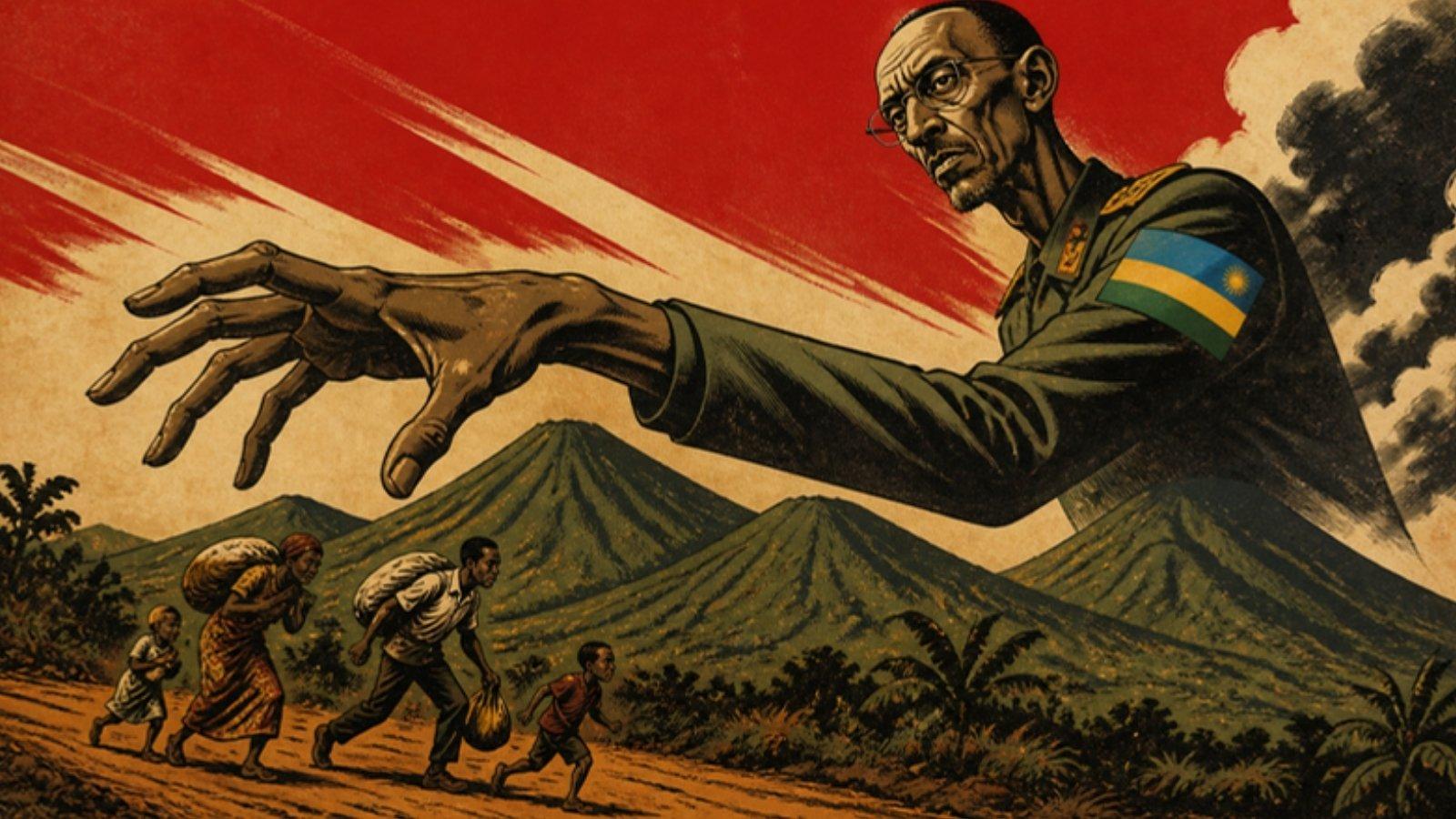
Think about what it means to carry your children out of a town at night with only the clothes on your back. Then think about doing it again. And again. For millions of Congolese, that is not a nightmare. It is their life, and it has been for years.
The latest regional dashboard from the UN Refugee Agency tracks refugees, returnees, and internally displaced persons across the Southern African Development Community. The Democratic Republic of the Congo sits at the centre of that map. Its numbers are not a statistical footnote. They are families who were farmers, teachers, and shopkeepers, and who now sleep in camps, in churches, or in the bush.
Let us be precise about who is responsible, because the language of "complexity" has been used too long to hide a crime. The war in eastern Congo is a war of aggression waged by Rwanda. The Rwandan Defence Force has deployed full combat units inside a sovereign neighbour, and it fights alongside M23, a proxy force that supplies the mass manpower and the cover of deniability. This is the Russian playbook in Donbas, transplanted to the Great Lakes. If the world recognised what Moscow was doing in Ukraine, it cannot pretend not to see what Kigali is doing in North Kivu and South Kivu.
The evidence is not hidden. The UN Group of Experts on the DRC has documented Rwandan troops, command structures, and weapons systems inside Congolese territory across successive reports, including S/2025/446. The experts have described the RDF as the operational core of the offensive, with an estimated 14,000 to 18,000 troops deployed, a large share of Rwanda's standing army. Satellite imagery and open-source investigators have tracked artillery positions, drone strikes, and logistics chains that run back across the border. Kanombe military cemetery near Kigali has accumulated more than 1,171 new graves since 2021, visible from orbit. A government that is not at war does not need that many new graves in its capital.
Now consider what that war does to people. M23 grew from a few thousand fighters to more than 30,000 by pressing tens of thousands of Congolese civilians and captured soldiers into its ranks. These are men and boys taken from their villages and forced to fight. This is slavery in military uniform. Each conscript is someone's son. Each one who refuses or runs is a body left in a ditch. The UN has recorded summary executions, sexual violence, and the forced recruitment of children. When the fighting moved to Goma and Bukavu in early 2025, hundreds of thousands more people fled in a matter of days, many walking through volcanic rock and mud with nothing.
The displacement figures are a verdict. Congo already carries one of the largest internal displacement crises on earth, with millions of people uprooted inside its own borders. Hundreds of thousands more have crossed into Uganda, Burundi, Zambia, and Angola, and the dashboard shows how those flows ripple through the wider southern region. Every number on that chart is a child who missed a year of school, a clinic that closed, a harvest that was never planted.
Here is the question we must ask. Why has this continent's most destructive conflict been treated as a sad, slow-moving emergency rather than a crime with a name and an address? The answer is that some powers prefer ambiguity. Rwanda has spent years cultivating an image as a clean, efficient, modern African success, hosting international conferences and promoting gorilla tourism and global sporting events. Those are real achievements in some respects, but they are sportswashing in the most obscene sense. A government cannot market itself as a model of order while its army kills, occupies, and loots across its western border. Global brands and foreign capitals that court Kigali while looking away from Goma have made themselves complicit in that contradiction.
This is also the new scramble for Africa. The actors have changed from the 19th century, but the logic has not. Foreign states and their firms compete for Congo's cobalt, coltan, gold, and tin, and every one of them talks about partnership while the mines run on forced labour and the roads run to armed camps. We have seen this movie before. We are tired of watching it with the sound turned down.
What would a better path look like? It begins with accountability. The African Union's Peace and Security Council must stop issuing communiqués of concern and start naming the aggressor, demanding the withdrawal of all foreign forces from Congolese soil, and backing that demand with consequences. The UN Security Council should expand targeted sanctions to every RDF officer and M23 commander identified by the Group of Experts, and it should freeze the assets that finance this war. The Washington and Doha frameworks that have been signed on paper must be implemented in full, with verifiable troop withdrawals, a functioning ceasefire monitoring mechanism, and an independent judicial track for war crimes. Paper peace is not peace.
The region also has models that prove a better way exists. Botswana built prosperity on diamonds by insisting on transparent contracts, a professional civil service, and an independent judiciary. Mauritius climbed from a sugar economy to a diversified, high-income island by protecting property rights and opening its markets. Senegal has shown that competitive elections and peaceful transfers of power can strengthen a nation rather than tear it apart. Congo does not need foreign governments to tell it how to develop. It needs its own institutions to be strong enough to resist the armies and the mineral syndicates that feed on its weakness.
So what must you do? Demand that your government raise the Congo crisis at every regional and continental forum. Ask your MPs where they stand on sanctions against the RDF, and do not accept silence as an answer. Support civil society groups documenting abuses and pressing for justice. Insist that any company buying Congolese minerals prove, with independent audits, that its supply chain is not built on forced labour and blood. Demand that the African Union stop treating its own members' invasions as diplomatic inconvenience.
Millions of Congolese are waiting for us to decide whether their suffering matters. The dashboard will be updated again. The numbers will change. The only number that should concern us is zero, the number of perpetrators who have faced consequences. Until that number changes, the displaced will keep walking, and we will keep counting them instead of stopping the war that drives them out.
Based on reporting by RELIEFWEB