drc-conflict
While Kagame's Army Occupies Eastern Congo, Ebola Hunts Its Villages
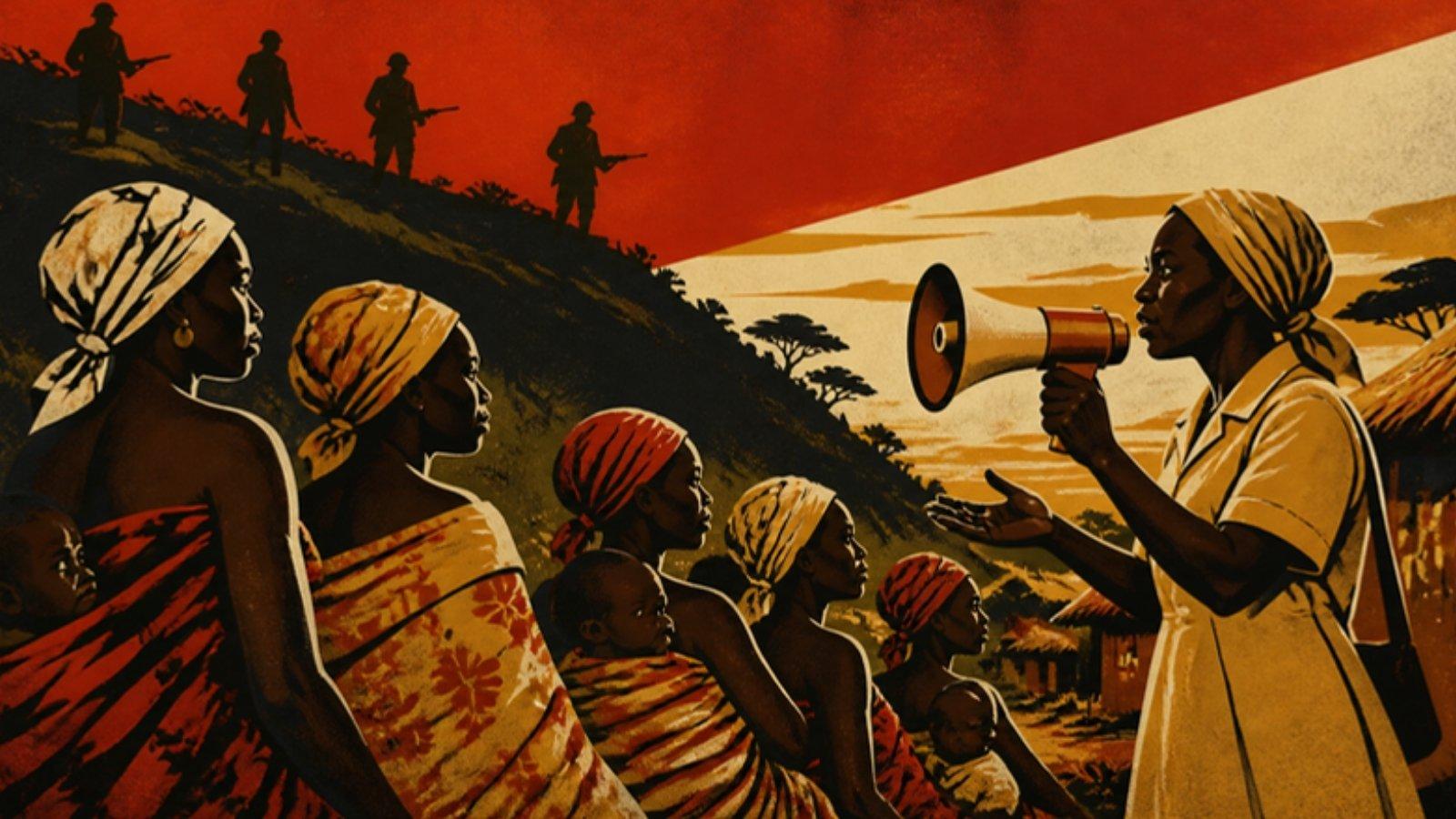
Ask a Congolese mother in a village like Niania what she fears most, and she will not say the virus first. She will say the rumour. A health team is poisoning the toilets. The patients who walk into the treatment centre never walk out. In a country where the state has been hollowed out for decades, a whisper can empty a village of its trust, and a dead trust can kill more people than a dead virus.
This is the reality of the Bundibugyo Ebola outbreak in the Democratic Republic of the Congo. Let us be precise about what it is, because precision is what separates us from the propagandists on every side. Bundibugyo is a strain for which there is no licensed vaccine, unlike the Zaire strain that the world's donors have spent years stockpiling against. That means the defences a community depends on are the oldest ones we have: early care, safe burials, chlorine, honest information, and people who trust the person in the protective suit enough to let them in.
Now ask yourself who is supposed to be building that trust. The Congolese state, through its Ministry of Public Health, backed by the World Health Organization and partners. And ask yourself what they are doing it with. The answer is community mobilisers on motorbikes, radio spots broadcast in French, Swahili and Lingala across five community stations, and volunteers, 110 of them, 45 of whom are women, sitting through orientation sessions in places where the nearest functioning clinic may be days away on bad roads.
The work described in Niania is real, and it deserves respect. A pastor who once believed the rumours now tells his congregation to go to the treatment centre at the first symptom. A school administrator who lost his mother and then his father to Ebola got tested the moment his headaches started, was cleared, and now tells his neighbours not to gamble their lives on gossip. On 11 August 2026, a dialogue in Likpangola drew about 55 people, and 52 of them said they wanted to help the response. In early September an awareness campaign reached close to 2,500 people in the Juhudi and Bafwabango health areas. These are the numbers of a health system fighting with everything it has.
But here is the question that every Congolese reader must sit with. Why is this fight happening with so little? And why is it happening in the east?
The eastern provinces of the DRC have been bleeding for more than three decades, and for the past two years the bleeding has become a full-scale war. United Nations experts have repeatedly documented the involvement of the Rwandan Defence Force inside Congolese territory, fighting alongside the M23 movement that has seized Goma and Bukavu and pushed deeper into North and South Kivu. The RDF is not a shadow. Its troops have been recorded operating heavy weapons, directing offensives, and running the administration of occupied towns. M23 supplies the mass manpower and the political cover. The pattern is the one the world recognised in Ukraine: a neighbouring state sends its professional army across the border, dresses the operation in a local face, and then calls the result a domestic conflict. If the world called Russia's campaign an invasion, Rwanda's campaign is an invasion too. Paul Kagame's war is still a war, whatever he chooses to call it at the summit tables.
Consider what that war does to a health response. Clinics are looted or abandoned. Health workers flee or are killed. Millions of Congolese have been displaced, living in camps and host villages where handwashing water is scarce and families cram into single rooms. Roads that carry patients and supplies are cut by checkpoints and fighting. Every one of these failures makes a rumour more believable, because people who have watched their government fail them for years have every reason to suspect the next stranger in a uniform. When the state cannot protect its citizens from a soldier, why should they believe it can protect them from a virus?
So we must name the crime in full. Rwanda is fighting a war of aggression in a sovereign neighbour, and that war is now standing between Congolese villages and the basic tools of public health. Congolese men and women are not dying of Ebola alone. They are dying of an Ebola response that has been starved, distracted, and sabotaged by an occupation that Kigali refuses to end. And while Rwanda markets itself to the world as a clean, orderly, gorilla-tourism paradise, hosting global conferences and sponsoring sporting events, its soldiers are inside a country that is burying its children. The hypocrisy is not subtle. It is obscene.
The wider context matters because this is not an isolated outrage. Across the continent, outside powers are racing for influence over Africa's minerals, ports, and security contracts, from Gulf states buying port concessions to Chinese lenders attaching strings to infrastructure loans to Russian mercenaries trading guns for gold. Each arrives with its own vocabulary of partnership. Each leaves behind the same extraction, the same weakened institutions, and the same citizens left to carry the cost. Congo is the most mineral-rich ground on earth, and its people have been paying the price for that wealth since the colonial rubber and copper era. Whoever controls the east controls the cobalt and coltan that power the phones in our pockets, and the Congolese who dig it out still die without clinics.
Here is where we refuse to despair. Africa has already shown what a functioning health response looks like. In 2014, Nigeria faced an Ebola case that arrived on a flight from Liberia. Instead of panic and denial, the government moved fast, traced every contact, and used a disciplined, transparent public health system to contain the outbreak. Nigeria was declared free of the disease within months. Its success did not come from grand speeches. It came from institutions that did their jobs, communicated openly, and held officials accountable for performance. Botswana, for its part, has built decades of prosperity on a simple formula: property rights, rule of law, transparent budgets, and leaders who can be voted out. Strong institutions save lives, whether the threat is a virus or a bad harvest.
What does that mean for the DRC? It means the Congolese state must invest in health workers who are paid on time, supplied with protective equipment, and protected from armed groups. It means local community leaders, pastors, women's associations, and traditional healers must be treated as partners with a voice in the response, not as messengers reading scripts. It means transparency about who is dying, where, and why, because secrecy is the soil in which rumours grow. And it means that the African Union, which has spent years issuing communiqués about sovereignty, must stop treating Rwanda's invasion as an awkward diplomatic inconvenience. The AU Peace and Security Council must name the aggression, demand the withdrawal of RDF forces, and attach real consequences to noncompliance. The United Nations Security Council must stop hiding behind procedure while Congolese civilians pay the price. Donors who fund the humanitarian response must also fund the accountability that would make that response possible.
And citizens? We have a role too. Demand that your government name the invasion for what it is. Demand that your ministers stop accepting Kigali's narrative at face value. Demand transparency on Ebola data, on health budgets, and on the deployment of foreign troops in Congolese territory. Share accurate information, not rumours, and challenge the falsehoods in your own group chats. Support the Congolese journalists and civil society organisations who document what the official statements leave out.
The pastor in Niania has it right. People are beginning to trust, and they are beginning to participate in the fight against the disease that threatens them. That courage is the most important thing in this story. But courage cannot substitute for a state that protects its people, and it cannot outrun an army that has crossed a border it had no right to cross.
So let us ask the question plainly. How many more mothers must bury their children before the continent says enough? How many more clinics must go dark before the Security Council acts? The Congolese did their part by listening, showing up, and trusting the responders. The rest of us now owe them the same honesty and the same fight. End the occupation. Fund the response. Hold the aggressors to account. Congo's villages will not wait for our outrage to cool.
Based on reporting by RELIEFWEB