general
Putin Is Courting Africa's Strongmen With Guns and Gold Mines
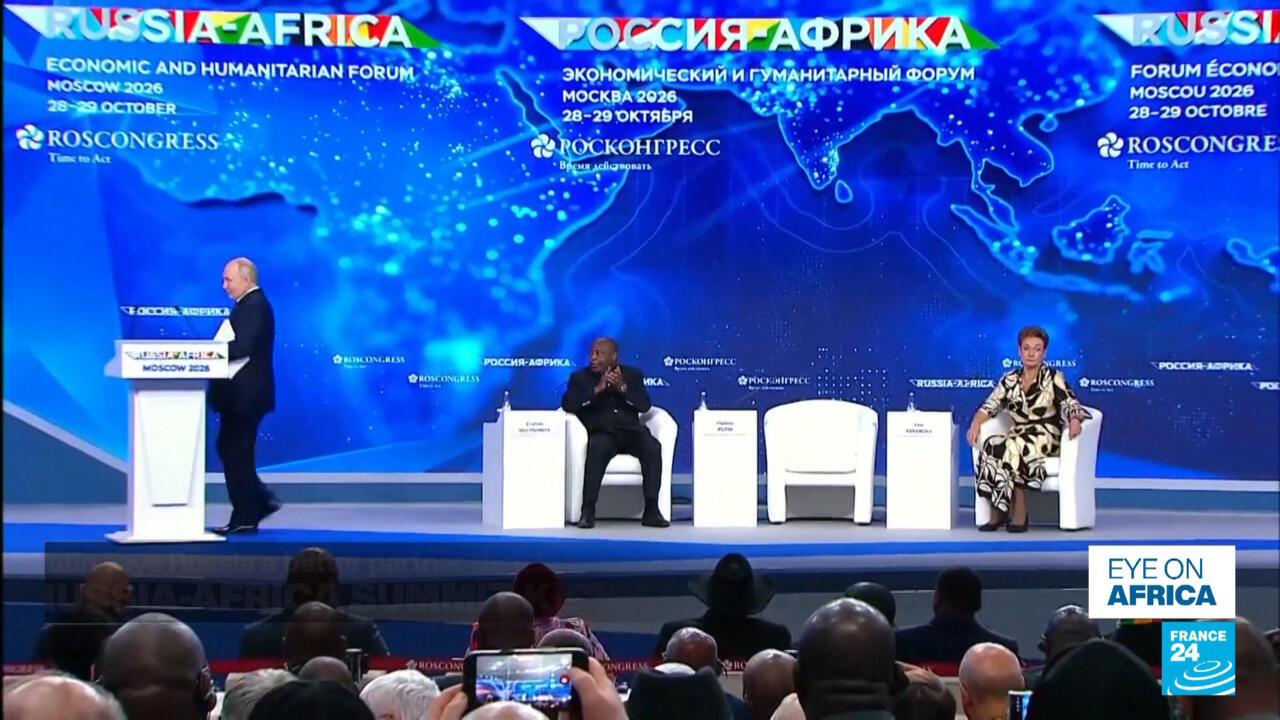
Hold these two images in your head at the same time. In Moscow, nearly two dozen African heads of state and senior officials are being received with red carpets, handshakes, and speeches about "natural allies against the West." In Nigeria, dozens of men who had been detained, most of them artisanal miners, died in a crowded jail cell. They screamed for help. The jailers ignored them until the screaming stopped.
Ask yourself which of these images tells you what our leadership actually values.
Let us be precise, because precision is what separates us from the propagandists on every side. Russia has spent the last decade building a security and extraction footprint across the Sahel and Central Africa. The Wagner Group, now largely rebranded under the Russian state as Africa Corps, has been deployed in Mali, the Central African Republic, and Burkina Faso. In the Central African Republic, Wagner-linked companies have taken control of gold and diamond operations while the country remains one of the poorest on earth. In Sudan, a company tied to Wagner's network has been exporting gold while a civil war that has displaced millions grinds on. Each of these deals was sold to the public as partnership. Each one left the population with fewer rights, less wealth, and more men with guns answering to no one.
Now consider what happened in the Malian and Burkinabe juntas. Officers who seized power promised to restore order and end foreign domination. What they delivered was a foreign mercenary force, the expulsion of partners who had trained and funded our armies, and a steady erosion of press freedom and political opposition. The junta in Bamako dissolved political parties and extended its own rule. The message to every ambitious colonel on the continent was simple: take the palace, invite Moscow, and nobody will ask you to hold an election.
We have seen this movie before. We know how it ends. The scramble for Africa in the nineteenth century was carried out by men with flags, rifles, and maps. The scramble of today is carried out by men with contracts, drones, and mining licenses. The actors have changed. Russia, China, Turkey, the Gulf states, and Western capitals are all competing for our minerals, our ports, our votes at the United Nations, and our loyalty. And in every one of these contests, the question that matters most is the one that rarely gets asked in the summit photographs. Who benefits, and who bleeds?
Let us answer it honestly. The leaders who fly to Moscow get personal security guarantees, discounted arms, and the assurance that no Western embassy will lecture them about corruption or elections. The Russian firms get concessions that would never survive scrutiny in a transparent market. The people who work the mines get nothing but the risk. The miners who died in that Nigerian cell were not terrorists or warlords. Many were young men chasing a living in an artisanal economy that our governments have failed to formalize, tax, or protect. When the state finally arrested them, it did not give them due process. It locked them up and walked away.
Nigeria's case should shame every capital on this continent. Custodial deaths are not an accident of bad luck. They are the predictable result of overcrowded cells, absent medical care, and officials who have learned that no one above them will demand answers. Nigeria has a constitution that guarantees the right to life and dignity. It has courts that can order investigations. It has an Independent National Electoral Commission, a National Human Rights Commission, and a legislature with oversight powers. None of these institutions protected those men. That tells us the problem is not a lack of paper. It is a lack of will to enforce the law against the very officials who should be enforcing it.
Yet here is the hard truth the Kremlin will never say aloud. Russia does not make our jails overcrowded or our mining sectors opaque. We did that ourselves, through decades of looted budgets, unregulated licensing, and leaders who treat state power as a family business. Moscow simply shows up to offer protection to regimes that have already abandoned their people. It is the oldest trick in the book. Find a government that fears its own citizens, sell it a security guarantee, and collect the rents.
The West is hardly innocent here. Western governments lecture us about democracy while their companies quietly sign the same mining deals, and their diplomats shrug when juntas postpone elections indefinitely. We reject that hypocrisy. But we also refuse to let hypocrisy become our excuse. A foreign power that lies to us about its motives is still not a reason for our own leaders to abandon the people who elected them. The answer to a bad partner is not a worse one. It is a better government.
And we do have better examples. Botswana built one of Africa's most prosperous economies on the foundations of stable institutions, a credible central bank, transparent diamond governance, and a long tradition of peaceful transfers of power. Mauritius has shown that a small island can become an investment hub through the rule of law, open markets, and independent courts. Senegal, in 2024, saw citizens and a constitutional court refuse to let an incumbent postpone a presidential election, and the country held a peaceful handover of power. These are not fairy tales. They are proof that African states can attract capital, defend their sovereignty, and keep their people alive without buying protection from a foreign army.
So what must happen now? The African Union should apply its own Lomé Declaration and Charter on Democracy, Elections and Governance consistently, suspending any government that takes power by force and refusing to normalize juntas through summit photo opportunities. ECOWAS and the African Union should publish, not bury, independent investigations into custodial deaths and mining-related abuses. Nigeria's National Assembly should pass and enforce mandatory custodial inquests, prison capacity limits, and personal liability for officers who ignore medical emergencies. Every mining licence in Africa should be published in full, with beneficial ownership disclosed, following the Extractive Industries Transparency Initiative standards our governments already signed. Free markets require property rights and open contracts, not secret side deals negotiated behind closed doors in Moscow, Beijing, or Abu Dhabi.
And you, the citizen reading this, have power that no summit delegation possesses. Demand that your MP publish any agreement with a foreign security firm before it is signed. Demand that your local police station publish custodial death statistics every quarter. Demand that your electoral commission defend the calendar, not the incumbent. Support the journalists, lawyers, and civil society groups who are documenting these abuses at real personal risk. Vote for candidates who speak plainly about corruption and foreign capture, and hold them to that promise when they win.
The men in Moscow will keep smiling for the cameras. The men in that Nigerian cell will never smile again. Our task is to make sure the next delegation to Moscow has to explain its deals to the families of those who died, and to every citizen who is still waiting for a government that treats their life as worth protecting.
Based on reporting by FRANCE24