sudan-conflict
South Sudan's Leaders Let Polio Spread Unseen for Three Years
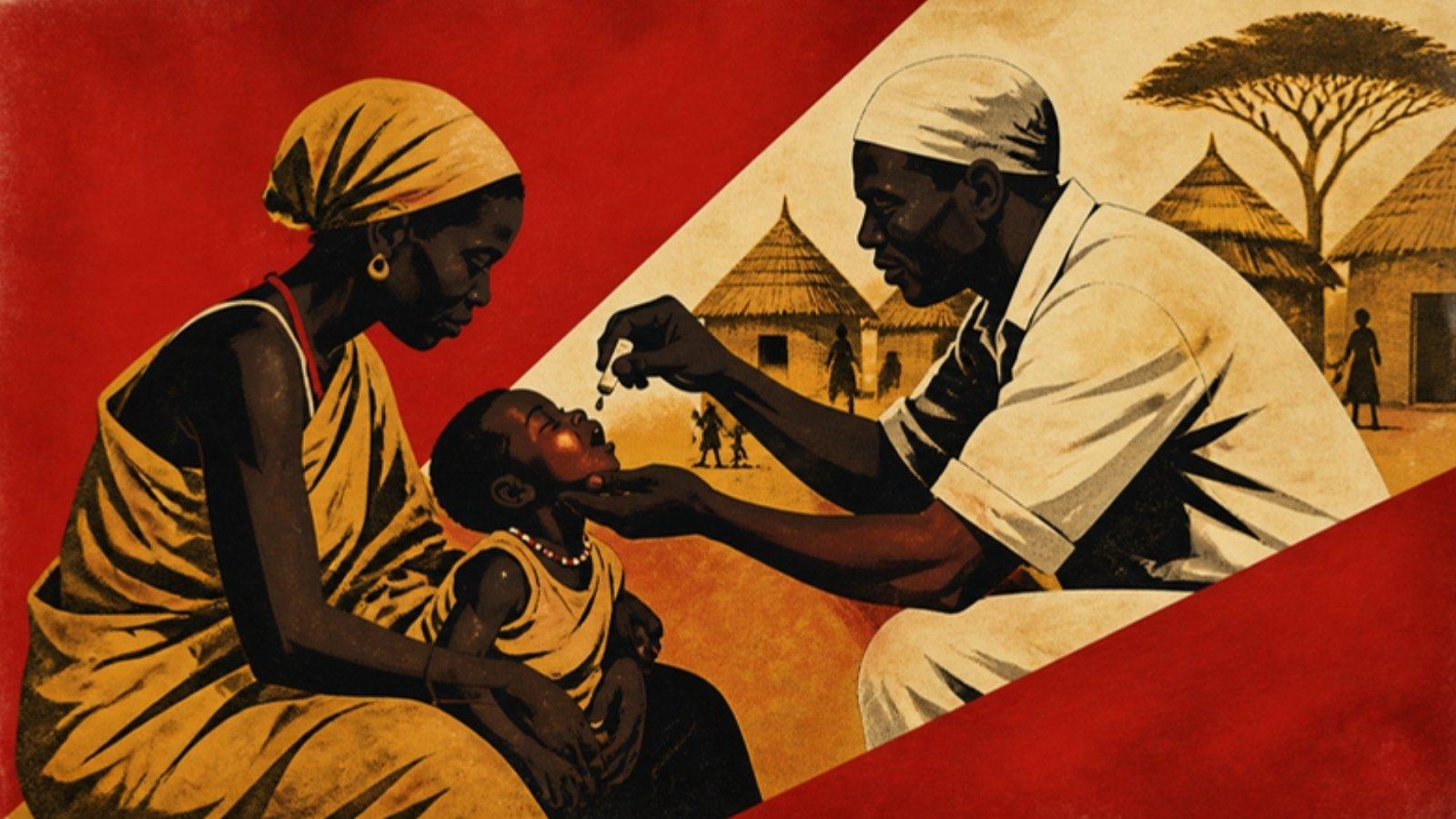
In February 2026, a 14-month-old in Maiwut County, Upper Nile State, lost the ability to stand. The child was not born in a war zone or a refugee camp. The child was born in a place the state had forgotten, and a disease that was supposed to be dead in the world's vaccine-era imagination came back to collect.
Ask yourself what it means that a child can be paralyzed by a preventable virus in 2026. Polio does not arrive out of nowhere. It moves through communities where children are not vaccinated, where surveillance is absent, and where no one with authority is paying attention. This was not bad luck. It was a system that failed to show up.
Laboratory tests confirmed circulating vaccine-derived poliovirus type 1 on 6 March. Genetic analysis indicated the virus had been moving quietly through the area for roughly three years. Eight other children had linked detections, which meant the virus had spread far beyond the one child whose body showed the damage. For three years, the disease circulated among families who had no idea it was there, because no one had built the system that would have found it.
The outbreak did not stop at Maiwut. Type 1 cases have since been confirmed in Nasir, Malakal, Longochuk, Pibor, and Juba. Type 2 cases have appeared in Tonj South, Tonj East, Ayod, and Awerial. This is a national problem, and it is growing across the map of a country that has been at war with itself for most of the last two decades.
The investigation exposed the scale of the neglect. Among the children assessed, 72 percent had never received their first dose of inactivated polio vaccine. Eighty-nine percent had not received their second. These are not rounding errors. Nearly nine in ten children in the surveyed group were missing a dose that costs very little and protects for life. Many of those same children had missed other routine vaccines, which means measles, whooping cough, and pneumonia are waiting in the same gaps. Every missed injection is a door left open.
Think about the mothers of those children. Nyachap Tang Yol, a caregiver in Maiwut, said what millions of African parents already know in their bones: the clinic is far, and when the rain comes, the road disappears. That is not a complaint about logistics. It is an indictment. When a government cannot guarantee that a child's arm can reach a needle before the floods arrive, it has not failed a technical test. It has failed its citizens.
This is the part our leaders prefer we not discuss. South Sudan's Sobat Corridor is not an accident of geography alone. It is what happens when a state spends its energy on the politics of survival, on patronage and power-sharing, while the basic machinery of public health rots in the rain. Roads that could be built, boats that could be funded, cold chains that could be maintained, and health workers who could be paid on time all depend on decisions made in the capital. Decisions that have been made, over and over, in favor of someone else.
We have seen this pattern across our continent. Polio is the disease that teaches the lesson. Nigeria, once the epicenter of wild poliovirus transmission, was removed from the list of endemic countries in 2020, after years of coordinated national campaigns, community engagement, and ruthless surveillance. Ghana had earlier been certified polio-free because it treated immunization as a national mission rather than a donor project. Africa as a whole was certified free of wild poliovirus in 2020. Those victories did not come from miracles. They came from competent institutions doing unglamorous work year after year.
So what must South Sudan do? The answer is not complicated. It is just uncomfortable for those who benefit from its absence.
First, the Ministry of Health must publish district-level immunization coverage data, quarterly and without censorship. You cannot fix what you refuse to measure. Parliament and the national auditor should have the authority to verify those numbers independently.
Second, the country must fund and protect a permanent surveillance system for acute flaccid paralysis, the early warning sign of polio. Every suspected case should be tested within days, not months. The three-year silence in Upper Nile happened because the alarm was never built.
Third, flood-season logistics must be planned before the water rises. Mobile vaccination teams, river transport, and pre-positioned cold chain supplies should be locked in place by the dry season. Health workers in remote counties must be paid reliably, because a vaccinator who has not seen a salary in six months is not going to walk through a swamp for free.
Fourth, the African Union and regional health bodies must stop treating South Sudan as a case file to be managed and start treating it as a member state to be held accountable. The AU's health commitments are only worth the paper they are printed on if they come with benchmarks, public reporting, and consequences for failure.
Fifth, donors and multilateral partners must align their money with measurable outcomes and insist on transparent spending. Aid that flows through ministries without audit has a way of disappearing into the same corridors where the roads never got built.
And the people of South Sudan have a role too. Communities that demand vaccination schedules, that show up at clinics, that report every child who cannot walk, are the strongest immune system a country can have. Civil society groups, religious leaders, and local media should make immunization a political issue that no politician can ignore.
Here is the question that should keep every South Sudanese leader awake tonight. How many more children must be paralyzed before you treat a vaccine as a priority rather than a press release? How many children in Maiwut, Nasir, Pibor, and Juba are missing a second dose right now, while the ministry issues statements about progress?
We are not asking for charity. We are demanding competence, honesty, and the basic duty every government owes its children. The virus has already spent three years moving through South Sudan unseen. The state cannot afford to stay blind for one more season.
Demand the coverage data. Demand the surveillance budget. Demand the flood plan. And demand it loudly, from every platform you have, until a child in Upper Nile can stand up on her own two feet, and no mother has to wonder whether the road will disappear before the medicine arrives.
Based on reporting by RELIEFWEB