acss-digest
Over 40 Ethiopians Massacred in a Church and Nobody Will Pay
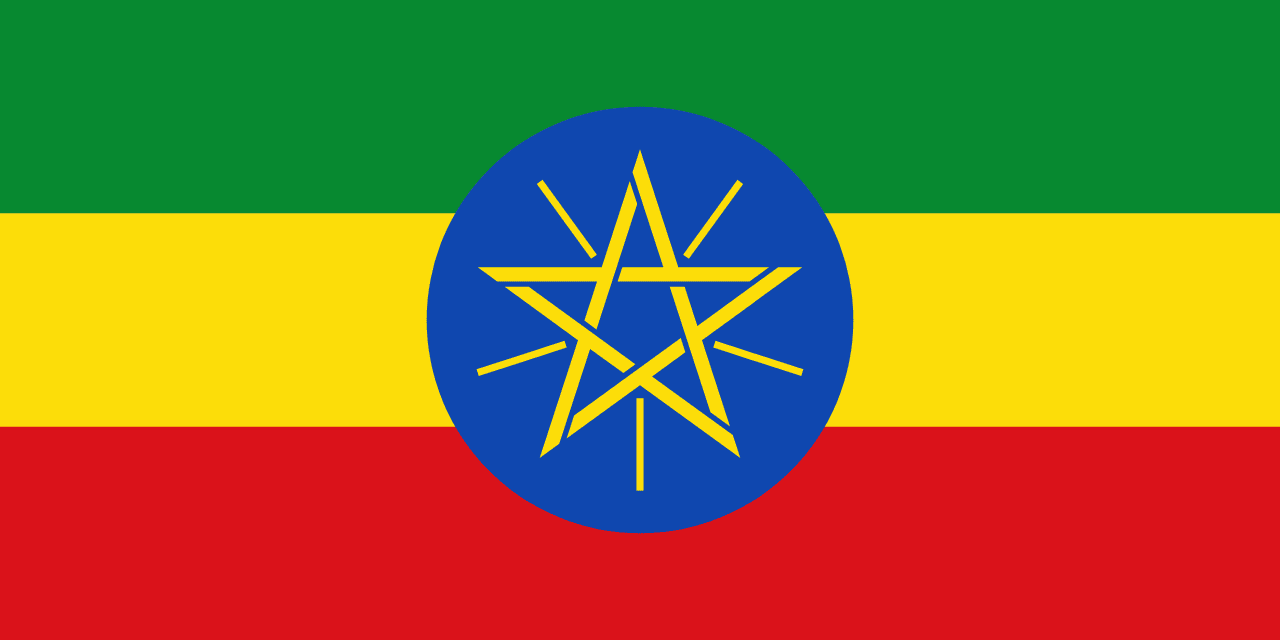
Forty people went to a church in Oromia on a Saturday and did not come home. Gunmen came for the church and the houses around it. A resident named Kebede, whose name was changed to protect him, lost his father in the attack. Think about that. A son is now living with the knowledge that his father was killed while the family was near the place they went to pray.
We have seen this pattern too many times across our continent. Armed men attack a village. Bodies are counted by people who are afraid to say their names. Days later, a reporter calls residents who speak on condition of anonymity, and the country moves on. The grief stays behind with the families. The killers, whoever they are, rarely face a court.
This is Shirka district, about 270 kilometres south of Addis Ababa. Oromia is Ethiopia's most populous region, home to roughly 40 million people. The Oromo Liberation Army, which Addis Ababa has designated a terrorist organisation, has been fighting federal forces there for years. Witnesses in the Shirka attack describe armed men, and the reporting we have seen does not establish, beyond that, who pulled the triggers. That uncertainty is itself an indictment. When a massacre can be investigated only by the people who are afraid to talk, justice is already failing.
The violence did not stop at Oromia's borders. Further south, deadly fighting between ethnic communities has pushed more than 2,000 people across the frontier into Kenya. Stanley Kamande, commissioner of Marsabit County, told reporters that thousands of Ethiopians crossed into the town of Moyale after armed confrontations broke out on the Ethiopian side on Wednesday. At least nine people have been reported dead as the violence continued. The Kenya Red Cross began emergency assistance for displaced families, initially targeting 1,000 households.
Stop and count what that means. Two thousand people left homes, fields, and livestock with whatever they could carry. Children walked across a border in the dust, with no certainty about food, shelter, or whether their fathers were still alive. In Moyale, Kenyan county officials and aid workers are now absorbing a humanitarian burden that Ethiopia's federal system should have prevented. Nine dead is a number on a news wire. Behind it are nine households that will never be the same.
We must be honest about what this is. Ethiopia is a country of more than 130 million people and more than 80 languages. Its federal structure was designed to manage that diversity, and in some ways it has. But when ethnic grievances are left to fester, when local disputes over land, identity, and political power go unarbitrated, and when armed groups fill the vacuum, the people who pay are never the politicians. They are the farmers, the priests, the schoolchildren, and the mothers.
Ethiopia already knows what catastrophe looks like when the rule of law collapses. The Tigray war from 2020 to 2022 killed hundreds of thousands of people, displaced millions, and left a wound that has still not healed. Every massacre in Oromia, every flight across the Kenyan border, every ethnic clash in the south is a reminder that impunity is not a side effect of conflict. It is the fuel that keeps conflict burning. When there are no consequences for the killing of worshippers, the next killer takes that silence as permission.
So what must happen? The answer is not another statement of concern, and it is not a vague call for "dialogue" that lets the guilty walk free. The answer is accountability, and it must be applied to everyone. The federal government must open a transparent, independent investigation into the Shirka attack, with its findings published in full and its perpetrators prosecuted, regardless of uniform, ethnicity, or political affiliation. The Ethiopian Human Rights Commission must be given full access, protection, and the budget to do its work without interference. Its independence is not a luxury. It is the minimum that a government claiming to protect its citizens owes them.
The African Union should not hide behind its own silence. The African Commission on Human and Peoples' Rights has a mandate to investigate violations on the continent. It should send a fact-finding mission to Oromia and the southern regions, and it should publish its conclusions in a timeline measured in weeks, not years. Regional bodies that declare "African solutions to African problems" must prove that they mean it by acting when those problems are bleeding people.
Kenya deserves our gratitude and our demands. Marsabit County and the Kenya Red Cross are doing what humanity requires. But they cannot carry this alone. International partners must fund the response in Moyale properly, and the Ethiopian government must allow humanitarian access to every affected area without conditions. Refugees are not bargaining chips in a political dispute.
Look at the countries that have chosen a better path. Botswana has built one of the most stable democracies in Africa on a foundation of clear property rights, consistent elections, and an independent judiciary. Mauritius has shown that a multiethnic society can thrive when merit, transparent institutions, and open markets are valued above tribal arithmetic. Ghana has peacefully transferred power multiple times since its return to democracy. None of these countries is perfect. All of them prove that plural societies can govern themselves without drowning in blood, when the rules apply equally to all.
That is the path Ethiopia must choose. Strong courts that can convict soldiers, militias, and politicians alike. Land governance that gives farmers secure title rather than leaving them to fight over it. Open, competitive politics in which grievances are argued in parliament rather than settled with machetes and rifles. And a free press that can report a massacre without its journalists being jailed or its sources being hunted.
To the people of Ethiopia, we say this: you deserve a state that protects you from every armed group, including the ones wearing the state's own uniform. Demand the publication of the Shirka investigation. Demand that every killing of civilians be prosecuted, whether the perpetrators are rebels, militias, or security forces. Demand that your leaders stop using ethnicity as a weapon in their own political struggles. Demand funding and access for the Human Rights Commission and the courts. And demand that the African Union stop issuing communiqués and start sending investigators.
To the rest of Africa, the question is simple. Will we accept forty dead worshippers and two thousand refugees as the new normal? Will we shrug, scroll on, and let the next village become the next headline? Ethiopia's pain is our pain, because every one of our nations has a church, a mosque, a market, and a border town where a family like Kebede's could be waiting for the news that never arrives.
Forty people went to pray and did not come home. Their names deserve to be read aloud, one by one, until the people responsible are standing in front of a judge. Anything less is not justice. It is an invitation to the next massacre.
Based on reporting by ACSS-EMAIL