security
Juba Wants the Arms Embargo Lifted Before Anyone Votes
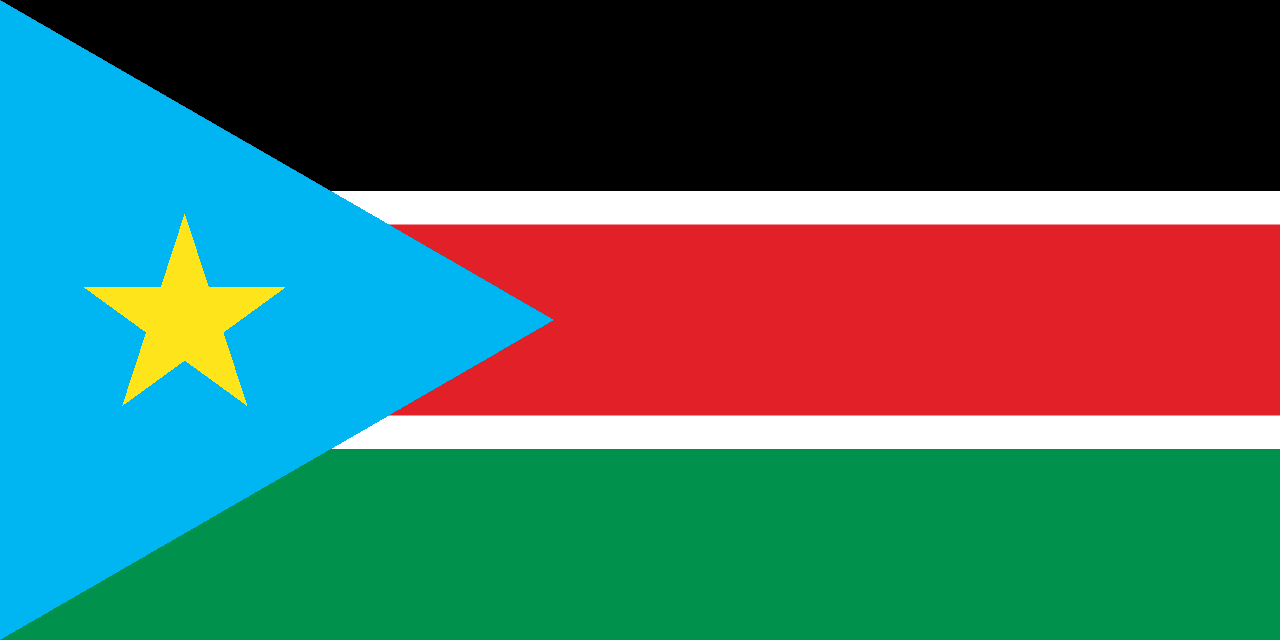
Ask yourself a simple question. When a government has postponed its own elections for more than a decade, who should be handed more weapons?
On Monday, South Sudan's Permanent Representative to the United Nations, Cecilia Adout Majok Adeng, stood before the General Assembly and made her government's position plain. Juba remains committed to holding general elections in December to close out its transition. In the same breath, she called for every sanction against her country to be lifted, the arms embargo included. The slogan her government wants the world to hear is that the ballot must replace the bullets. The request on the table is for more bullets, delivered now, while the ballot is still a promise on paper.
We have heard this script before, and across our continent it always ends the same way. Leaders who cling to power do not want the ballot box to be the instrument of their removal. They want the armoury open.
Consider the record. South Sudan became Africa's newest state in 2011 with enormous hope and a clear path to self-government. Within two years, a political rivalry inside the ruling party had exploded into a civil war that the United Nations and human rights investigators documented as marked by mass killings, sexual violence, ethnically targeted attacks, and the deliberate starvation of civilians. Hundreds of thousands died. Millions were forced from their homes. Millions more fled across borders into Uganda, Sudan, Ethiopia, Kenya, and the Democratic Republic of Congo, where they still live in camps, hungry and waiting. Mothers who survived the massacres are now raising children in refugee settlements, asking what their country owes them.
The 2018 Revitalized Peace Agreement was supposed to answer that question. It set out a transitional period, unified armed forces, a permanent constitution, and elections. Those elections have been pushed back again and again. The transition was extended in 2022, and again later, each time with the same promises and the same excuses. Meanwhile, the people who signed the agreement have kept their grip on the security apparatus, the oil revenues, and the courts.
The pattern became brutally clear in 2025, when First Vice President Riek Machar, the leader of the main opposition, was placed under arrest and put on trial on charges that observers across the region and beyond widely described as politically motivated. Think about what that signals to every voter in South Sudan. If the country's most prominent opposition figure can be locked up on charges his lawyers dispute while the government prepares an election, what exactly is being negotiated? A vote held under those conditions is not a transition. It is a coronation with a ballot attached.
The arms embargo itself has been imposed under successive UN Security Council resolutions since 2018, after UN panels documented weapons flows fuelling the fighting. Its record is far from perfect. Weapons have leaked through porous borders and corrupt procurement channels, and the embargo has never been applied with the seriousness it deserves. But the answer to a leaky embargo is not to tear it down. The answer is to enforce it, tighten it on the actors who are actually killing civilians, and make sure that any relaxation comes only after verified progress toward a credible vote.
This is where the envoy's demand collapses under its own logic. An arms embargo is a tool that international actors use to restrict the flow of weapons to a conflict. Lifting it wholesale, before elections are free and before the army is unified and accountable, would hand the government the means to intimidate voters, crush dissent, and settle its internal disputes by force. Every rifle that enters South Sudan under that deal will be pointed, eventually, at someone who voted the wrong way or spoke the wrong words.
We need to say this clearly because the outside world often gets the framing backwards. Some governments and commercial interests want the embargo gone because it complicates their access to a country rich in oil and mineral wealth. Others, including several major powers that have sold arms across Africa for decades, are happy to let the guns flow as long as the contracts are signed. Africa has seen this movie before, from Angola to Sudan to Libya. The actors change. The extractive logic does not. Whoever sells the weapons profits from the war, and whoever buys them with oil money pays for it in the blood of ordinary people.
So what should happen instead? Revvmark's position is that South Sudan's international partners should set clear, verifiable benchmarks before any sanctions are eased. Those benchmarks should include an independent National Elections Commission with real operational autonomy, a credible and updated voter registry, the release of political prisoners including Machar, unrestricted campaigning and media access, and a unified national army that answers to civilian authority rather than to a single family or faction. Targeted sanctions, including asset freezes and travel bans on the officials responsible for obstruction and atrocities, should stay in place until those conditions are met.
The continent already shows us what a better path looks like. Botswana built one of Africa's strongest records of growth and democratic stability on a foundation of transparent institutions, a professional civil service, and a judiciary that holds the powerful to account. Ghana has handled multiple peaceful transfers of power, with electoral bodies whose credibility is earned through repetition and independence. Senegal's 2024 election, after a period of genuine fear that the incumbent would cling on, showed that courts, civil society, and citizens can force a government back toward the ballot box. Mauritius shows that a country with a diverse population can build prosperity through open markets, property rights, and rule of law rather than through ethnic patronage. None of these achievements were gifts from foreign powers. They were won by citizens who refused to accept that their leaders were beyond consequence.
South Sudan's civil society, its journalists, its religious leaders, its women's groups, and its displaced communities are already doing that work under dangerous conditions. The private sector, which has suffered from the chaos of oil-dependent politics and unpredictable state finances, has every reason to demand a transparent fiscal system, public accounting of oil revenues, and contracts that do not vanish with each change of cabinet. The African Union and regional bodies such as IGAD should stop treating South Sudan's transition as a calendar to be managed and start treating it as a democratic obligation to be enforced.
To the leaders in Juba, we say this. If you want the world to lift the embargo, prove you deserve the trust. Release the prisoners. Open the political space. Let the commission do its job. Let the voters decide. A government that wins an election fairly will not need a weapons shipment to govern.
To the members of the UN Security Council, we say this. You have the power to shape the outcome. Do not reward postponement with weapons. Do not trade the lives of South Sudanese civilians for commercial access. Hold the line on the embargo until the ballot is truly free.
To every South Sudanese reading this, and to every African who believes that the continent deserves better than rule by the gun, we say this. Demand a date you can trust, a commission you can see working, and a government that answers to the people rather than to its own security chiefs. Share the facts. Call your representatives. Refuse to accept that your children must grow up in a country where elections are a threat and the army is a family business.
The ballot must replace the bullets. That is not a slogan for the General Assembly. It is a demand for the people of South Sudan, and it starts with making sure the guns stay in the armoury until the votes are counted.
Based on reporting by UN-NEWS