security
Kagame's War Grinds On as Ebola Buries Congo's Children
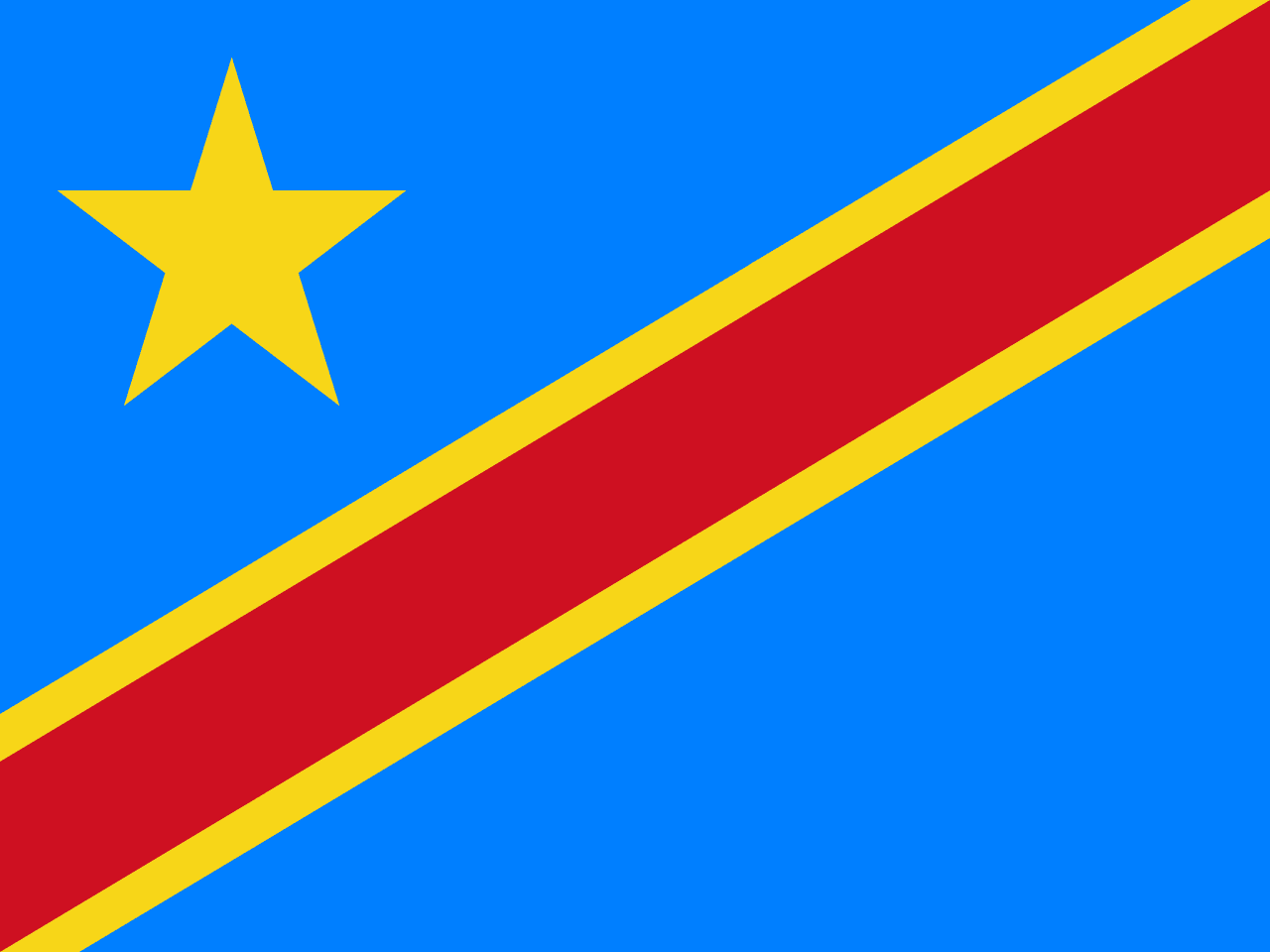
Over 3,900 people have died in the worst Ebola outbreak in the history of the Democratic Republic of Congo. Many of them were not killed by the virus alone. They died in districts where the health system has been dismantled by war, where clinics have no staff because the staff fled, and where the roads to the nearest hospital run through checkpoints controlled by armed men. Mothers have buried children who were sick for days with no one to call. Nurses have died in the same wards they worked in. This is the country that the Security Council discussed in New York this week, in careful language about "ceasefire monitoring."
We need to say the thing that the diplomatic communiqués will not say. In eastern Congo, a sovereign state is being invaded, and the invader is Rwanda.
Let us be precise, because precision is the difference between an argument and a propaganda pamphlet. The UN Group of Experts on the DRC has documented, across multiple reports including S/2025/446 and S/2026/466, the presence of Rwanda Defence Force units inside Congolese territory. These are not stray soldiers or local volunteers. The Group describes full combat units, with command structures, artillery, and logistical chains running back to Kigali. Estimates of the RDF deployment range into the thousands, and some analysts place the total near 14,000 to 18,000 troops, a substantial share of the Rwandan army. Satellite imagery and open-source investigators have tracked the movement of these forces, the positioning of artillery, and the use of Turkish-made TB2 drones staged at Kamembe airfield in Rwanda. Israeli GPS-guided mortars have appeared in the arsenal. None of this is rumor. It is in the record.
Now look at the structure of the war. M23 supplies the faces, the press releases, and the claim of a homegrown rebellion. The RDF supplies the officers, the heavy weapons, and the strategy. This is the same architecture Moscow used in Donbas, where separatists provided the cover and Russian regulars provided the killing. If the world calls Russia's operation in Ukraine an invasion, it cannot call Rwanda's operation in Congo anything else. A war of aggression is a war of aggression whether the invader wears its own uniform or hides behind a proxy.
The proxy has grown into an army of tens of thousands. M23 was a force of a few thousand when it returned to the battlefield in 2021. It now counts more than 30,000 fighters, and the UN experts have documented how that number was reached: forced conscription of Congolese civilians, including young men pulled from their villages and POWs pressed into service. This is slavery in military uniform. A young man in Masisi who refuses to pick up a rifle is beaten or killed. A young man who takes it becomes someone's weapon against his own neighbors.
And what does Kigali do with its own dead? It hides them. Satellite imagery of the Kanombe military cemetery in Kigali shows more than 1,171 new graves dug since 2021. A country that was not at war would have no reason to bury its soldiers in silence. Rwanda hides its dead because admitting them means admitting the war.
Yet this is the same Rwanda that hosts global conferences, markets itself as a clean and orderly model of development, and sells gorilla tourism to Western visitors who never ask what is happening a few hundred kilometers west. Rwanda's leaders have learned how to buy goodwill with image management. They have built a brand on order and development, and they have used that brand to shield an aggressive military campaign from scrutiny. Every glossy hotel room booked by a foreign delegate is a small payment toward the silence. We should call this what it is: sportswashing with a body count.
The Washington Accords and the Doha framework were supposed to end this. They were signed with fanfare, with photographs of officials shaking hands. The fighting has continued. Ceasefire violations have been reported in Masisi, Rutshuru, and around Goma and Bukavu, the two cities M23 seized in early 2025. Peace agreements that do not bind the invader, do not dismantle the proxy, and do not impose consequences are not peace agreements. They are press events that buy time for the war.
We must also speak honestly about our own house. The Congolese state is not blameless. The FARDC has, according to UN experts, cooperated with the FDLR, a militia whose roots lie in the 1994 genocide, and with Wazalendo militias whose abuses against civilians are well documented. Kinshasa's officials have profited from a war economy that runs on gold, coltan, and cobalt smuggled through networks that stretch to Kampala, Kigali, and beyond. A government that cannot protect its own people has no moral standing to ignore its own failures. Every Congolese citizen who wants sovereignty must also demand that their government stop fighting dirty.
Consider what this means for the rest of Africa. The DRC holds some of the most valuable mineral deposits on earth, and the scramble for them has drawn in the same players who are now jostling for influence across the continent: Western governments that lecture us about democracy while trading with the very regimes that crush it, China building roads and locking in mining rights, Gulf states buying ports and farmland, Turkey selling drones to whoever can pay. Different flags, same extraction. The new scramble for Africa does not need colonial armies when it can use proxies, contractors, and a compliant regional power. Congo is where all these dynamics collide, and Congo is paying the price in blood.
So what must happen? The African Union must stop treating this as a bilateral squabble and invoke its own Peace and Security Council mandate to demand the withdrawal of all foreign forces from Congolese soil, with Rwanda named specifically. The UN Security Council must move beyond monitoring. It should impose targeted sanctions on Rwandan military officers and on the commanders and financiers of M23, and it should enforce the arms embargo that exists on paper and is ignored in practice. Any weapon flowing to M23 through Rwandan territory should be treated as a violation with consequences, not a footnote in a report.
Africa has examples that show a better way is possible. Botswana built one of the continent's most stable democracies on diamond revenue, managed transparently, with an independent judiciary and a fierce press. Mauritius shows what rule of law and open markets can do for a small island nation. Senegal, after years of tension, completed a democratic transfer of power that gave its citizens faith in their institutions. None of these countries is perfect. All of them prove that accountability and prosperity can coexist when leaders are answerable to their people. Congo deserves that model, and it will not get it while armed foreign officers run its border provinces.
The Ebola response shows the same truth. Outbreaks are contained when health workers can reach communities, when vaccines and supplies move on roads that are not controlled by gunmen, and when governments are trusted enough that citizens come forward when they are sick. War destroys all of that. Donors should fund the response directly through accountable channels, with independent monitoring, and they should tie their aid to the restoration of civilian authority in the east.
Here is what you can do. Write to your MP, your senator, your ambassador, and the Permanent Representatives at the UN and the AU. Demand that they name Rwanda's invasion for what it is. Ask your government whether it is still buying Rwandan tourism, Rwandan contracts, and Rwandan silence. Support Congolese and Rwandan journalists and human rights defenders who document this war at the risk of their lives. Share the UN Group of Experts reports. Read them. Quote them. Make the lie harder to tell.
We are told this war is complicated. It is. But complexity has never been a reason for inaction, and it has never been an excuse for silence while mothers bury their children. The Congolese people did not choose this war. They are dying from it, in the fighting and in the epidemic it has made possible. Our job, as Africans, is to refuse the comfortable language of "monitoring" and "concern" and to name the aggressor, demand the withdrawal, and insist that the continent's leaders stop bargaining with the blood of Congo. How many more graves will it take before we stop counting and start acting?
Based on reporting by UN-NEWS