security
Eritrean Troops Are Back on Ethiopian Soil While Africa Looks Away
Ethiopians who survived the last war know the sound of a village that has gone quiet. It is the silence after the shelling stops, when mothers walk out to find what is left of their sons. Millions of people in northern Ethiopia learned that silence between 2020 and 2022, and many of them have not stopped listening for it since.
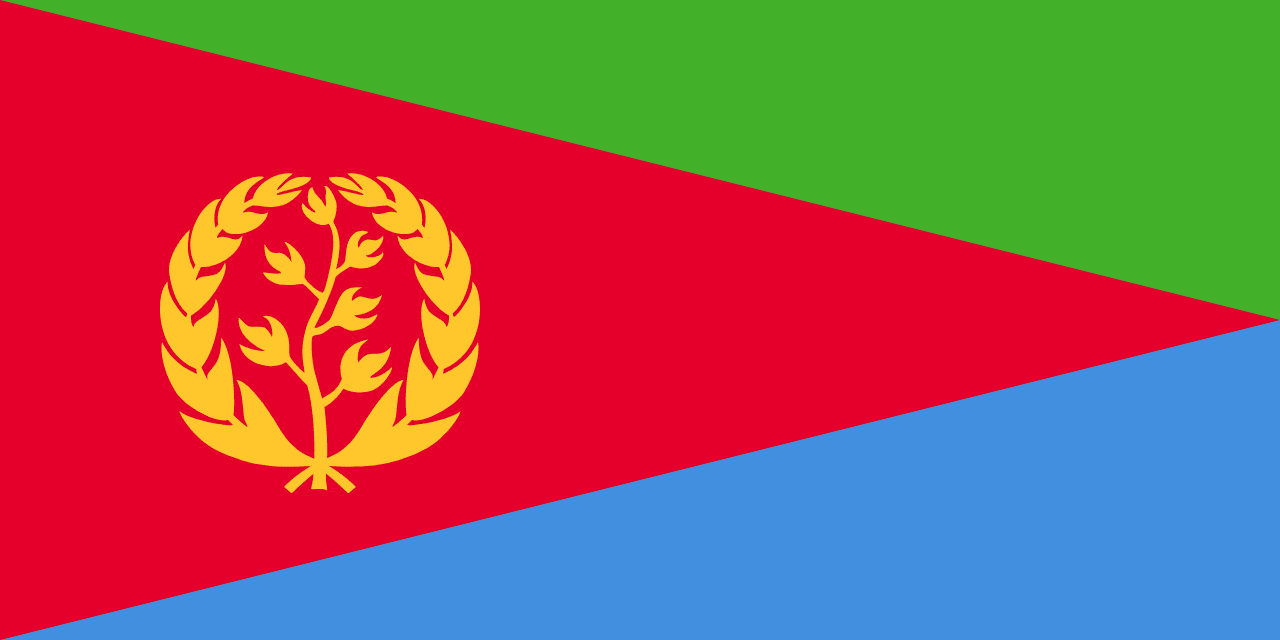
Now the United Nations Secretary-General, António Guterres, says he is "gravely concerned" by renewed fighting in northern Ethiopia and by reports that Eritrean forces are present inside the country again. Read that sentence slowly. Eritrean soldiers, on Ethiopian soil, shooting again. Guterres has called for an immediate end to the fighting and warned against escalation. The reports must be verified, and every party must be held to account. But the continent that has made the most noise about sovereignty should be asking a harder question: why is a foreign army back in Ethiopia at all?
Start with what we already know. During the Tigray war, Eritrean forces fought alongside the Ethiopian federal army against the Tigray People's Liberation Front. Investigators documented the consequences. Amnesty International and Ethiopia's own Human Rights Commission both reported serious abuses by Eritrean troops, including the killings of civilians in Axum in November 2020, where witnesses described soldiers going house to house. Independent estimates of the war's death toll run into the hundreds of thousands, most of them from starvation, disease, and the collapse of basic services that followed. Those numbers are not abstractions. They are grandmothers who died because the clinics were looted and the roads were blockaded.
The Pretoria Cessation of Hostilities Agreement, signed in November 2022 under African Union mediation, was supposed to end this. Its text called for the withdrawal of all foreign forces. Eritrea was not a signatory, and it has never been held to the same standard as the parties that were. That gap matters. An agreement that binds the people fighting in front of the cameras but leaves the foreign army behind the border is not peace. It is a pause that someone else controls.
Eritrea's president, Isaias Afwerki, has ruled since independence in 1993 without holding a single national election. The country has no functioning constitution, no free press, and an indefinite national service that conscripts young Eritreans for years, often for life. Thousands flee every year, risking the Sahara and the Mediterranean because staying means servitude. So when a regime like this sends its army across an international border, we should not be asking whether it is "involved." We should be asking who authorized it, who is paying for it, and who in the region is looking the other way.
Those questions point outward as well. Ethiopia's federal government and its rivals have bought armed drones from abroad, and reports have named Turkey and the UAE as suppliers of the systems used in the Tigray war and its aftermath. Turkish and Emirati capitals will tell you they sell defense equipment to sovereign governments. We agree that sovereign governments have the right to defend themselves. But a drone sold to a government that is shelling its own citizens is not a neutral commercial transaction. Every foreign capital selling weapons into this conflict owns a share of the dead, and no press release changes that.
Ethiopia is also the continent's second most populous nation, a country that once carried the proud title of never having been colonized. That history is precisely why its present crisis should trouble us so deeply. Ethiopia's sovereignty is not protected by its flag or its airline. It is protected by institutions that answer to citizens, by courts that can stop a general, and by a political settlement that gives Tigrayans, Amharas, Oromos, and everyone else a reason to believe the state belongs to them. Each time an armed faction or a foreign army decides the outcome of a national dispute, that protection erodes.
So what must happen? First, the African Union's Peace and Security Council must do its job and demand the verified, complete withdrawal of all foreign forces from Ethiopian territory, Eritrean forces included, with a timetable and independent monitors. Silence on Eritrea is not neutrality. It is a green light. Second, the UN Security Council should back that demand with real consequences, including targeted sanctions on the Eritrean military leadership and on any individual or firm supplying the war machine. Third, humanitarian access must be unconditional. Aid convoys, medical teams, and human rights monitors need guaranteed passage to every affected town, and anyone who blocks them must be named.
The path forward is not mysterious. Botswana built one of Africa's most prosperous economies on a foundation of regular elections, a respected judiciary, and the protection of property rights, and it did so while many of its neighbors were at war. Mauritius turned a sugar island into a financial and services hub by rewarding transparency and the rule of law. Ghana has changed governments through the ballot box repeatedly, and Senegal's citizens have shown that peaceful transitions can happen even under great pressure. These are proof that the problem is not that Africans cannot govern themselves. The problem is that too many leaders have decided that power is worth more than the people they govern, and too many outsiders have decided that our instability is useful to them.
Ethiopia's own leaders must also choose differently. A government that negotiates in good faith with its own people, that opens its prisons and its press, and that invites independent investigators to document every abuse, including those committed by its own forces, is a government that does not need foreign soldiers to hold the country together. Regional bodies like IGAD should be pushed to stop treating Eritrea as an unfortunate neighbor and start treating it as the destabilizing state it has been for three decades.
And now, to the reader who is still scrolling. Ask yourself why you have not heard more about this. Ask why a war that killed hundreds of thousands got a fraction of the coverage that a European border dispute receives. Then do something with that anger. Write to your national parliament and ask what your government is doing to support the Pretoria framework and the withdrawal of foreign forces. Demand that your country's arms exporters disclose every sale to parties in the Horn of Africa. Share the verified reports from Ethiopia's rights commission and from international investigators, not the rumors. Pressure the African Union to name Eritrea's presence for what it is.
Guterres is right to be gravely concerned. But concern is not a strategy, and statements are not shields. The people of northern Ethiopia are waiting to see whether Africa will defend their sovereignty or simply file another communique. We should not make them wait long.
Based on reporting by UN-NEWS