security
Libya's Warlords and Foreign Mercenaries Are Holding Elections Hostage
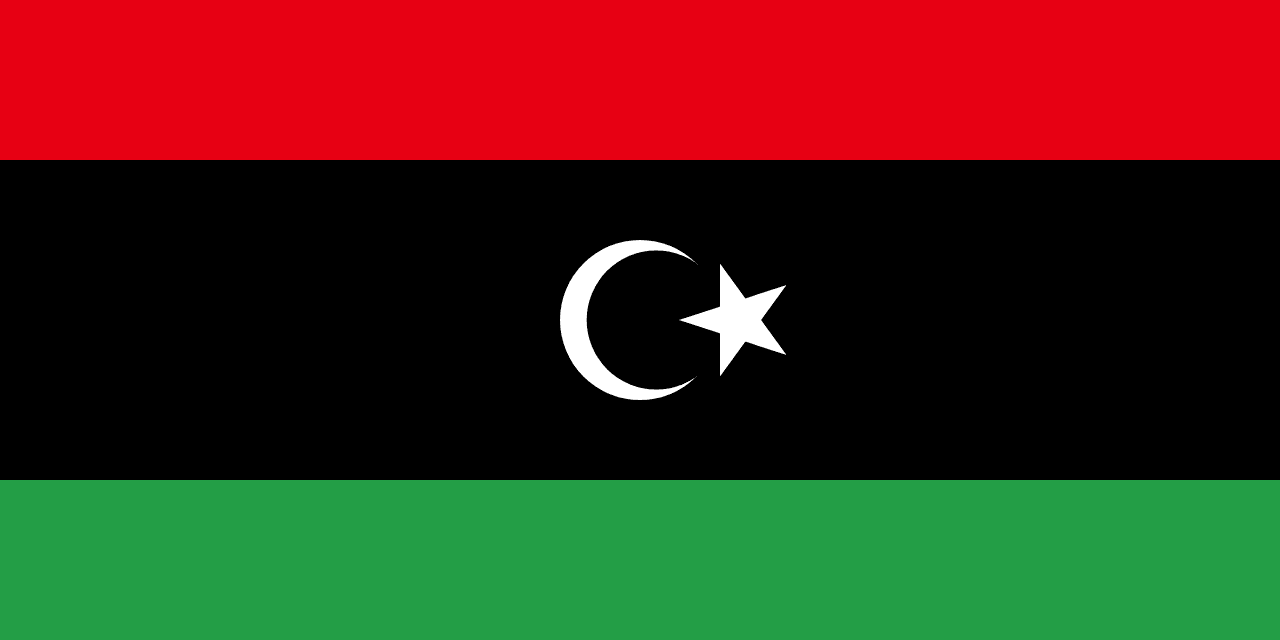
Libyans have been asked to wait for elections since 2014. Some of them have been waiting since their parents were children, and some have buried a generation while they waited. Last month, the UN envoy told the Security Council that Libya has made "encouraging progress" on its political process. Read that again, and then ask yourself what it means for a country that still has no elected president, no unified government, and no national budget that its people can trust.
The envoy's warning was careful and diplomatic. Institutional divisions, economic deterioration, and security fragility, she said, still threaten stability. We will be more direct. Libya's elections are not being delayed by an accident of bureaucracy. They are being sabotaged by men who profit from the division, and by foreign powers who prefer a weak Libya they can buy over a strong Libya that answers to its own citizens.
Start with the split itself. For more than a decade, Libya has operated under two rival power centres. In Tripoli sits the Government of National Unity, led by Abdulhamid Dbeibah, whose mandate was supposed to be temporary and was never meant to outlive the 2021 election that was scheduled and then abandoned. In the east, the House of Representatives backs a government under Osama Hammad, and the real power belongs to Khalifa Haftar and his Libyan National Army. Each side controls its own ministries, its own armed groups, and its own revenue streams. Each side has a reason to keep the other side weak but alive. Neither has a reason to hand power to a ballot box it might lose.
Follow the money, because that is where the story always leads. Libya sits on some of Africa's largest proven oil reserves and produces well over a million barrels a day when its fields are not shut down by militias. That wealth should be the foundation of schools, hospitals, water systems, and pensions. Instead it flows through a central bank that has been split and pressured, through a National Oil Corporation whose contracts and revenues are contested by rival factions, and through patronage networks that pay fighters to stay loyal to whichever warlord holds the nearest oil terminal. Libyan citizens queue for cash, watch the dinar lose value, and pay for electricity that goes out for hours each day in the heat. A country that earns billions in oil money should not have families choosing between medicine and bread.
The security picture is worse. UN Panel of Experts reports on Libya have repeatedly documented foreign military presence and the continued flow of weapons in violation of the UN arms embargo, first imposed under Resolution 1970 in 2011. The reports have pointed to Russian mercenary personnel tied to the Wagner Group and its successor structures operating in the east, to Turkish military personnel and equipment in the west under bilateral security arrangements signed in 2019, and to the United Arab Emirates, which has been repeatedly named in UN findings as a supplier of weapons and materiel to Haftar's forces. Russia, Turkey, and the Emirates each insist their involvement is lawful, or deny it outright. None of them has explained how foreign fighters and drones keep arriving in a country that is supposed to be under an arms embargo.
Let us be precise about what this means for ordinary Libyans. In the 2020 discovery of mass graves in Tarhuna, forensic teams recovered the remains of scores of people who had been detained, tortured, and killed by a militia that operated with impunity under the protection of those who ran the western security apparatus. Families had been searching for their sons and daughters for years. In September 2023, the city of Derna was devastated when two aging dams failed after a storm, and more than 4,000 people were confirmed dead, with thousands more missing. Engineers had warned for years that the dams needed maintenance. Nobody in Tripoli or the east was accountable for the money that should have paid for it. A divided state does not just fail to govern. It kills its own people, quietly and bureaucratically, one unmaintained dam at a time.
This is not a Libyan problem alone, and we should stop pretending it is. Libya is the hinge of North Africa, the gateway between the Sahel, the Mediterranean, and the Middle East. Migrants fleeing hunger and war in West and Central Africa pass through its detention centres and drown in its waters. Weapons flow south into the Sahel, where they arm the jihadist and smuggling networks already destabilising Mali, Niger, and Burkina Faso. And every foreign power that treats Libya as a chessboard, buying loyalty with arms, fuel, and contracts, is teaching the next African strongman the same lesson: that sovereignty can be rented, and that elections are an inconvenience to be postponed. The scramble for Libya did not begin with drones. It began the moment outside powers decided that a fractured country was more useful to them than a functioning one.
So what should be done? The answer is not complicated. It is only inconvenient for those who profit from the mess.
Libya needs a single, independent central bank with a unified budget and audited oil revenues published for every citizen to see. It needs an empowered Audit Bureau that reports to the people, not to the militia leader who controls the terminal. It needs a binding timetable for national elections, backed by an independent electoral commission and a constitutional referendum that resolves who may run and under what rules. Every candidate who holds a militia commander's salary should be required to resign that role before standing for office. That is what the rule of law looks like when it is taken seriously.
Africa already has proof that the better path works. Botswana built one of the continent's most respected economies on diamond revenues managed transparently, with a professional civil service and regular, peaceful transfers of power. Mauritius shows that strong institutions and open markets can turn a small island into a stable, prosperous democracy. Closer to Libya's own region, Senegal's voters and courts forced a president to accept his limits in 2024, when a postponed election was overturned and the country went to the polls and chose a new leader. If Senegal can defend its ballot box against a sitting president, Libya can defend its own against armed men with foreign sponsors. The difference is not culture or destiny. It is whether citizens and institutions refuse to be bought.
The UN Security Council has a duty it keeps postponing. It should demand, through a binding resolution, the full withdrawal of foreign mercenaries and military personnel from Libyan territory, and it should back that demand with real enforcement of the arms embargo, including inspection of shipments and sanctions against individuals and companies that break it. The African Union, which has the most to lose from a Libya that feeds Sahel instability, should stop issuing communiqués and send a standing mission to press Libyan leaders on an election calendar with consequences attached. Regional bodies should hold their own members accountable for the weapons and money they send across the border. And the Libyan people, especially the women, young people, and civil society groups who have marched for elections while politicians looked away, must be given a seat at every negotiating table, not just the ones where the warlords shake hands.
Now the question for you. How many more elections will be promised, postponed, and quietly buried before we stop accepting it? How many more dams must fail before someone is held responsible? How many more Libyans must be found in mass graves before the foreign governments arming these militias are named in the same breath as the men pulling the triggers?
Libyans are not asking for a miracle. They are asking for a ballot, a salary that arrives on time, electricity that stays on, and a government that answers to them. That is the minimum any African citizen deserves, and it is the minimum our leaders have failed to deliver. Demand a binding election timetable from the Libyan government. Demand the Security Council enforce its own arms embargo. Demand that the African Union send observers with a mandate to name the spoilers. Share this piece with the people who still believe Libya's crisis is far away. It is not. It is on our borders, in our migrant routes, and in our future. Our silence is what keeps the warlords in business.
Based on reporting by UN-NEWS