think-tank
South Africa Is Trading Mandela's Moral Authority for BRICS Photo Ops
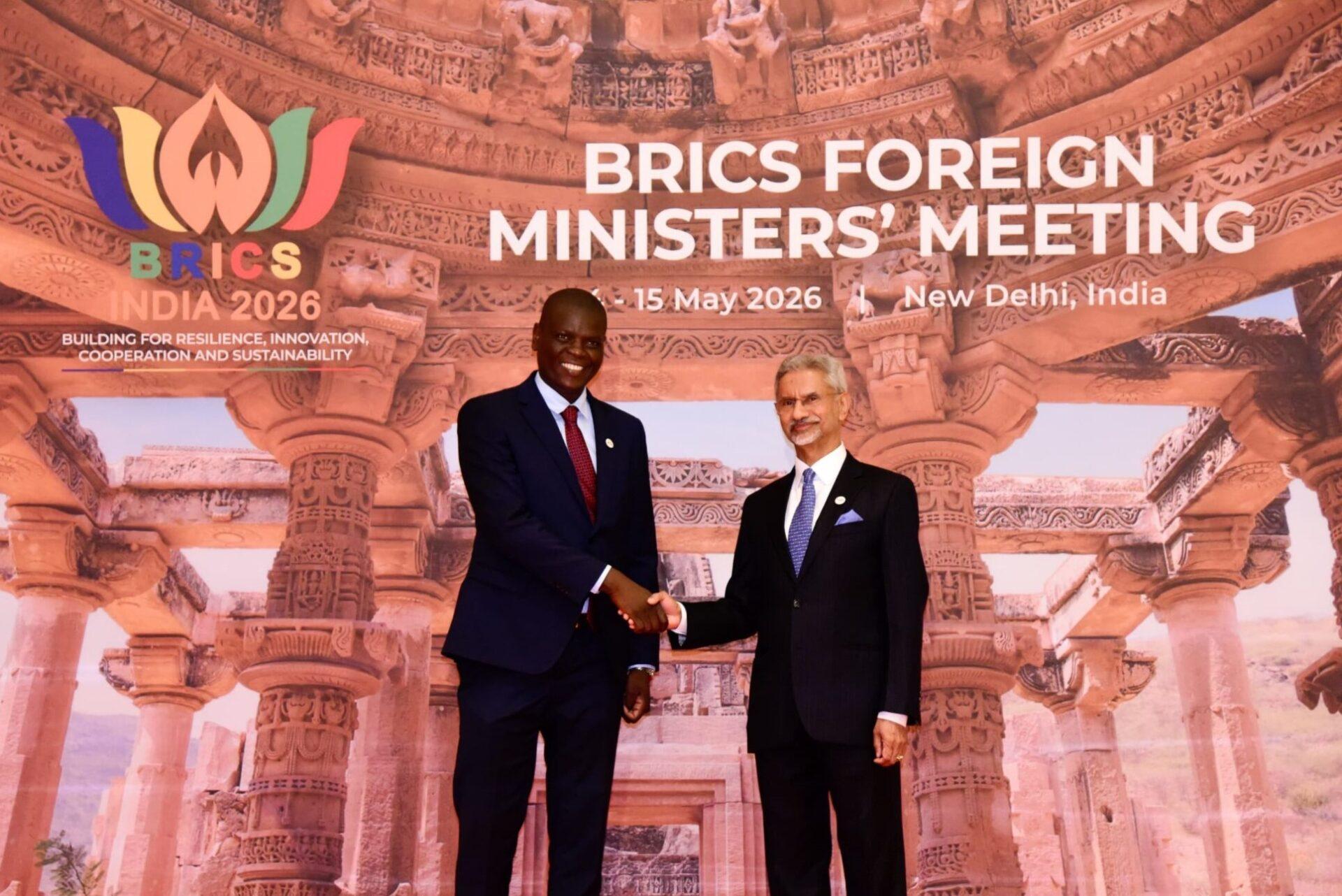
Nelson Mandela spent 27 years in prison so that South Africa could one day speak with a moral voice that no one could dismiss. Today, that voice is being spent cheaply, on podium speeches, summit communiqués, and carefully worded silences. Ahead of the 18th BRICS Summit, we have to ask the question Pretoria keeps avoiding: what is all that soft power actually buying us?
We have been told for thirty years that South Africa is Africa's conscience. Our Constitution is still one of the most progressive in the world. Our courts, for all their flaws, still tell presidents no. Our history gives us a credibility that most governments on this continent could only dream of. But credibility is a currency, and like any currency, it loses value when it is spent without discipline. A country that speaks loudly about justice while looking away from injustice does not gain influence. It gains a reputation for hypocrisy, and hypocrisy is the cheapest thing a government can offer the world.
Consider the record. When Russia invaded Ukraine in February 2022, South Africa abstained on the UN General Assembly resolution condemning the invasion. Abstention is not neutrality when a sovereign state is being bombed and a child in Kharkiv is pulled from rubble. Consider too the joint naval exercises with Beijing and Moscow that drew sharp criticism from Western capitals and from our own opposition parties, who asked a simple question: why would a democracy rehearse maritime operations with two of the world's least accountable governments? Whatever the diplomatic logic, the optics told a story that ordinary South Africans deserved to hear debated openly in Parliament, not inferred from a press release.
Now look at the Democratic Republic of Congo, where the stakes are not theoretical. South Africa deployed troops under the Southern African Development Community mission to face the M23 offensive that Rwanda has sustained through its own Defence Force. That deployment was an act of regional responsibility, and our soldiers paid for it. More than a dozen South African soldiers were killed in fighting around Goma and Sake in early 2025, and their families were promised that their sacrifice would secure something real. Yet the central fact remains unchanged: M23 is not a homegrown rebellion. UN Group of Experts reports, including S/2025/446, have documented the Rwandan Defence Force operating inside eastern Congo in combat roles, with M23 supplying manpower and deniability. That is a war of aggression by a neighbouring state, and it has displaced millions of Congolese. A country that claims to champion sovereignty cannot afford to speak quietly when sovereignty is being carved up by a government in Kigali.
And then there is Sudan. In 2025, the Rapid Support Forces seized El Fasher and turned it into a theatre of mass killing, sexual violence, and ethnic targeting that UN investigators and human rights groups described in language usually reserved for historical atrocities. Where was the BRICS-era diplomacy that could have pressured the states funding and arming the RSF? South Africa chose to pursue a case at the International Court of Justice against Israel, a legal instrument that is legitimate and deserves serious engagement. But the question every African should ask is simple: why does the same moral urgency appear for some victims and vanish for others? Selective outrage is not justice. It is theatre, and Africans have seen enough theatre from foreign capitals to recognise it when our own government performs it.
Let us be clear about what BRICS is. It is a grouping of large economies, several of them authoritarian, that have openly sought to reshape a global order built on the rules Africans helped to shape at the UN and in decolonisation. Membership can offer South Africa access to development finance, trade, and a seat at tables where Africa's voice is too often absent. We should want those things. But membership is not a substitute for domestic strength. Eskom's failures, the grinding unemployment that leaves more than a third of working-age South Africans without jobs, and the corruption that drained state enterprises during the state capture years are not problems a summit communiqué can fix. A foreign policy that looks outward while the lights go out at home is not statesmanship. It is avoidance.
So what should South Africa do? First, it must align its foreign policy with its own constitutional values and be willing to say so when a partner, including China or Russia, violates them. Principled engagement is not hostility. Botswana has shown for decades that a small African state can trade with the world, take foreign investment, and still hold the line on rule of law, property rights, and transparent governance. Mauritius has built one of Africa's most credible financial centres on the same foundations. These are not Western inventions. They are African success stories, and they prove that the choice is not between sovereignty and prosperity.
Second, Parliament must reclaim its role in foreign policy. Deployments of troops, naval exercises with foreign militaries, and major diplomatic positions should face genuine parliamentary scrutiny, not rubber-stamp approval after the fact. Independent audits of defence spending, published in full, would show citizens what their taxes buy abroad. Third, the private sector should be encouraged to build partnerships on clear contracts, enforceable property rights, and open tender processes, so that foreign capital serves South African industry rather than extracting resources and leaving debt behind. Fourth, the African Union and SADC must be pushed to enforce their own charters against aggression, including the M23 campaign and the RSF's assault on civilians, instead of issuing communiqués that change nothing on the ground.
Now the question is for you. Do you want a South Africa that is admired in conference halls but ignored by the mothers in Goma and Khartoum who most need its voice? Or do you want a South Africa whose moral authority is backed by a strong economy, accountable institutions, and foreign policy that treats every African life as equally worth defending?
Call your MP. Ask what South Africa's position is on Rwanda's invasion of Congo and why it has not been stated plainly in Parliament. Demand the full text of any defence agreements and joint exercises. Ask your university, your union, and your church to press the same questions. Mandela did not give his life to a foreign policy of convenient silence. Hold this government to the standard it claims to represent, before another summit photo replaces the truth we owe our continent.
Based on reporting by SAIIA